


.webp?alt=media&token=003a9c69-aa45-4f6d-8589-ae595d5ea776)
Nationalism: Theory, Ideology, History
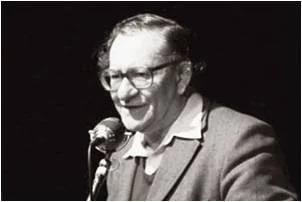 Anthony D. Smith
Anthony D. Smith's concise overview argues that nationalism must be understood as more than a political ideology—it is also a form of public culture drawing on older symbolic and religious forms. The book systematically maps the competing paradigms in nationalism studies: modernism, perennialism, primordialism, and Smith's own ethno-symbolism. Smith contends that nations are modern phenomena, yet they are genealogically linked to premodern ethnic communities (ethnies) whose myths, memories, and symbols supply the cultural materials for national identity. The framework is applied across ideology, theory, and history, concluding with an assessment of nationalism's persistence in a globalising world.
Key Details
Related Books
View AllSimilar books from the same category, ranked by shared topics and reader engagement.



Key Insights — Read in 10 Minutes
What is the central argument of Nationalism: Theory, Ideology, History?
Smith argues that nationalism is not merely an ideological movement but a form of public culture that draws on much older cultural and symbolic forms, including religious motifs and ethnic myths. The book systematically surveys the competing paradigms in nationalism studies—modernism, perennialism, primordialism—and advances Smith's own ethno-symbolist position. His central claim is that while nations and nationalism are modern phenomena, they are genealogically linked to premodern ethnies whose myths, memories, and symbols supply the cultural materials that make national identity emotionally resonant and politically potent.
What are the four main paradigms of nationalism Smith identifies in the book?
Smith organises the field around four competing paradigms. Modernism holds that nations are entirely modern constructions of industrial capitalism or print capitalism (Gellner, Anderson). Perennialism argues that nations have existed in some form throughout history, though not always in their modern guise. Primordialism treats ethnic and national attachments as natural, ancient, and unchanging. Smith's own ethno-symbolism occupies a middle position: it accepts that nationalism is modern but insists that modern nations are built from premodern ethnic materials—myths, symbols, and memories that give national identity its durability and emotional force.
How does Smith distinguish 'civic' and 'ethnic' nationalism in this book?
Smith treats the civic-ethnic distinction as an important but often oversimplified analytical tool. Civic nationalism is associated with Western states like France and the United States, emphasising territorial citizenship, legal rights, and voluntary adherence to a political creed. Ethnic nationalism, associated with Eastern Europe and Germany, emphasises descent, language, and cultural kinship. Smith argues the two are rarely pure types—most nationalisms combine elements of both—and that the distinction should be understood as a spectrum rather than a rigid dichotomy. The book's chapter on ideologies develops this analysis in detail.
How does this book relate to Smith's earlier The Ethnic Origins of Nations (1986)?
Nationalism: Theory, Ideology, History is a concise synthesis of the ethno-symbolic framework Smith developed in The Ethnic Origins of Nations and National Identity. It distils those arguments into a brief, accessible overview suitable for students and general readers. The book does not advance new theoretical claims so much as map the field and locate ethno-symbolism within it. Walker Connor praised it as a 'masterly, updated distillation of Anthony Smith's four decades of intensive scholarship,' noting its concision and comprehensive treatment of nationalism's key aspects. Gerard Delanty found it 'very accessible and engaging.'
What does Smith conclude about the prospects of nationalism in a globalising world?
Smith rejects predictions that nationalism will fade with globalisation. In the book's final chapter, he examines arguments about the demise of the nation-state, hybrid identities, consumer society, and global culture, concluding that nationalism remains persistently powerful. He argues that globalisation often provokes nationalist reactions rather than dissolving national attachments, and that the uneven distribution of ethno-histories means some nations have deeper cultural resources to draw on than others. Smith also emphasises the 'sacred foundations' of nationalism—its capacity to inspire sacrifice and devotion—as a key reason for its resilience. The conclusion is cautious but firm: nationalism is likely to persist.
What was the initial critical reception of Nationalism: Theory, Ideology, History?
The book was widely praised as an accessible and authoritative introduction. Walker Connor of Middlebury College called it a 'masterly, updated distillation' of Smith's scholarship, praising its clarity and critical sweep. Gerard Delanty of the University of Sussex found it 'very accessible and engaging,' noting that it 'manages to say something new and offers many insights.' One reader on Amazon warned that despite some assumptions, the book is not a reader or anthology of originary texts but a summary of approaches and theories—a clarification that speaks to its function as a guide rather than a sourcebook.
Show 1 more insights
What is the most common misconception about Smith's approach in this book?
A frequent misreading treats ethno-symbolism as a form of primordialism that claims nations are ancient and unchanging. Smith explicitly rejects this. Ethno-symbolism is a modernist theory: it holds that nations and nationalism are modern phenomena. What Smith insists on is that these modern phenomena draw on premodern ethnic materials. The ethnie is not a nation; it is a pre-national community that may or may not develop into a nation. Smith's argument is about genealogy and cultural resources, not about the antiquity of the nation itself. This distinction is often lost in crude summaries that collapse ethno-symbolism into primordialism.
Wealthy Psyche is an intellectual archive. We do not host, distribute, or sell book copies — physical or digital. We provide structured knowledge to help you think better, faster.