



On Contradiction
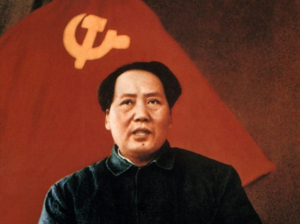 Mao Zedong
In On Contradiction, Mao Zedong develops a practical interpretation of Marxist dialectics in which understanding change requires identifying the specific contradictions operating within a situation. His central methodological distinction is between the principal contradiction, which shapes the development of a complex process, and secondary contradictions, alongside the principal aspect that determines a contradiction's dominant character at a particular stage. Mao also distinguishes the universality of contradiction from its particular forms, arguing that concrete analysis must replace mechanical application of general principles. Written in the context of revolutionary China, the essay connects philosophical reasoning with political strategy and social transformation. Its interpretation and textual history remain subjects of scholarly debate.
Key Details
Related Books
View AllSimilar books from the same category, ranked by shared topics and reader engagement.



Key Insights — Read in 10 Minutes
What is the central argument of On Contradiction, and how does it guide political analysis?
Mao argues that contradiction is fundamental to materialist dialectics and that development occurs through the interaction and struggle of opposing aspects. For practical analysis, he distinguishes the principal contradiction in a complex process from its secondary contradictions. Identifying the principal contradiction helps explain which relationship most strongly shapes the situation at a given stage. This method is intended to prevent political analysis from treating every conflict as equally important or applying abstract Marxist formulas without examining concrete historical conditions.
How does Mao distinguish the principal contradiction from the principal aspect of a contradiction?
The principal contradiction is the leading relationship among several contradictions within a complex process. The principal aspect, by contrast, is the dominant side within a particular contradiction. These concepts address different levels of analysis: one identifies which contradiction is most influential overall, while the other examines which opposing aspect predominates within that contradiction. Mao treats both as historically conditioned rather than permanently fixed. Their relative importance can change as circumstances develop, making reassessment essential to his proposed method of concrete analysis.
How does On Contradiction differ from Mao's On Practice?
On Contradiction focuses on the structure and development of opposing forces, emphasizing the universality and particularity of contradiction, principal and secondary contradictions, and the relationship between opposing aspects. On Practice examines the relationship between knowledge and practical activity, arguing that knowledge develops through social practice and must be tested and deepened through experience. The essays complement one another: On Practice addresses how people acquire and verify knowledge, while On Contradiction provides a framework for analyzing the conflicting relationships that shape change. Both are associated with Mao's effort to interpret Marxist philosophy in the Chinese revolutionary context.
Was On Contradiction definitely written in 1937 in the form now commonly read?
The standard Chinese account dates the essay to August 1937 and describes it as originating in lectures at the Anti-Japanese Military and Political College in Yan'an. However, scholars have debated the dating and textual development of the published essay. In a 1980 article in The China Quarterly, Nick Knight examined competing arguments about whether the familiar text represents an original 1937 composition or a substantially revised later version. Other researchers also questioned the official chronology. The distinction matters because the essay's intellectual development and its later presentation are separate historical questions.
What does Mao mean by the universality and particularity of contradiction?
Universality means that contradiction is a general feature of processes and development, rather than an unusual exception. Particularity means that contradictions take different forms under different conditions and must be understood in their concrete settings. Mao considers both principles necessary: recognizing only universality encourages abstract generalization, while concentrating only on particular cases obscures broader patterns. For revolutionary analysis, this combination means studying the actual actors, relationships, historical stage, and material conditions involved instead of assuming that one strategy or explanation applies identically to every situation.
Does On Contradiction claim that every conflict must be resolved through violence?
No. Mao distinguishes contradiction from antagonism rather than treating the terms as interchangeable. Contradictions can take different forms, and antagonism is one possible form of struggle between opposing aspects, not a necessary description of every contradiction. This distinction is important when interpreting the essay's philosophical vocabulary. It does not, by itself, establish that all social disagreements can be peacefully reconciled or that every conflict requires violent resolution. The appropriate interpretation depends on the type of contradiction, the conditions in which it develops, and Mao's broader political framework.
Show 2 more insights
How has the argument in On Contradiction held up under later historical scrutiny?
The essay remains useful for studying Maoist philosophy, Chinese revolutionary strategy, and methods of analyzing interacting social forces. Its emphasis on context and changing relationships offers a framework for examining why political strategies may need to change across historical situations. However, the framework does not automatically establish which contradiction is principal in any particular case; that judgment depends on evidence and interpretation. Its historical significance must also be separated from the empirical success of policies justified in its name. Readers should evaluate particular applications against documented outcomes rather than treating the philosophical framework as a universally verified predictive theory.
How did On Contradiction influence Maoist theory and later Chinese political thought?
On Contradiction became one of the philosophical texts associated with Maoism, alongside On Practice. Its concepts provided a vocabulary for interpreting revolutionary strategy, shifting alliances, social conflicts, and changing political priorities. Mao later addressed related issues in On the Correct Handling of Contradictions Among the People, a 1957 text concerned with contradictions within socialist society and how they should be handled. The later work applies related distinctions to questions of governance and political classification. Their relationship demonstrates the continuing use of contradiction analysis in Mao's thought, while leaving open questions about how consistently particular political decisions followed the stated framework.
Wealthy Psyche is an intellectual archive. We do not host, distribute, or sell book copies — physical or digital. We provide structured knowledge to help you think better, faster.