



On New Democracy
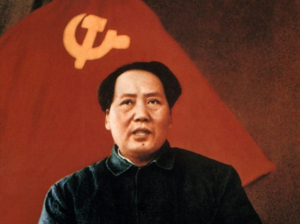 Mao Zedong
In On New Democracy, Mao Zedong argues that China must pass through a distinct revolutionary stage between its existing semi-colonial, semi-feudal order and socialism. Rather than advocating an immediate transition to socialism, he proposes a New Democratic state led by the working class through the Communist Party and incorporating a broader alliance of anti-imperialist and anti-feudal forces, including peasants, the urban petty bourgeoisie, and sections of the national bourgeoisie. The framework extends to economic organization and culture, presenting political independence, a mixed revolutionary alliance, and a national, scientific, mass culture as connected elements of China's transformation. Written in January 1940, the essay articulates Mao's strategy for the Chinese revolution.
Key Details
Related Books
View AllSimilar books from the same category, ranked by shared topics and reader engagement.



Key Insights — Read in 10 Minutes
What is the central argument of On New Democracy, and why does Mao reject an immediate socialist revolution?
Mao argues that China's historical conditions require a distinct New Democratic stage before the transition to socialism. He characterizes China as semi-colonial and semi-feudal, with imperialist domination and entrenched agrarian relations obstructing independent national development. In his account, the immediate task is therefore a democratic, anti-imperialist and anti-feudal revolution rather than the immediate establishment of a fully socialist economy. This stage is intended to unite several revolutionary classes under working-class and Communist Party leadership. The argument makes the sequence of revolutionary stages, rather than socialism as an immediate objective, the essay's defining strategic claim.
What does Mao mean by New Democracy, and how does it differ from liberal parliamentary democracy?
New Democracy is Mao's proposed political order for the first stage of China's revolution, based on an alliance of classes opposed to imperialism and the existing semi-feudal order. It is not presented as a politically neutral system in which all parties and interests compete on equal terms. Mao assigns leadership to the working class through the Communist Party while allowing participation by other revolutionary social groups. The concept therefore differs from liberal democracy's emphasis on pluralistic competition and equal political rights regardless of class. Understanding this distinction is essential to interpreting the essay's use of democratic language.
Why does On New Democracy allow a role for sections of the national bourgeoisie?
Mao distinguishes China's national bourgeoisie from comprador interests closely tied to foreign imperialism. He argues that sections of domestic business may oppose foreign domination and therefore share certain immediate objectives with workers and peasants, even though their long-term class interests differ. The proposed alliance is consequently conditional rather than a claim that all capitalist interests are inherently revolutionary. Mao expects working-class leadership to guide the coalition and prevent it from becoming a bourgeois-led political order. This position reflects his argument that revolutionary strategy must account for China's particular economic structure instead of mechanically applying a model developed for a different society.
How does On New Democracy differ from the theory of permanent revolution?
Mao's essay emphasizes a distinct New Democratic stage in which multiple anti-imperialist and anti-feudal classes cooperate under Communist Party leadership before the transition to socialism. The theory of permanent revolution associated with Leon Trotsky instead emphasizes the continuity of democratic and socialist tasks and the capacity of the working class to move beyond bourgeois-democratic limits without treating a separate, stable bourgeois-democratic stage as the necessary strategic framework. Both approaches address revolutions in societies with uneven development, but they differ over class alliances, political leadership, and the relationship between democratic and socialist stages. These distinctions are central to their competing interpretations of revolutionary strategy.
How does Mao connect culture to the political and economic program of New Democracy?
Mao argues that revolutionary transformation requires more than a change of government or ownership arrangements. He calls for a national, scientific, and mass culture that opposes imperialist domination, challenges inherited feudal influences, and serves the broader population rather than a narrow elite. Culture is thus treated as part of the struggle over political authority and social organization, not as an independent sphere detached from material conditions. The essay's cultural argument also helps explain why Mao links intellectual life and education to revolutionary mobilization. Its framework raises questions about how cultural renewal can coexist with ideological control by a ruling political organization.
When was On New Democracy written, and what historical problem was it addressing?
The essay is dated January 1940. Mao wrote it during the Second Sino-Japanese War, when China faced Japanese invasion and an ongoing struggle over national political authority. The work addresses disagreements about the aims and leadership of the Chinese revolution, including whether the immediate objective should be a broad democratic transformation or a more direct socialist transition. It was initially published in the context of debates over Chinese politics and culture and subsequently became a prominent statement of Communist Party strategy. Its date and wartime setting are important for understanding why national independence and cross-class unity occupy such central positions in the argument.
Show 2 more insights
Did the New Democratic stage remain a permanent alternative to socialism in Mao's theory?
No. In the essay, New Democracy is explicitly framed as a historical stage preceding socialism, not as a permanent final settlement between capitalism and socialism. Mao envisages a transition in which the democratic revolution establishes the political and economic conditions for subsequent socialist transformation. However, the exact relationship between the proposed coalition, state ownership, private enterprise, and later socialist policies must be examined in its historical context. The distinction between a transitional program and the political system that subsequently emerged in the People's Republic of China is important: the essay describes a revolutionary strategy, not a complete prediction of every later institutional development.
How should readers assess On New Democracy in light of the later development of the People's Republic of China?
The essay provides evidence of how Mao articulated revolutionary strategy in 1940, particularly his insistence on a staged revolution and a coalition broader than the industrial working class alone. Later political and economic developments in the People's Republic of China can be compared with these stated aims, but they should not be treated as automatic confirmation of the framework. The subsequent transition toward socialist transformation, changes in the role of private business, and the consolidation of Communist Party rule raise questions about how temporary alliances functioned in practice. A careful assessment distinguishes the essay's original wartime objectives from later policies and evaluates each against historical evidence.
Wealthy Psyche is an intellectual archive. We do not host, distribute, or sell book copies — physical or digital. We provide structured knowledge to help you think better, faster.