



On Practice: On the Relation Between Knowledge and Practice, Between Knowing and Doing
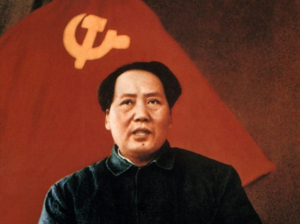 Mao Zedong
In On Practice, Mao Zedong argues that knowledge develops through social practice and must return to practice to be tested, corrected, and deepened. His central framework describes a movement from perceptual knowledge, acquired through direct experience, to rational knowledge, developed by analyzing underlying relationships, and back to practical activity informed by that understanding. The essay targets two opposing errors within revolutionary Marxism: dogmatism, which applies theory without adequately examining reality, and empiricism, which relies on fragmentary experience without developing broader theoretical insight. Written in the context of the Chinese revolution, it presents knowledge as an ongoing cycle connecting experience, theory, and action.
Key Details
Related Books
View AllSimilar books from the same category, ranked by shared topics and reader engagement.



Key Insights — Read in 10 Minutes
What is the central argument of On Practice, and what does Mao reject?
Mao argues that knowledge originates in social practice, develops through the analysis of experience, and must return to practice for verification and further development. He rejects dogmatism, which treats established theories as formulas to apply regardless of concrete conditions, and empiricism, which remains confined to isolated experiences without developing a broader understanding. For Mao, neither abstract theory nor unexamined experience is sufficient. Reliable understanding requires a continuing relationship between practical activity, rational analysis, and the testing of conclusions against changing material circumstances.
How does Mao explain the movement from perceptual knowledge to rational knowledge?
Perceptual knowledge begins with immediate experience: observing events, encountering objects, and participating in practical activities. Rational knowledge develops when people analyze this experience to identify underlying relationships and patterns that are not immediately apparent. Mao treats these as connected stages rather than independent sources of knowledge. Rational understanding must then guide further activity, where its conclusions can be tested and revised. This sequence is central to the essay's theory of cognition: experience supplies the material for analysis, while analysis helps people act more deliberately and understand subsequent experience more deeply.
Why does On Practice criticize both dogmatism and empiricism?
Mao considers dogmatism and empiricism opposite but related failures in revolutionary analysis. Dogmatists rely on general principles and authoritative formulations without adequately studying local conditions or practical experience. Empiricists, by contrast, may accumulate detailed firsthand knowledge but fail to connect it to wider theoretical relationships or the revolutionary process as a whole. Mao argues that either tendency can produce ineffective decisions. His proposed alternative is to connect theory with concrete investigation, using experience to develop understanding and using that understanding to guide and evaluate subsequent practice.
How does On Practice differ from On Contradiction?
On Practice primarily examines how knowledge develops through experience, theoretical analysis, and renewed practical activity. On Contradiction focuses on the opposing forces and relationships that shape the development of processes, including the distinctions between principal and secondary contradictions. The essays therefore address complementary philosophical questions. One concerns the relationship between knowing and doing; the other concerns how contradictions structure change. Both were presented as contributions to Marxist philosophy in the context of the Chinese revolution, but their central analytical tasks are distinct and should not be reduced to a single general theory of revolutionary strategy.
Was On Practice originally written in 1937, or was it revised later?
The standard account dates the work to July 1937, when Mao was delivering philosophy lectures in Yan'an. The familiar essay was associated with his teaching materials on dialectical materialism. However, the publication history is more complex than a simple first-draft date suggests. Research on the essay's versions reports that Mao substantially revised the material after the founding of the People's Republic of China and made further editorial changes. This distinction matters for scholars: the conventional date identifies the work's stated origins, but the surviving published text also reflects subsequent editing.
Does Mao claim that practical experience alone guarantees true knowledge?
No. That interpretation would overlook his criticism of empiricism. Mao assigns practice a foundational role in knowledge, but he also argues that raw experience must be developed through rational analysis. People may encounter events directly and still misunderstand their underlying causes or relationships. Theoretical understanding helps organize experience and guide more informed action, while subsequent practice tests that understanding. The framework therefore emphasizes an ongoing process rather than treating firsthand observation as infallible. It also assumes that practical results can help expose errors and provide the basis for revising conclusions.
Show 2 more insights
What role does social practice play in Mao's theory of knowledge?
Mao uses social practice to mean more than individual experimentation. His account includes productive activity, class struggle, and scientific experimentation as ways people engage with and transform the material world. Knowledge develops within these activities and reflects historically situated relationships between people and their environment. This emphasis distinguishes his account from a view of cognition as an entirely detached mental process. It also gives the essay a political dimension: theoretical understanding is expected to inform collective activity, while the consequences of that activity provide material for evaluating and developing knowledge.
How has On Practice been used and criticized in later Marxist thought?
On Practice remains a frequently studied statement of Maoist epistemology, particularly its emphasis on the connection between experience, theory, and action. Its concepts are relevant to discussions of revolutionary education, political investigation, and the relationship between abstract principles and local conditions. Critical questions concern how practice is interpreted as a test of truth, whether political institutions can assess outcomes impartially, and how contradictory evidence is handled when a theory guides the activity being evaluated. The essay offers a philosophical method, but its claims still require critical examination and independent evidence when applied to particular historical or political decisions.
Wealthy Psyche is an intellectual archive. We do not host, distribute, or sell book copies — physical or digital. We provide structured knowledge to help you think better, faster.