



The Chatham House Version: And Other Middle Eastern Studies
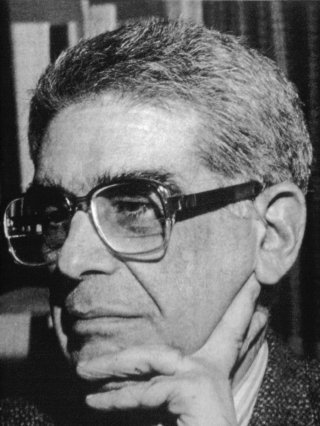 Elie Kedourie
Published in 1970, this collection of twelve essays advances a polemical thesis about British policy in the Middle East. Kedourie argues that Britain's disastrous handling of the region stemmed from what he calls 'the Chatham House version'—a view of Middle Eastern history propounded by Arnold Toynbee and the Royal Institute of International Affairs. This sensibility, infected with moral defeatism and guilt over imperialism, led Britain to abandon its imperial responsibilities and hand the region over to intolerant nationalism. The essays examine episodes from the capture of Damascus to the kingdom of Iraq, showing successive manifestations of illusion and misjudgment.
Key Details
Related Books
View AllSimilar books from the same category, ranked by shared topics and reader engagement.



Key Insights — Read in 10 Minutes
What is the central thesis of The Chatham House Version?
Kedourie argues that Britain's faulty and disastrous handling of Middle East problems stemmed from a sensibility he calls 'the Chatham House version.' This was a view of Middle Eastern history and politics propounded and propagated through publications of the Royal Institute of International Affairs, written or edited by Arnold Toynbee. Infected with moral defeatism and guilt over imperialism, this view led Britain to abandon its imperial responsibilities, leaving the region to the depredations of intolerant nationalism. The episodes Kedourie investigates show 'successive and cumulative manifestations of illusion, misjudgment, maladroitness, and failure.'
Who or what was Chatham House, and why did Kedourie single it out for attack?
Chatham House was the popular name for the Royal Institute of International Affairs in London. From the 1920s through the 1950s, it exercised profound influence on British policy in the Middle East. Arnold Toynbee, the celebrity historian and mainstay of Chatham House, presided as Director of Studies for some thirty years. Kedourie named his target after the institution because he saw it as the epicentre of a moral orientation—'a whole intellectual style'—that combined sentimental anti-Westernism with a belief that history could be enlisted 'to save mankind.' He traced this sensibility back to the moral defeatism of English radicalism, personified by Toynbee.
How did reviewers respond to Kedourie's attack on Toynbee and Chatham House?
Reception was sharply divided. Bernard Lewis, writing in The Spectator, praised the book as 'brilliant' and a 'striking departure' from the prejudices and ignorance that vitiated most Middle East writing . A reviewer in Middle East Forces, however, disputed Kedourie's virtual identification of Chatham House with Toynbee's views, noting that Toynbee from 1946 onwards was almost wholly engaged in completing A Study of History and rarely appeared at Chatham House meetings . The New Criterion later called the title essay 'the most devastating polemic since the Second World War' . The book went out of print twice and was reissued in 2004 with an introduction by David Pryce-Jones .
How does this book relate to Kedourie's better-known work on nationalism?
The Chatham House Version applies Kedourie's critique of nationalism to the specific case of British policy in the Middle East. Where Nationalism (1960) traced the doctrine's philosophical origins and its destructive consequences in general, this 1970 collection shows how British policymakers, influenced by Chatham House's moral defeatism, facilitated the triumph of Arab nationalism at the expense of imperial order and minority populations. The book's essay 'Minorities' articulates Kedourie's sober political truth: the areas said to suffer from imperialism had known nothing but alien rule throughout most of their history, and until the coming of Western powers, their experience of government was 'the insolence and greed of unchecked arbitrary power' .
What are the main criticisms of Kedourie's argument in this book?
Critics raised two main objections. First, Kedourie's tendency to overstate his case, as in his claim that modern Middle Eastern society had only 'two classes: the official class and the non-official class' . Second, his virtual identification of Chatham House with Toynbee's views derived from an outsider's perusal of publications rather than informed awareness of what went on at the institution; Toynbee rarely attended meetings from 1946 onwards, and Chatham House hosted dissenting voices including pro-Zionist critics of British policy . Some reviewers also noted that Kedourie's fervour in marshalling arguments sometimes led him into abuse of hindsight regarding British wartime strategy .
Why was the book reissued in 2004, and what did that edition add?
The 2004 reissue by Ivan R. Dee was framed as a 'victory for memory' amid the Iraq War, offering 'hard lessons for the Bush administration or any outside power that would intervene in Middle Eastern affairs' . The new edition carried an introduction by David Pryce-Jones, a writer on Middle Eastern affairs described as a worthy heir to Kedourie . The New Criterion editorial argued that no one could comprehend the realities of contemporary Iraq without absorbing Kedourie's admonitory history, particularly his essay 'The Kingdom of Iraq: A Retrospect' .
Show 1 more insights
What is the most common misreading of Kedourie's position in this book?
A frequent misreading treats Kedourie as a straightforward defender of imperialism or as a polemicist motivated by nostalgia for empire. His position was more subtle and more bitter. He did not argue that British rule was benevolent or that the empire should have been preserved indefinitely. Rather, he argued that Britain abdicated its responsibilities in a fit of moral self-flagellation, leaving behind populations—especially minorities and Jews in the Arab world—at the mercy of nationalist tyrannies. His target was not imperialism as such but the bad faith of those who, like Toynbee, claimed moral superiority while enabling the triumph of forces they refused to understand .
Wealthy Psyche is an intellectual archive. We do not host, distribute, or sell book copies — physical or digital. We provide structured knowledge to help you think better, faster.