



The Commonwealth of Oceana
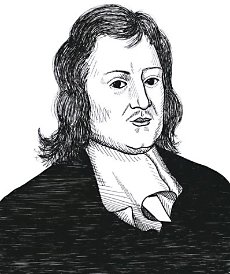 James Harrington
Harrington's Oceana argues that political power follows the distribution of property, and that England's Civil War was the inevitable result of a long-term shift in land ownership away from the monarchy and nobility. To secure a stable republic, he proposes an Agrarian Law capping estates, a bicameral legislature with a debating Senate and a deciding popular assembly, and the equal rotation of offices by ballot. Its central mechanism is the 'balance of property': get the distribution of land right, and good orders will make good men, not the reverse.
What is Harrington's 'balance of property' thesis, and how does it explain the English Civil War?
Harrington argues that the distribution of land determines the form of government: 'if one man has the whole, or two parts in three of the whole land or territory, the interest of one man is the predominant interest, and causes absolute monarchy' . Conversely, when land is widely distributed, the many hold power. He claims the English Civil War was not a contingent political failure but the inevitable result of a long-term transfer of land from the Crown and nobility to the gentry and yeomanry . The fall of the monarchy was simply the political superstructure catching up with an economic base that had already shifted.
How does Harrington's republic differ from the classical mixed constitution of Polybius?
Harrington adapts Polybius's balance of the one, the few, and the many, but anchors it in property rather than in institutions alone. His republic has a Senate that debates and proposes, a popular assembly that resolves and decides, and magistrates who execute — all rotating through the ballot . The agrarian law is what makes this balance possible by preventing the concentration of land that would destroy it. Where Polybius described Rome's balance as an achievement of institutional design, Harrington makes it a consequence of economic structure, a distinctly modern move that links political stability to social distribution.
Why does Harrington dedicate Oceana to Oliver Cromwell, and what does the dedication mean?
Harrington addresses Oceana to Cromwell with a calculated appeal to glory: he presents the Lord Protector with the choice of becoming a Lycurgus — a founder who gives his people laws and then divests himself of power — rather than a Caesar who seizes a crown . The dedication is not sycophantic but strategic: Harrington knows Cromwell is contemplating kingship and wants to persuade him that true greatness lies in founding a republic. Scholars debate whether Harrington was optimistic or ironic in this appeal, but the epigraph 'de te fabula narratur' makes clear that Cromwell is the primary intended reader.
What is the most common misconception about Oceana?
A common misconception treats Oceana as a democratic or levelling text because it advocates popular assemblies and rotation of office. In fact, Harrington explicitly assumes the supremacy of landowners: the 'people' he means are the gentry, merchants, and yeomanry, and he writes that they 'needed protection from the poor' . His republic is not egalitarian but balanced — it excludes the propertyless from full citizenship and relies on an agrarian law to preserve a broad but not equal distribution of land. The equality he prizes is equality among property-holders, not social equality.
How did Oceana influence later constitutional thought?
Oceana was a source of inspiration for the American constitutionalists and, in France, for Sieyès, whose constitution was partially adopted by Napoleon in 1799 . The idea that political institutions must rest on a stable distribution of property influenced eighteenth-century republican thought, particularly in the 'neo-Harringtonian' tradition that J.G.A. Pocock placed at the center of an Atlantic republican discourse . Harrington's insistence that 'good orders make good men' rather than the reverse also anticipated modern constitutional design theory, which prioritizes institutional incentives over the virtue of officeholders.
What is the relationship between Oceana and Hobbes's Leviathan?
Harrington and Hobbes are often treated as opposites — Hobbes the absolutist, Harrington the republican — but they shared a fundamental premise: both believed an absolute sovereign was necessary to maintain civil peace, and both saw the conventional political thinking of their time as inadequate to the crisis of the Civil War . Their disagreement was not over whether sovereignty should be absolute but over its institutional form. Hobbes rejected mixed government as a contradiction; Harrington argued that mixed government was the only way to ground absolute sovereignty securely. Oceana is, in this sense, a reply to Leviathan from within a shared framework.
Wealthy Psyche is an intellectual archive. We do not host, distribute, or sell book copies — physical or digital. We provide structured knowledge to help you think better, faster.