



The Ethnic Origins of Nations
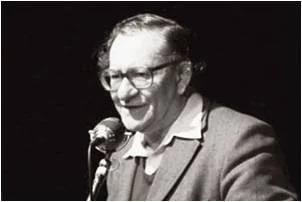 Anthony D. Smith
Anthony D. Smith's 1986 book is the foundational statement of ethno-symbolism, a position that rejects both primordialist claims that nations are immemorial and modernist claims that they are purely products of industrial capitalism. Smith argues that modern nations are genealogically linked to premodern ethnic communities—ethnies—through the myths, symbols, memories, and values they inherit and reconstruct. Nations are not invented from nothing; they are built by intelligentsias from older ethnic cores, which supply the cultural materials necessary to generate solidarity in a secular age. The book's central mechanism is this genealogy: ethnie precedes nation, and the modern nation is a reconstruction, not a creation ex nihilo.
Key Details
Related Books
View AllSimilar books from the same category, ranked by shared topics and reader engagement.



Key Insights — Read in 10 Minutes
What is the central claim of The Ethnic Origins of Nations, and what does it reject?
Smith argues that modern nations are not pure products of modernity but are genealogically connected to premodern ethnic communities he calls ethnies. He rejects the modernist position of Ernest Gellner and Benedict Anderson that nations are entirely modern constructions of industrial capitalism or print capitalism. He equally rejects radical primordialism, which treats nations as natural, immemorial entities. Smith's middle path holds that modern nations fuse premodern ethnic identities with modern civic elements, and that the myths, symbols, and memories of ethnic cores are indispensable for generating national solidarity in a secular era.
What specific concept did this book introduce, and where is it used today?
The book introduced the concept of the ethnie, a French term Smith preferred to 'ethnic group,' defined as a named human population with myths of common ancestry, shared historical memories, elements of common culture, a link with a homeland, and a sense of solidarity among at least some members. Smith distinguished two routes from ethnie to nation: 'lateral' ethnies, where a bureaucratic state incorporated outlying regions into a dominant culture (England, France), and 'vertical' ethnies, where subject communities mobilised through vernacular and religious institutions (Armenians, Greeks). The concept is used today in studies of Kurdish nationalism, Ukrainian identity formation, and other cases where premodern ethnic consciousness is contested.
How does Smith's ethno-symbolism differ from Gellner's and Anderson's modernist theories?
Smith accepts that nationalism is a modern phenomenon but insists that modernist theories cannot explain the emotional power of national attachments or why people are willing to die for nations. Gellner traces nationalism to industrialisation's demand for a culturally homogeneous workforce; Anderson traces it to print capitalism and the decline of religious certainties. Both treat premodern ethnic ties as irrelevant or dissolved by modernity. Smith counters that modern nations are constructed from pre-existing ethnic materials—myths, symbols, memories—and that without these cultural resources, nationalist mobilisation would lack the emotional resonance that makes it politically potent.
What are the two main routes from ethnie to nation that Smith identifies?
Smith distinguishes lateral and vertical ethnies. Lateral ethnies, found in Western Europe, were aristocratic and bureaucratic; the state itself created the nation through taxation, conscription, and administration, incorporating middle strata and outlying regions into a dominant culture. England, France, Spain, and Sweden followed this route, where nation-formation overlapped with administrative and economic revolutions. Vertical ethnies, found in Eastern Europe and the Middle East, were subject communities bound by organised religion, sacred scriptures, and clergy rather than by a state. Byzantines, Orthodox Russians, Copts, and Armenians followed this route, where vernacular mobilisation and religious institutions sustained ethnic identity under foreign rule.
How was The Ethnic Origins of Nations received by critics?
The book was widely praised as a major contribution. Walker Connor called it 'unquestionably an important contribution' and recommended it 'unhesitatingly to all students of nationalism.' Michael Levin wrote in Ethnic and Racial Studies that 'Smith's depth of learning is awe-inspiring, and this work deserves a prominent place wherever nationalism is discussed.' A reviewer in the Journal of American Ethnic History said Part I was 'in some respects the most original part of the book.' However, one Amazon reviewer noted that Smith's approach leaves 'untouched questions of the political,' and that the book does not fully address the political elements of ethnic and national identity formation.
How has the book's argument held up since 1986?
Ethno-symbolism has become one of the dominant paradigms in nationalism studies, with Smith cited across disciplines from history and sociology to political science. His argument that premodern ethnic ties matter has proven influential in explaining persistent ethnic conflicts that modernist theories predicted would fade. However, critics on the constructivist side, such as those discussing Hobsbawm's 'invented traditions,' argue that Smith overstates the continuity between premodern ethnies and modern nations, and that the historical evidence for durable ethnic cores is often thinner than his framework assumes. The book remains a touchstone for debates about how far back nationalist consciousness can be traced.
Show 1 more insights
What is the most common misconception about Smith's ethno-symbolism?
A frequent misreading treats ethno-symbolism as a form of primordialism that claims nations are ancient and unchanging. Smith explicitly rejected this. Ethno-symbolism is a modernist theory in the sense that it holds nations and nationalism to be modern phenomena. What Smith insists on is that these modern phenomena draw on premodern ethnic materials. The ethnie is not a nation; it is a pre-national community that may or may not develop into a nation. Smith's argument is about genealogy and cultural resources, not about the antiquity of the nation itself. This distinction is often lost in crude summaries that collapse ethno-symbolism into primordialism.
Wealthy Psyche is an intellectual archive. We do not host, distribute, or sell book copies — physical or digital. We provide structured knowledge to help you think better, faster.