


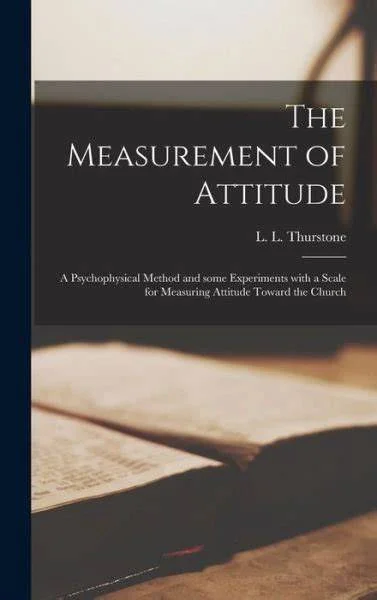
The Measurement of Attitude: A Psychophysical Method and Some Experiments with a Scale for Measuring Attitude Toward the Church
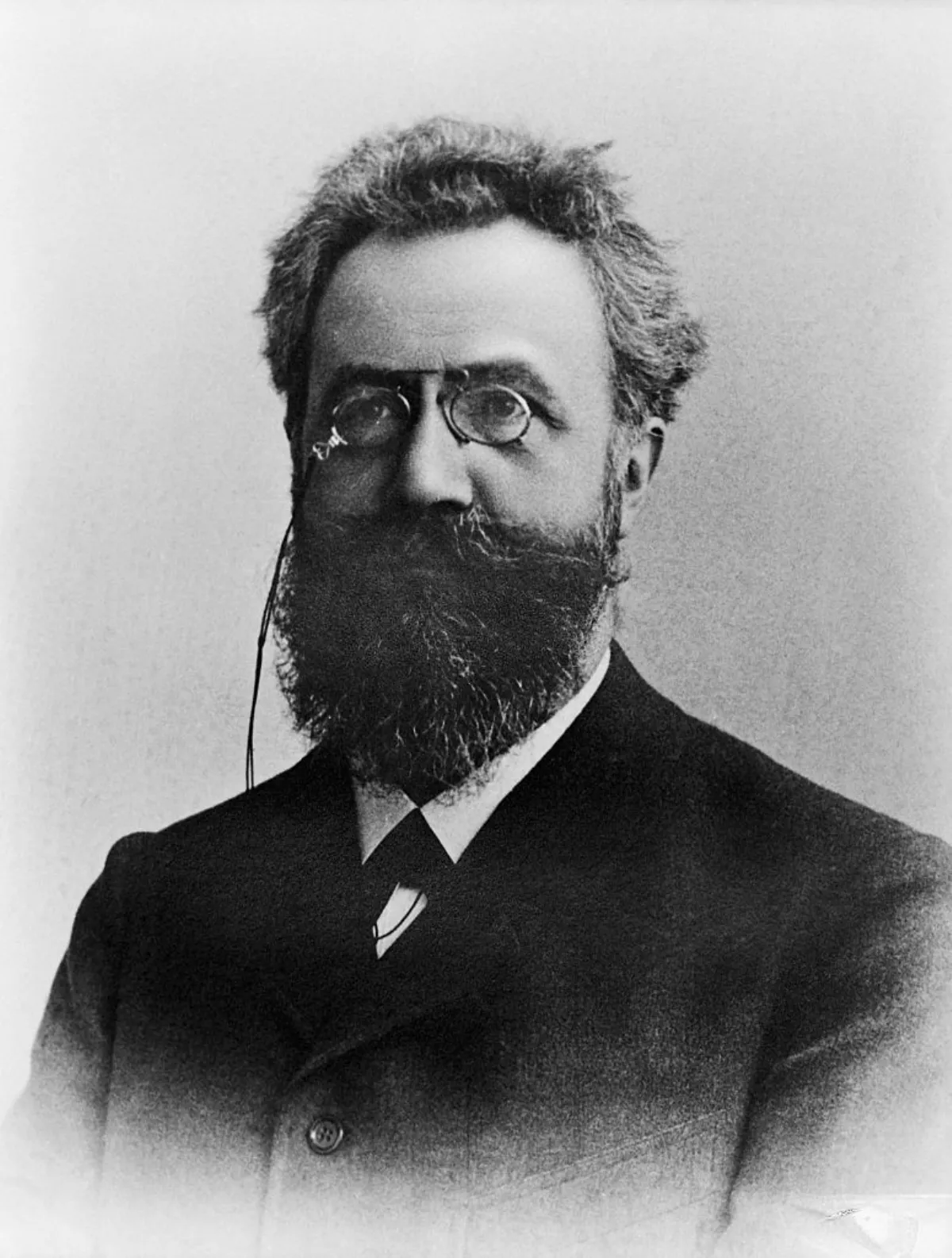 L.L. Thurstone
Thurstone and Chave's 1929 monograph applies psychophysical scaling to social psychology, introducing the method of equal-appearing intervals for measuring attitudes on an interval scale. The book's central mechanism is a panel of judges sorting statements into eleven categories of favorableness, from which each statement receives a scale value and an ambiguity index. The resulting instrument — demonstrated on attitude toward the church — allowed parametric statistics to be applied to subjective opinion for the first time. The work established Thurstone scaling as a foundational technique in attitude measurement.
Key Details
Related Books
View AllSimilar books from the same category, ranked by shared topics and reader engagement.



Key Insights — Read in 10 Minutes
What is the central claim of The Measurement of Attitude, and what does it reject?
The central claim is that attitudes can be measured with the same quantitative rigor applied to physical sensations, producing an interval scale rather than merely an ordinal ranking. Thurstone and Chave reject the assumption that subjective opinion is inherently resistant to precise measurement or that attitudes can only be classified nominally. By adapting the psychophysical method of equal-appearing intervals, they demonstrate that judges can reliably sort statements of opinion along a continuum of favorableness, and that the resulting scale values remain stable across different groups of judges. The book's experiments on attitude toward the church serve as the proof-of-concept for this general method.
What specific concept or framework did this book introduce, and where is it used today?
The book introduced Thurstone scaling, also known as the method of equal-appearing intervals, for constructing unidimensional attitude measurement instruments . The procedure involves generating a large set of opinion statements, having judges sort them into eleven piles representing degrees of favorableness, and computing scale values and ambiguity indices for each statement. Today, Thurstone scaling is recognized as a major step in the development of behaviorally anchored rating scales, mixed standard rating scales, and weighted checklists for measuring work performance . Though largely supplanted in popularity by Likert scaling, Rasch models, and semantic differential techniques, it remains a foundational technique in attitude measurement .
How does Thurstone scaling differ from Likert scaling, which replaced it in popularity?
Thurstone scaling requires a panel of judges to sort statements into categories before the scale is administered to respondents, a time-consuming and cumbersome procedure . Likert scaling, introduced in 1932, eliminates the judge panel entirely: respondents directly indicate their agreement with statements on a simple response format, and scores are summed. This made Likert's method far more practical for large-scale survey research. However, Thurstone scaling produces an interval scale suitable for parametric statistics, while Likert's summed scores were initially treated as ordinal . In practice, Likert scaling's simplicity and comparable reliability led to its dominance, though Thurstone's approach influenced later developments in item response theory and Rasch measurement.
What was the specific experimental procedure used to construct the attitude-toward-the-church scale?
Thurstone and Chave asked approximately 300 judges to sort a large pool of statements about the church into eleven piles, from most unfavorable to most favorable, without expressing their own opinions . The judges were instructed to place a neutral statement in the middle pile. For each statement, the researchers computed the median scale value and an ambiguity index based on the spread of judgments. Statements with low ambiguity and scale values distributed evenly across the continuum were selected for the final scale. In the measurement phase, respondents simply checked the statements with which they agreed, and their attitude score was the average scale value of endorsed items .
How has the book's method held up in light of subsequent psychometric research?
Thurstone's equal-appearing interval method has been substantially validated by later measurement theory. A Rasch analysis of Thurstone and Chave's original data found that their scale values correlated strongly with logit values derived from modern item response theory, indicating their judgments were largely consistent with contemporary measurement models . However, the method's practical limitations — particularly the labor-intensive judge-sorting stage — have limited its continued use. The book's deeper contribution was demonstrating that subjective attitudes could be placed on an interval scale, a principle now taken for granted in survey research and scale construction. Modern reviews credit Thurstone scaling as a major step in developing behaviorally anchored rating scales and weighted checklists .
Why did Thurstone choose attitude toward the church as the demonstration domain?
The church was a socially salient and sufficiently controversial institution in 1929 America to provide a rich pool of opinion statements spanning the full range from fervent support to outright hostility. The topic also allowed Thurstone and Chave to test whether the method could distinguish degrees of attitude intensity that simple pro/con classifications would collapse. The choice mirrored Thurstone's broader strategy of using socially meaningful domains to validate psychophysical methods in social psychology. The scale they produced — forty-five statements with assigned scale values — became a model for subsequent attitude scales on topics ranging from war to birth control, and the book's appended scale and instructions for its use made the method directly replicable .
Wealthy Psyche is an intellectual archive. We do not host, distribute, or sell book copies — physical or digital. We provide structured knowledge to help you think better, faster.