



The Psychology of Careers: An Introduction to Vocational Development
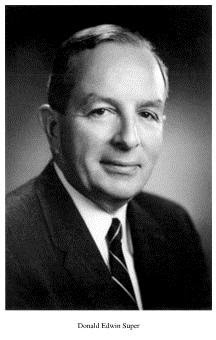 Donald Edwin Super
Super's 1957 book argues that occupational choice is not a single event but a lifelong developmental process unfolding through five life stages—growth, exploration, establishment, maintenance, and decline. Its central mechanism is the implementation of the self-concept: people choose and adjust to work in ways that allow them to express their developing self-images. Rejecting the trait-matching view of vocational guidance, Super synthesizes psychological, sociological, and economic research into a unified framework, introducing vocational maturity as the place reached on the developmental continuum from exploration to decline.
Key Details
Related Books
View AllSimilar books from the same category, ranked by shared topics and reader engagement.



Key Insights — Read in 10 Minutes
What is the central claim of The Psychology of Careers, and what does it reject?
The book argues that occupational choice is not an event occurring at a single moment but a phase of a process that continues throughout life, including entry into work, adaptation, maturity, and gradual decline . It rejects the prevailing trait-matching model in which counselors assessed aptitudes and interests to predict job fit. Super's alternative is developmental: vocational behavior unfolds through predictable life stages, and the individual's task is to implement their self-concept in occupational roles . A 1958 French review summarized the core insight: professional choice is only one phase of a process that includes entry, adaptation, stabilization, and disengagement .
What are the five career stages, and where did Super get them?
The stages are growth, exploration, establishment, maintenance, and decline (or disengagement) . Super adopted them from the life-span developmental psychologist Charlotte Bühler, who derived five life stages from analyzing 300 published biographies and 300 life histories recounted by elderly individuals . Bühler's analysis produced a normative story of the life course, which Super appropriated as career stages. The stages function as a linguistic schema for organizing work lives, not biological predictions—they tell individuals what society expects at each phase and provide meanings for interpreting personal experience . Super later acknowledged that people recycle through stages across the lifespan .
What is vocational maturity, and how does it differ from vocational success?
Vocational maturity is the place reached by an individual on the developmental continuum from exploration to decline . Solomon Barkin's review explained that Super devised a vocational maturity index that replaces the concept of 'success' with an analysis of the client's subjective attitudes and self-conceptions. A vocational maturity quotient, conceptually similar to an IQ, indicates development relative to age . The shift matters because it reframes counseling from predicting occupational achievement to assessing where a person stands in the developmental process. Savickas later extended this concept, proposing career adaptability as a successor to vocational maturity .
How did the book treat the family's role in vocational development?
Super devoted a chapter to the relationship between family and vocational development, drawing on empirical studies, case studies, and Anne Roe's work . He identified four family functions: providing opportunities for children to identify with or reject adult role models; creating needs and shaping values; supplying experiences that build information and skills relevant to future occupations; and providing or withholding resources like equipment, money, and interpersonal networks that condition access to careers . The family thus influences vocational preferences, entry into training, success, and satisfaction. This treatment reflected Super's broader insistence that vocational development is embedded in socialization.
What specific methodological innovation did Super introduce for occupational classification?
Barkin's review identified a new method for occupational classification going far beyond current thinking: Super combined level of occupation, vocational interest plus the personality requirements of the job, and type of industry into a logical scheme for categorizing any specific job . Although presented as a research tool, it was designed to enable counselors to perceive variables within any given occupation. The classification addressed a persistent problem in vocational psychology: the absence of a framework that could organize the profusion of data fractured into economic, psychological, sociological, and anthropological pigeonholes .
How did reviewers assess the book's contribution and its limitations?
Reviews acknowledged the book's scope while noting organizational problems. Kirkus Reviews noted Super incorporated conceptual and experimental developments from the last fifteen years, treating the job as a measure of social prestige, a means of livelihood, and an activity that may or may not fulfill individual needs . Barkin praised the integration of discrete research data but found readers must search diligently for the frame of reference, with summarizing sections badly needed . Darley's review described it as a more sophisticated version of Super's 1942 text, with earlier themes reappearing in different vocabulary but still largely derivative and descriptive .
Show 2 more insights
How does this book relate to Super's later life-span, life-space theory?
The Psychology of Careers established the developmental framework that Super refined throughout his career. The 1957 book presented the five life stages and vocational maturity. By 1980, Super had added the life-space dimension, recognizing that people play multiple roles—child, student, worker, spouse, parent, homemaker, citizen, leisurite, pensioner—and that careers are shaped by the interaction of these roles across the lifespan . The later theory also incorporated the salience of life roles and the theaters in which they are played. Savickas's memorial noted that Super prompted vocational psychologists to expand the study of how people choose occupations to include how individuals develop careers .
What criticisms did the book receive regarding the relationship between personality and vocational outcomes?
A sociological review noted Super's conclusion that personality traits seem to have no clear-cut and practically significant differential relationship to vocational preference, entry, success, or satisfaction . The reviewer called this a 'bold (but welcome) suggestion' that further sociological studies might help remove ignorance about such matters. The same review observed that Super's framework was heavily sociological in orientation, employing concepts like social self, status, role, role expectations, and role aspirations, with a strictly psychological orientation subordinated to the examination of social factors . This prompted the suggestion that a more accurate title would have been 'The Social Psychology of Careers.'
Wealthy Psyche is an intellectual archive. We do not host, distribute, or sell book copies — physical or digital. We provide structured knowledge to help you think better, faster.