


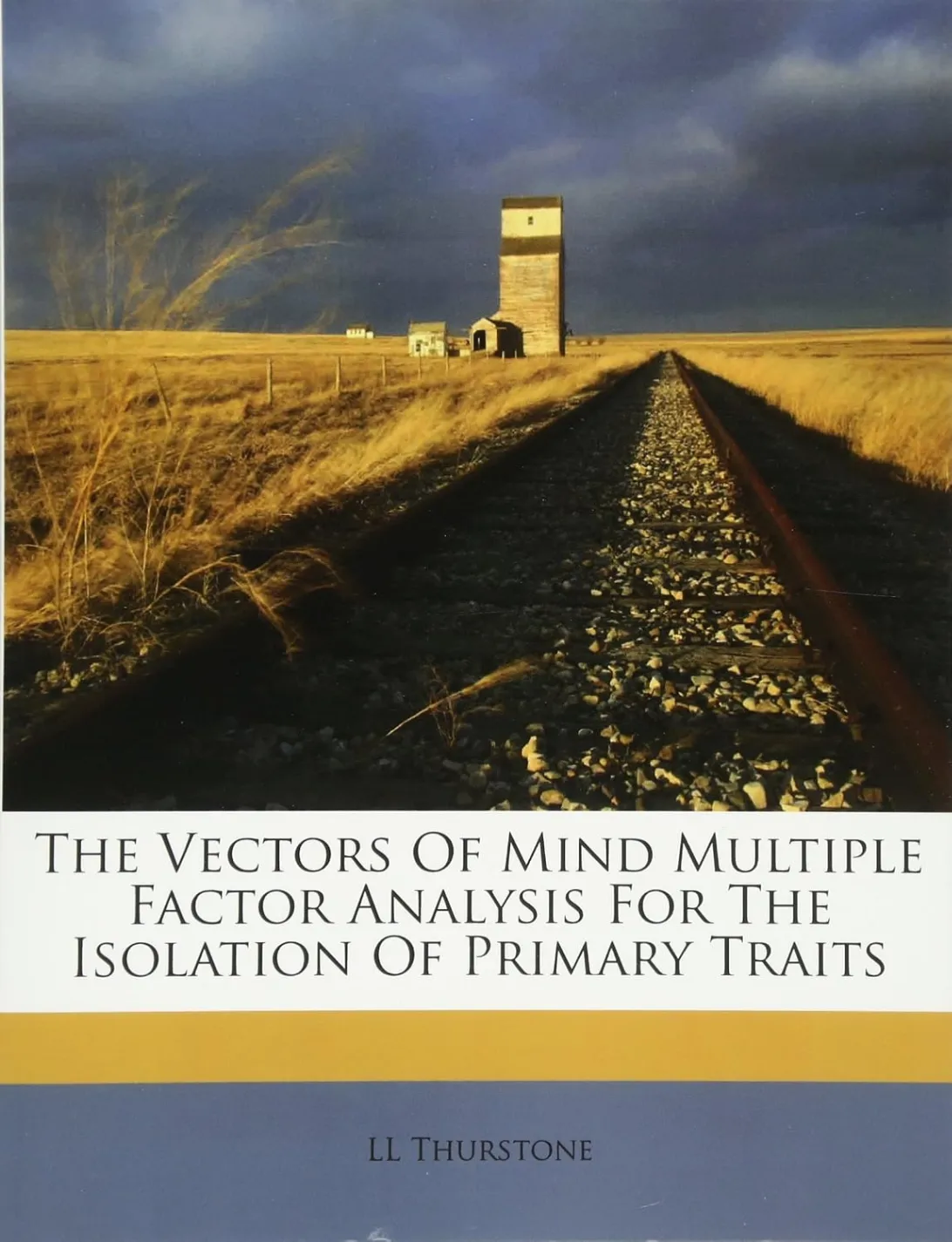
The Vectors of Mind: Multiple-Factor Analysis for the Isolation of Primary Traits
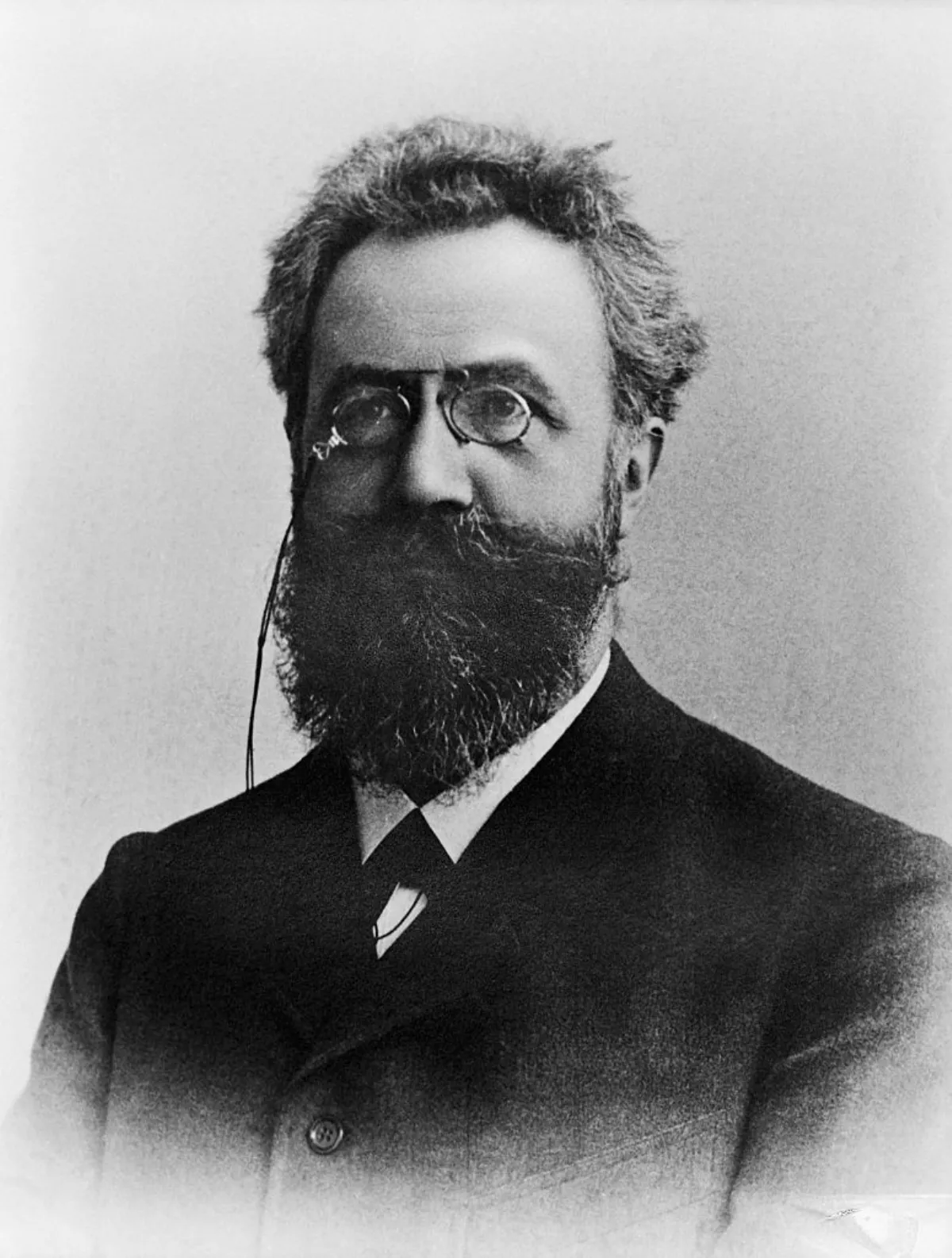 L.L. Thurstone
Thurstone's 1935 treatise introduces multiple-factor analysis as an alternative to Spearman's single-factor theory, arguing that mental traits are multidimensional and cannot be reduced to one general factor. The book's central mechanism is the isolation of 'primary traits' through matrix algebra and simple structure rotation — mathematical techniques that reveal several independent group factors rather than one overarching 'g'. Thurstone applies the method to personality adjectives, psychotic symptoms, vocational interests, and data previously used to support Spearman's theory, consistently finding multiple common factors where the tetrad difference method found only one.
Key Details
Related Books
View AllSimilar books from the same category, ranked by shared topics and reader engagement.



Key Insights — Read in 10 Minutes
What is the central thesis of The Vectors of Mind, and what does it reject?
Thurstone's central thesis is that mental abilities are multidimensional and cannot be adequately described by a single general factor. He rejects Spearman's two-factor theory on the grounds that the tetrad difference criterion merely shows whether a set of intercorrelations can be described by one common factor — it cannot detect group factors when they exist . Thurstone's multiple-factor method, by contrast, recognizes the possibility of group factors and attempts to determine the smallest number needed to account for differentiable traits . He applied this method to data Spearman's students had used to support the single-factor hypothesis, and both datasets reduced to two common factors rather than one .
What specific methodological innovation did the book introduce, and where is it used today?
The book introduced the centroid method for extracting factors from a correlation matrix and the concept of simple structure for rotating those factors to psychological interpretability. Thurstone argued that simple structure — minimizing the number of loadings per variable while maximizing variance across loadings per factor — provides a criterion for identifying primary traits . The future development of factor theory, Thurstone wrote, would likely reduce factor analysis to simpler computing methods, and he regarded factor methods as an intermediate stage in the development of science, most useful at the borderline where fundamental laws are not yet known . These methods became foundational for psychometrics.
How did Henry Garrett's 1936 review in Psychological Bulletin assess the book?
Garrett's review described The Vectors of Mind as 'an important addition to the literature on mental measurement,' noting that it summarized Thurstone's multiple-factor methods to date and presented much new material not hitherto published . Garrett outlined the book's structure: a mathematical introduction to matrix theory, chapters on the factor problem and fundamental factor theorem, the centroid and principal axes methods, and the identification of primary traits . However, Garrett observed that the book's contribution was 'almost entirely methodological; and its usefulness to the psychology of mental organization is still a promise for the future' . This assessment acknowledged the mathematical rigor while noting the substantive applications remained undeveloped.
What was the relationship between The Vectors of Mind and Thurstone's later Primary Mental Abilities?
The Vectors of Mind (1935) provided the methodological foundation, while Primary Mental Abilities (1938) delivered the substantive findings. In the 1935 book's preface, Thurstone announced that a factor analysis of sixty psychological tests taken by 240 college students was in progress and would appear in monograph form . That study became Primary Mental Abilities, which isolated seven primary abilities including verbal comprehension, word fluency, number, space, memory, perceptual speed, and reasoning . Britannica describes The Vectors of Mind as Thurstone's 'principal work' that presented his method, with the 1938 test applying it to measure components of intelligence .
How did Thurstone's approach differ fundamentally from Spearman's in its implications for education?
Stephen Jay Gould's analysis emphasizes that the Spearman-Thurstone dispute was not merely technical but carried profound educational consequences. With Spearman's 'g,' each child can be ranked on a single scale of innate intelligence, and general ability can be measured early to sort children according to intellectual promise — as in the British 11+ examination . With Thurstone's primary mental abilities, there is no general ability to measure: some children excel at some things, others in different and independent qualities of mind . Thurstone wrote that 'the essence of each child becomes his individuality,' making unilinear ranking of pupils inappropriate even within his system of a few primary abilities .
Why did Thurstone apply multiple-factor analysis to Spearman's own data, and what was the result?
Thurstone applied his method to two sets of data that Spearman's students had used to support the single-factor hypothesis, a direct challenge to the empirical basis of two-factor theory . The result was that both datasets reduced to two common factors rather than one, demonstrating that the tetrad difference criterion had failed to detect group factors because Spearman's test selection procedures required tests to have only one factor in common . This methodological critique was central to Thurstone's argument: the tetrad equation, properly understood, is a special case of multiple-factor analysis, not a general proof of unitary intelligence. The demonstration that Spearman's own data contained multiple factors was a significant rhetorical victory.
Wealthy Psyche is an intellectual archive. We do not host, distribute, or sell book copies — physical or digital. We provide structured knowledge to help you think better, faster.