


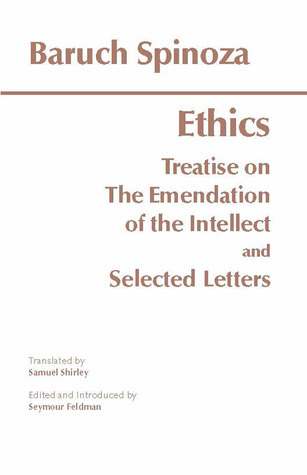
Treatise on the Emendation of the Intellect
 Baruch Spinoza
Spinoza's Treatise on the Emendation of the Intellect is an unfinished methodological work that begins with an autobiographical account of the philosopher's decision to abandon ordinary goods—wealth, honor, and sensual pleasure—in pursuit of a 'true and communicable good' that can be shared with others. The central argument is that the mind possesses an innate power to form true ideas, and the method consists in reflexive knowledge of this power: by starting from any given true idea, the intellect can progressively order and unite its thoughts, reproducing the formal structure of Nature itself. The work breaks off before completing the synthetic exposition of this method.
Key Details
Key Insights — Read in 10 Minutes
What is the central claim of the Treatise on the Emendation of the Intellect, and what does it reject?
The central claim is that the mind's innate power to form true ideas provides the only reliable foundation for knowledge, and that the method of emendation consists in reflexive awareness of this power. Spinoza rejects the ordinary goods of wealth, honor, and sensual pleasure as false ends that engross the mind and lead to its enervation. The work begins from a personal diagnosis: these goods 'contribute nothing to the preservation of our being but even hinder it.' The remedy is not self-denial but redirecting desire toward the 'supreme good'—the knowledge of the union the mind has with the whole of Nature.
What specific framework does the Treatise introduce, and how does it relate to Spinoza's later work?
The Treatise introduces the framework of the 'emendation' of the intellect: a method for purifying thought of distractions and false ideas so that the mind can form clear and distinct ideas. It distinguishes kinds of cognition—hearsay, random experience, and true knowledge—and argues that only the last provides an adequate foundation. This framework directly prefigures the Ethics, which applies the method in geometrical form. Scholars argue that the Ethics' definitions, axioms, and propositions are 'condensations of methodological considerations' first worked out in the Treatise.
Why is the Treatise unfinished, and does this affect its philosophical value?
Spinoza worked on the Treatise in the early 1660s but abandoned it, likely because he recognized that the method's full exposition required the metaphysical system that would become the Ethics. The work was published posthumously in 1677 as part of the Opera posthuma, and its final sections break off just as Spinoza was about to move from analysis to synthesis. The incompleteness does not diminish its importance: as one of the few works where Spinoza reflects explicitly on philosophical method, it remains indispensable for understanding the aims and structure of the Ethics.
How does the Treatise differ from Descartes's Discourse on Method?
Both works begin with an autobiographical narrative of intellectual conversion and both were left unfinished, but their methods diverge sharply. Descartes's method is designed to establish certainty by doubting everything and rebuilding knowledge from a foundation of clear and distinct perceptions. Spinoza does not begin with doubt but with an innate power of the mind to form true ideas; the method is not a technique for avoiding error but a reflexive knowledge of how the intellect already operates when it thinks truly. Where Descartes seeks a personal foundation for science, Spinoza seeks a 'communicable good' that can be shared.
Is the Treatise on the Emendation of the Intellect relevant to politics or international relations?
The Treatise is primarily epistemological and ethical, not political. However, its central concept of a 'communicable good'—a good that can be shared without diminishment—has political implications. Balibar notes that this phrase, introduced in the Treatise, points toward Spinoza's later political thought about what can be held in common. The work's analysis of superstition, fear, and hope as obstacles to clear thinking also connects to the Theological-Political Treatise's argument that freeing the mind from superstitious fictions is a condition of both piety and peace. The direct bearing on international relations is indirect but present in Spinoza's broader account of reason and common life.
Wealthy Psyche is an intellectual archive. We do not host, distribute, or sell book copies — physical or digital. We provide structured knowledge to help you think better, faster.