


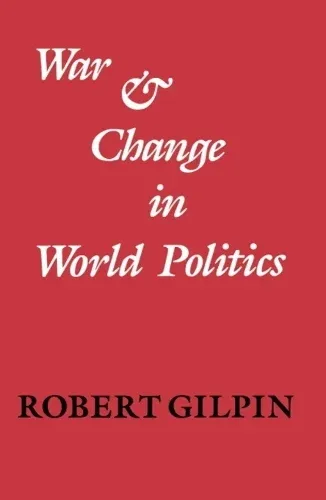
War and Change in World Politics
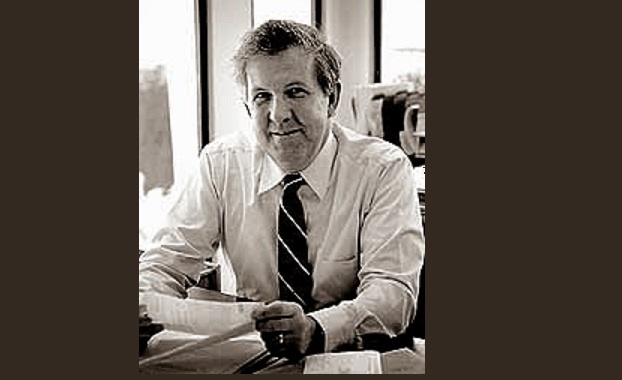 Robert Gilpin
Gilpin's central argument is that the fundamental nature of international relations has not changed over millennia, and that change in world politics is driven by the differential growth of power among states. A shift in the balance of power—economic or military—weakens the existing system because rising states see increasing benefits and decreasing costs in challenging it. Actors seek to alter the system through territorial, political, or economic expansion until the marginal costs of further change exceed the marginal benefits. The result is a cyclical pattern of hegemonic war and the emergence of a new dominant power that establishes a new international order reflecting its interests.
Key Details
Related Books
View AllSimilar books from the same category, ranked by shared topics and reader engagement.



Key Insights — Read in 10 Minutes
What is the central claim of War and Change in World Politics, and what does it reject?
Gilpin argues that international political change is driven by the differential growth of power among states, and that the fundamental nature of international relations has not changed over millennia. He rejects static theories that treat the international system as a stable equilibrium. His framework holds that rising powers will seek to alter the system when they perceive that the benefits of doing so exceed the costs, leading to hegemonic war and the establishment of a new order reflecting the victor's interests. This is a dynamic theory of change, not a static theory of continuity.
What specific concept or framework did Gilpin introduce, and where is it used today?
Gilpin introduced a five-stage model of hegemonic war and international change. The stages are: (1) a stable equilibrium when no state benefits from changing the system; (2) a state attempts change when expected net gain is positive; (3) expansion continues until marginal costs equal or exceed marginal benefits; (4) rising costs of maintaining the status quo become unsustainable; (5) hegemonic war results, establishing a new equilibrium reflecting the new distribution of power. This framework is used today in debates about US decline, China's rise, and hegemonic stability theory.
How does Gilpin's theory differ from Robert Keohane's liberal institutionalism?
Gilpin, a self-described 'soft realist,' argued that state power and security interests remain the key determinants of international economic affairs, pushing back against liberal institutionalists like Keohane and Joseph Nye who emphasized the declining importance of state power amid complex interdependence. Where Keohane focused on how institutions can facilitate cooperation even without a hegemon, Gilpin contended that non-state actors remain fundamentally dependent on what states do, and that the distribution of power shapes the rules of the international system. Gilpin's framework is rooted in realism; Keohane's in liberal institutionalism.
How has Gilpin's argument held up since its publication in 1981?
The book anticipated later influential arguments like Tilly's on war and state-making and Kennedy's on imperial overstretch. It became a landmark in the neo-neo synthesis between neo-realism and neo-liberalism. However, some scholars argue it is a late Cold War book centered on US decline and what might be done to avert it. Barry Buzan noted that Gilpin accepts Waltz's definition of structure in terms of power distribution, which limits his analysis to the rise and decline of hegemonic powers rather than deeper transformations of the system itself. The question of US decline and hegemonic transition remains on the agenda, though in a different context.
What is the common misconception about War and Change in World Politics?
A common misreading is that Gilpin predicts inevitable hegemonic war whenever power transitions occur. His argument is more conditional: a rising power will challenge the existing order only when it perceives that the expected benefits of changing the system exceed the expected costs. If the costs are prohibitive, or if the rising power can achieve its goals within the existing framework, war may be avoided. The theory identifies conditions under which hegemonic war becomes likely, not a deterministic law that war must always occur.
Wealthy Psyche is an intellectual archive. We do not host, distribute, or sell book copies — physical or digital. We provide structured knowledge to help you think better, faster.