

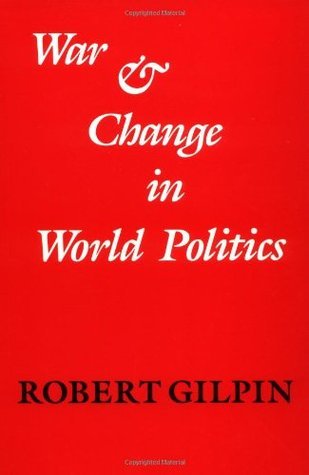
War and Change in World Politics
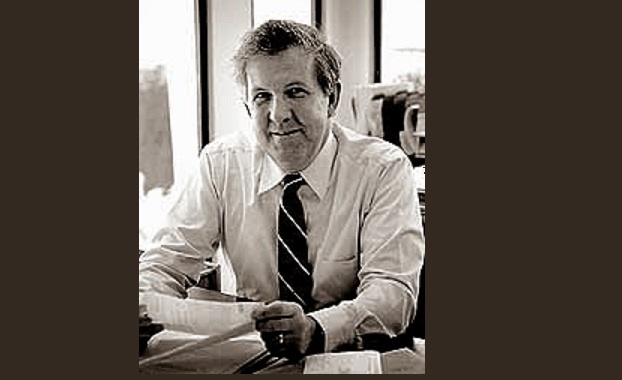 Robert Gilpin
Gilpin argues that international systems transform when the differential growth of power among states erodes the existing order. A rising state, seeing the increasing benefits and decreasing costs of change, seeks to alter the system through territorial, political, or economic expansion until marginal costs exceed marginal benefits. The result is a new equilibrium, often established through hegemonic war. This rational-choice framework, drawing on microeconomic theory and historical sociology, explains why no hegemonic power can lock in a favorable position forever.
What is the central claim of War and Change in World Politics, and what does it reject?
The central claim is that international systems change when differential growth of power among states creates a disequilibrium between the existing order and the underlying distribution of capabilities. Gilpin rejects static balance-of-power theories that treat order as self-sustaining. Instead, he argues that rising powers, acting on rational cost-benefit calculations, will seek to alter the system when expected benefits exceed expected costs, often through hegemonic war.
What specific concept or framework did Gilpin introduce, and where is it used today?
Gilpin introduced a rational-choice framework for hegemonic war and systemic change, built on the concept of differential growth of power. He combines microeconomic assumptions about state behavior with historical sociology to explain cycles of hegemony, equilibrium, decline, and war. This framework is widely used in international political economy and security studies to analyze power transitions, hegemonic stability, and the rise and decline of leading states.
How does Gilpin's theory differ from Kenneth Waltz's neorealism?
Waltz's neorealism explains continuity through anarchy and balance-of-power dynamics, treating system structure as static. Gilpin, by contrast, builds a dynamic theory of change. He argues that differential growth of power disrupts equilibria and that states rationally pursue revision when benefits outweigh costs. Where Waltz sees balancing, Gilpin sees hegemonic war as a mechanism of systemic transformation. The two approaches offer competing visions of order, stability, and change in international politics.
How has War and Change in World Politics held up since its publication in 1981?
The book remains a foundational text in political economy, but its predictive record is debated. Gilpin's expectation of hegemonic decline and systemic war did not materialize in the form he anticipated, particularly regarding Japan's rise. Critics argue that his materialist focus underestimates ideational and institutional factors. Nonetheless, his framework continues to inform analyses of power transitions, especially in discussions of China's rise and U.S. hegemony.
What is a common misconception about Gilpin's argument?
A common misreading treats Gilpin as a deterministic theorist who predicts inevitable hegemonic war. In fact, he presents a conditional relationship: change occurs when differential growth creates disequilibrium and rising powers calculate that revision is profitable. War is one possible outcome, not an automatic one. Gilpin also emphasizes that hegemons can adapt, and that peaceful adjustment is possible when costs of war are perceived as too high.
Why is War and Change in World Politics considered a Political Economy text?
Gilpin integrates economic theory—especially rational choice and marginal analysis—into the study of international relations. He treats states as rational actors weighing costs and benefits of maintaining or changing the system. His focus on differential growth, technological diffusion, and the economic foundations of military power bridges political economy and security studies, making the book a key text in the political economy of international change.
Wealthy Psyche is an intellectual archive. We do not host, distribute, or sell book copies — physical or digital. We provide structured knowledge to help you think better, faster.