


Alexander Wendt
Alexander Wendt is the leading figure of social constructivism in international relations, fundamentally challenging the materialist and rationalist assumptions of neorealism. His pivotal 1992 article, *Anarchy Is What States Make of It*, argued that the international system's structure of anarchy does not dictate self-help behavior; rather, the meaning of anarchy and the identities and interests of states are socially constructed through interaction[reference:0][reference:1]. This argument culminated in his 1999 book *Social Theory of International Politics*, which provides a cultural theory of international politics and is considered the definitive constructivist text[reference:2][reference:3]. A professor at Ohio State University, Wendt's later work, including *Quantum Mind and Social Science* (2015), pushes into the philosophy of social science by proposing a quantum basis for consciousness[reference:4][reference:5].
.webp?alt=media&token=c5f7412e-4626-4155-8f8e-0f7a35b8c766)


✦What does 'anarchy is what states make of it' mean?
This is the central claim of Wendt's constructivism[reference:6]. Neorealists like Kenneth Waltz treat anarchy—the absence of a world government—as an immutable structure that forces states to pursue power and security in a self-help system. Wendt argued that anarchy has no inherent logic; its meaning depends on the shared ideas, norms, and identities that states develop through interaction[reference:7][reference:8]. If states see each other as enemies, anarchy produces conflict; if they see each other as friends, it produces cooperation. The structure is socially constructed, not given.
✦How does Wendt's constructivism differ from realism and liberalism?
Realism and liberalism are materialist and individualist theories—they explain state behavior primarily through power distributions (realism) or economic interests and institutions (liberalism). Wendt accepts that these matter but argues they are insufficient: states do not have pre-given interests; their identities and interests are shaped by social structures of shared knowledge and norms[reference:9]. Where realists see anarchy as a permanent condition of conflict, Wendt sees it as a social structure that can evolve toward cooperation and even a world state[reference:10].
✦What is Wendt's most influential book?
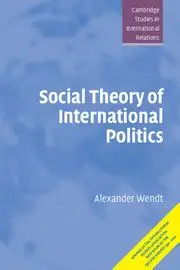
*Social Theory of International Politics* (Cambridge University Press, 1999) is his magnum opus[reference:11]. It systematically develops a constructivist theory of the international system, drawing on philosophy and social theory to present an idealist and structuralist worldview[reference:12]. The book won the International Studies Association's 'Best Book of the Decade' award in 2006[reference:13] and has been translated into more than ten languages[reference:14]. It remains the foundational text for constructivist IR theory.
✦Why has Wendt's later work turned to quantum theory?
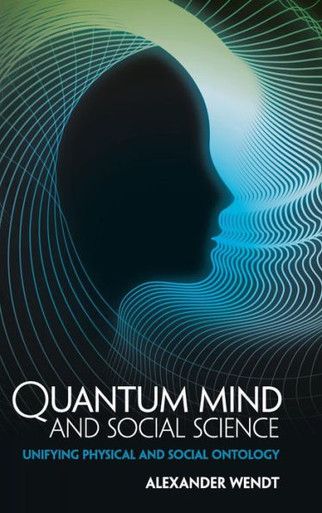
In *Quantum Mind and Social Science* (2015), Wendt argues that the social sciences have been built on a classical, materialist ontology that cannot adequately explain consciousness or agency[reference:15]. He proposes that consciousness is a macroscopic quantum mechanical phenomenon[reference:16]. This has profound implications: if the human mind is quantum, then social phenomena are not fully determined by classical cause-and-effect, opening space for genuine free will and a holistic, 'non-local' vision of social life[reference:17]. He sees this as a potential revolution for social science akin to quantum theory's impact on physics[reference:18].
✦What is a common misconception about Wendt's constructivism?
A frequent misunderstanding is that constructivism is an idealist or utopian theory that denies the reality of power and material forces. Wendt explicitly rejects this: he is a 'moderate' or 'conventional' constructivist who accepts that power and interests are real[reference:19]. His claim is not that ideas are all that matter, but that the very meaning and operation of power and interests are constituted by social structures and shared understandings. You cannot understand what counts as 'power' or 'security' without understanding the intersubjective beliefs that give them content.
✦What honors has Wendt received in his career?
Wendt has received numerous top honors. In a 2013 TRIP survey of 1,400 international relations faculty, he was named the most influential scholar in the field over the previous 20 years[reference:20][reference:21]. In 2023, he and Martha Finnemore were jointly awarded the Johan Skytte Prize in Political Science, one of the discipline's most prestigious awards[reference:22]. In 2025, he was elected as a member of the American Academy of Arts and Sciences[reference:23].
✦What is Wendt working on now?
Beyond quantum theory, Wendt is currently writing a book on Unidentified Anomalous Phenomena (UAP, formerly UFOs) and human security, prompted by the 2021 Pentagon Report confirming that UAP are real and pose a potential national security threat[reference:24]. This reflects his longstanding interest in the ontological and epistemological boundaries of social science—how we know what we know, and what counts as a legitimate object of study[reference:25][reference:26].