


John J. Mearsheimer
John Mearsheimer is the leading proponent of offensive realism, the theory that the anarchic structure of the international system compels great powers to maximize their relative power in a relentless struggle for hegemony. In his seminal 2001 book *The Tragedy of Great Power Politics*, he argued that security competition is inescapable: states can never be certain of others' intentions, so rational survival dictates aggression when conditions permit. This sharply contrasts with Kenneth Waltz's defensive realism, which holds that states primarily seek security through balancing. A West Point graduate and former U.S. Air Force officer, Mearsheimer has been a professor at the University of Chicago since 1982.




✦What is offensive realism and how does it differ from Waltz's defensive realism?
Both are structural realist theories that start from anarchy, but they reach opposite conclusions about state behavior. Kenneth Waltz's defensive realism holds that anarchy incentivizes states to seek security through balancing, making them status-quo oriented. Mearsheimer's offensive realism argues that because states can never know others' intentions, the pursuit of security logically compels them to become power maximizers. The rational response to anarchy is aggression and hegemony-seeking whenever the opportunity arises—not restraint[reference:0].
✦What is the core argument of *The Tragedy of Great Power Politics*?
Published in 2001, the book argues that great power competition is a permanent and inescapable feature of international life[reference:1]. Mearsheimer builds his case on five assumptions: anarchy, inherent offensive military capability, uncertainty about intentions, survival as the primary goal, and strategic rationality[reference:2]. These conditions create powerful incentives for states to behave aggressively, making the pursuit of regional hegemony the only rational path to guaranteed security[reference:3]. The book won the Joseph Lepgold Book Prize[reference:4].
✦Why did Mearsheimer and Stephen Walt's *The Israel Lobby* generate such controversy?
In their 2007 book, Mearsheimer and Walt argued that U.S. Middle East policy cannot be explained solely by strategic or moral considerations; instead, they contended that the Israel lobby—a loose coalition of individuals and organizations— exerts disproportionate influence over U.S. foreign policy, often against American national interests[reference:5]. The book became a *New York Times* bestseller and was translated into 26 languages[reference:6], but drew fierce criticism from those who saw it as oversimplified or biased.
✦What does Mearsheimer argue in *The Great Delusion*?
In his 2018 book, Mearsheimer critiques liberal internationalism—the belief that spreading democracy, human rights, and free markets can create a peaceful world order[reference:7]. He argues that this is a dangerous delusion: great powers will always prioritize their own security over liberal values, and attempts to impose liberalism abroad inevitably lead to costly failures like the Iraq War. The book received the 2019 Best Book of the Year Award from Russia's Valdai Discussion Conference[reference:8].
✦What is a common misconception about Mearsheimer's realism?
Many assume that offensive realism is a prescriptive theory—that Mearsheimer *advocates* for aggression. In fact, he describes his theory as an explanation of how the world works, not a moral endorsement. He has been highly critical of U.S. interventionism, including the Iraq War[reference:9], and advocates restraint. His position is descriptive: great powers *will* pursue hegemony, not that they *should*. The tragedy is precisely that even well-intentioned states are driven into competition by structural forces beyond their control.
✦What is Mearsheimer's view on the Ukraine war and NATO expansion?
Mearsheimer has consistently argued that NATO expansion into Eastern Europe was a provocative act that Russia would inevitably view as a threat to its core security interests[reference:10]. He contends that the West's failure to appreciate realist dynamics—particularly Russia's legitimate security concerns—made the Ukraine conflict all but inevitable. This position has made him a controversial figure, with critics accusing him of excusing Russian aggression, while supporters credit him for accurately predicting the consequences of NATO enlargement.
✦How does Mearsheimer's military background shape his scholarship?
Mearsheimer graduated from West Point in 1970 and served five years as an officer in the U.S. Air Force, rising to captain[reference:11][reference:12]. This practical experience with military strategy and the realities of power gives his scholarship a grounded, unsentimental quality. He has noted that his military training made him skeptical of liberal idealism and inclined toward a hard-headed assessment of power politics—a perspective that directly informs his realist theory of international relations[reference:13].
✦What honors has Mearsheimer received in his career?
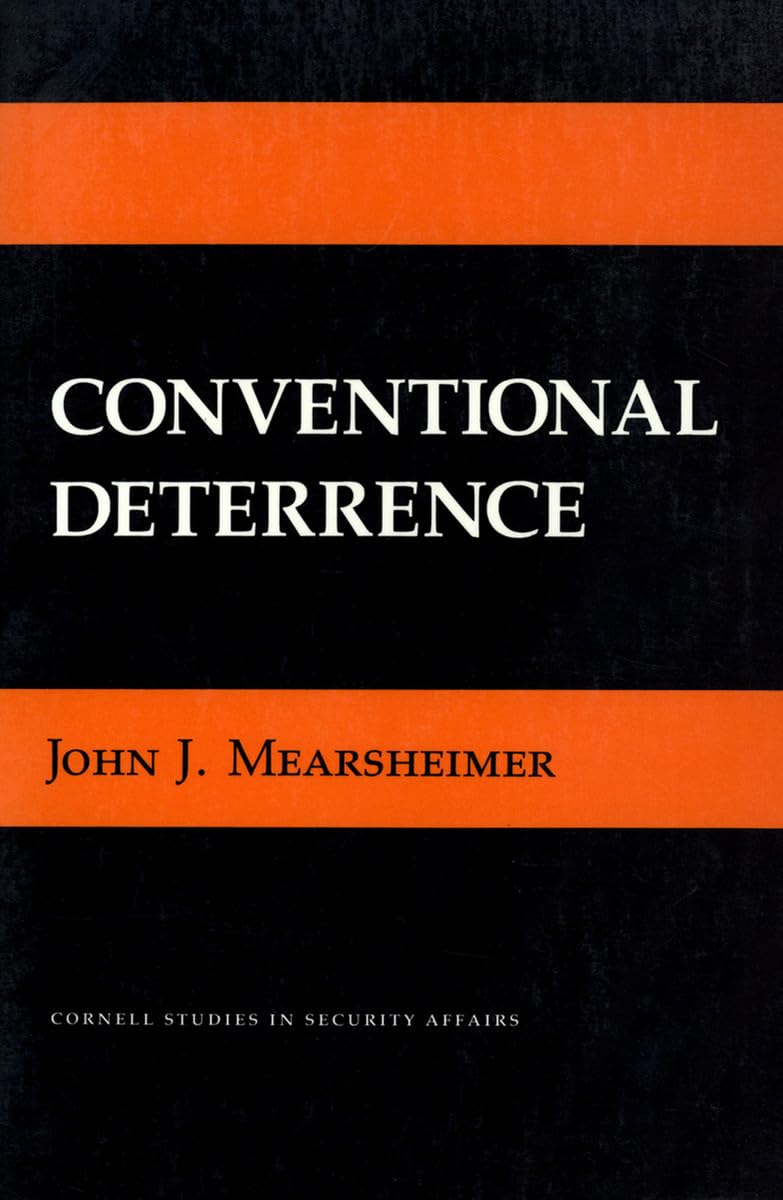
Mearsheimer was elected to the American Academy of Arts and Sciences in 2003[reference:14]. In 2020, he received the James Madison Award from the American Political Science Association, a triennial prize given to a political scientist who has made a distinguished scholarly contribution to the field[reference:15]. He has also received honorary doctorates from universities in China, Greece, and Romania[reference:16]. His book *Conventional Deterrence* won the Edgar S. Furniss Book Award[reference:17], and *The Tragedy of Great Power Politics* won the Joseph Lepgold Book Prize[reference:18].