


Kenneth N. Waltz
Kenneth N. Waltz (1924–2013) revolutionized International Relations by replacing classical realism's human-nature foundation with a systemic, scientific theory—neorealism (or structural realism). In *Theory of International Politics* (1979), he argued that the anarchic structure of the international system—the distribution of capabilities among great powers—is the primary determinant of state behavior, not ideology or domestic politics. He posited that states, as self-interested units, must balance against threats, producing enduring patterns of bipolar stability and balance of power. This parsimonious framework transformed IR into a deductive, formal discipline. A professor at Berkeley and Columbia, Waltz was both a critic and a defender of realism, later analyzing nuclear proliferation with clarity and skepticism.




✦How does Waltz's neorealism differ from Morgenthau's classical realism?
Morgenthau grounded realism in human nature's lust for power, making his theory philosophical and agent-centered. Waltz rejected psychological or ideological explanations, arguing that states are compelled to act by the anarchic structure itself—the absence of a world government and the distribution of capabilities among units. The system produces behavior regardless of leadership or domestic preferences. This shift from human nature to structure made realism more scientific and parsimonious, earning it the label 'neorealism' or 'structural realism'.
✦What is the concept of 'anarchy' in Waltz's theory, and why does it matter?
Anarchy means the absence of a central authority to enforce rules among states. For Waltz, this is not chaos but a defined ordering principle: units must rely on self-help because survival is the primary motive and no one guarantees security. This condition ensures that states worry about relative gains, emulate successful practices, and engage in balancing. The anarchy is the 'unavoidable starting point' for all realist thinking, creating uniform pressures on all states regardless of regime type.
✦How does Waltz define the balance of power?
Waltz defines the balance of power as a 'system-generated outcome' that arises when states seek to survive by checking others. Unlike classical writers who saw balancing as a choice, Waltz argued that any state that fails to balance will be disadvantaged. He distinguished between balancing (internal through military buildup or external through alliances) and bandwagoning, and famously argued that the Cold War bipolar balance was remarkably stable because both superpowers had clear interests and limited contests. This functional and causal account replaced moral arguments with a mechanistic explanation.
✦How does Waltz's structural realism approach nuclear proliferation?
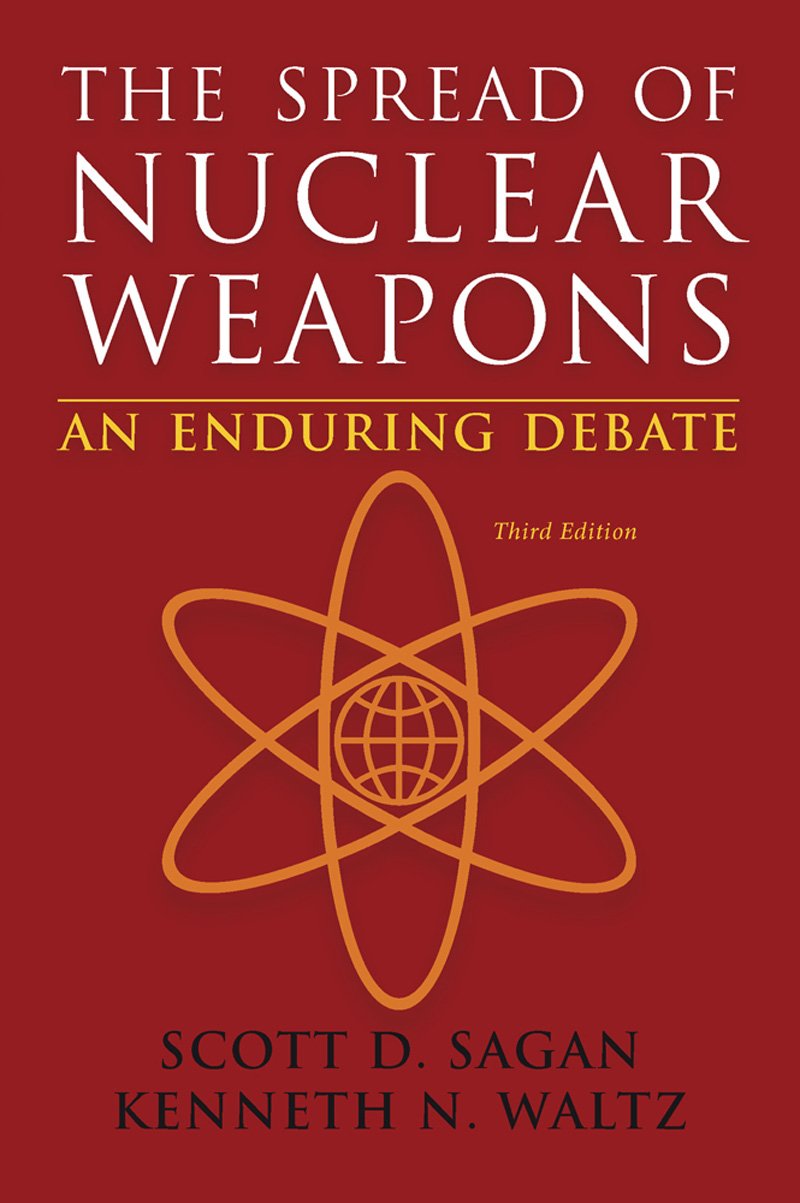
In *The Spread of Nuclear Weapons: A Debate Renewed* (1995, with Scott Sagan), Waltz controversially argued that more nuclear states could improve stability because nuclear deterrence makes war less likely—a 'nuclear peace' argument. He proposed that new nuclear powers would act cautiously and balance their adversaries, reducing the frequency of conflict. His critics, led by Sagan, countered that proliferation increases the risk of accidents, miscalculations, and unauthorized launches. This debate remains a central reference for nuclear strategy scholarship.
✦What is the difference between a 'unit-level' and a 'systemic' theory of international politics?
A unit-level theory explains international outcomes through characteristics of states—regime type, public opinion, leadership personality, or economic system. A systemic theory explains outcomes through the structure of the international system—its ordering principle (anarchy or hierarchy) and the distribution of capabilities (unipolar, bipolar, or multipolar). Waltz developed a systemic theory because he believed unit-level explanations could not account for the similarity of state behavior across radically different societies. His work did not deny the importance of units but insisted that the system is the primary independent variable.
✦What is a common misconception about Waltz's neorealism?
A common misconception is that neorealism is deterministic and ignores domestic politics or state preferences entirely. Waltz acknowledged that unit-level factors affect foreign policy, but he insisted that systemic factors are more important for explaining broad patterns—for example, the recurrence of balancing behavior or the stability of bipolarity. He never claimed domestic politics do not matter; he simply argued that they cannot explain the deep regularities of international politics. This distinction is often lost in simplified summaries.
✦How has Waltz's work been used in contemporary International Relations?
Waltz's framework has become the default reference for all subsequent structural theories of IR, including offensive realism and defensive realism. It is also a target of constructivists (who emphasize ideas and identity), liberal institutionalists (who highlight cooperation), and critical theorists. His concept of balancing is foundational for alliance theory. His work remains the standard starting point for introducing IR to students, and it provides the conceptual vocabulary for almost every major debate about international order, security, and unipolarity.