Alexis de Tocqueville
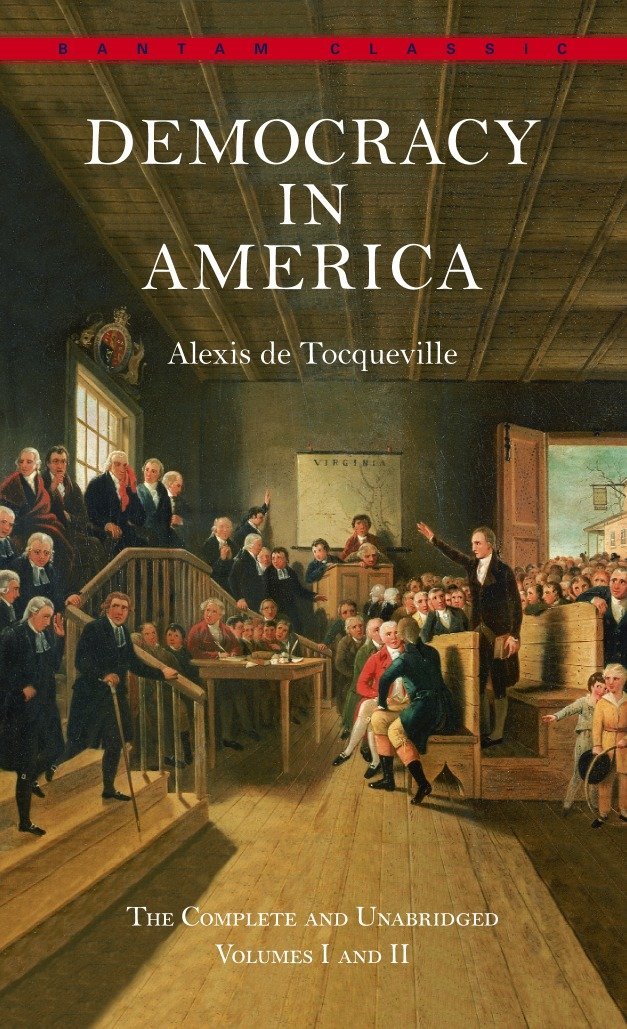
Alexis de Tocqueville profoundly shaped democratic theory by identifying a fundamental tension at its heart: the pursuit of equality can paradoxically foster a new, 'softer' form of despotism, which he termed the 'tyranny of the majority' [citation:4]. As a French aristocrat and magistrate, his travels to the United States in 1831, ostensibly to study its penal system, produced the enduring two-volume masterwork *Democracy in America* (1835, 1840) [citation:2][citation:3]. In it, he warned that the democratic majority's power is not just physical but 'physical and moral at the same time,' capable of subduing the will and repressing independent thought [citation:4]. His enduring contribution is the insight that democracies must cultivate civic associations and local self-governance as essential 'habits of liberty' to guard against this new form of social control [citation:1][citation:11].


✦What is the 'tyranny of the majority' that Tocqueville warned about?
Tocqueville's 'tyranny of the majority' is not about the oppression of a monarch but a new, subtler despotism inherent in democratic societies. He observed that in America, the majority's power is absolute and extends beyond politics to control public opinion and the very independence of mind [citation:4]. He noted that this power is both physical and moral, repressing not just all contest but all controversy, leaving minorities and individuals with no independent forum for appeal, from the legislature to the jury, all of which are tools of the majority [citation:4][citation:11].
✦What did Tocqueville identify as the main safeguards against democratic despotism?
Tocqueville argued that the best safeguards are the 'habits of liberty' and 'interest well understood' cultivated through active participation in civil society. The presence of a vibrant network of voluntary associations and decentralized local government serves as an essential bulwark against centralized tyranny [citation:1][citation:11]. By engaging in local self-governance and collaborative problem-solving, citizens learn to cooperate, build trust, and counter the individualism and apathy that can lead to a new form of authoritarianism [citation:1][citation:12].
✦What was the core paradox or tension Tocqueville identified in democracy?
The core tension is between the values of *equality* and *liberty*. Tocqueville believed that a democratic society's intense desire for equality could paradoxically lead to a loss of freedom. As democracy undermines traditional hierarchies, it tends to atomize individuals, leaving them isolated and more vulnerable to a centralized administrative state [citation:11]. This new 'soft' despotism, which he called the 'tyranny of the majority,' is the great danger he saw as democratic equality advanced [citation:3].
✦Where did Tocqueville's insights into American democracy come from?
Tocqueville's insights came directly from a nine-month journey across the United States with his friend Gustave de Beaumont, from May 1831 to February 1832 [citation:3]. While the official purpose of the trip was to study the American penal system, Tocqueville used the opportunity to conduct a vast political ethnography [citation:3]. He observed the culture, institutions, and everyday life of the young nation, which he then synthesized into his classic work, *Democracy in America* [citation:3].
✦How do Tocqueville's ideas apply to the challenges of modern democracy?
Tocqueville's analysis remains strikingly relevant to the challenges of the 21st century. His warnings against the despotism of a centralized state are echoed in discussions of modern bureaucracy and distant governance [citation:1]. His emphasis on the importance of civic engagement, trust-building, and local networks [citation:1] directly applies to combating political polarization and the appeal of populist movements. His work serves as a foundational text for understanding the need to balance individual rights with the collective good in any vibrant democracy [citation:5][citation:7].