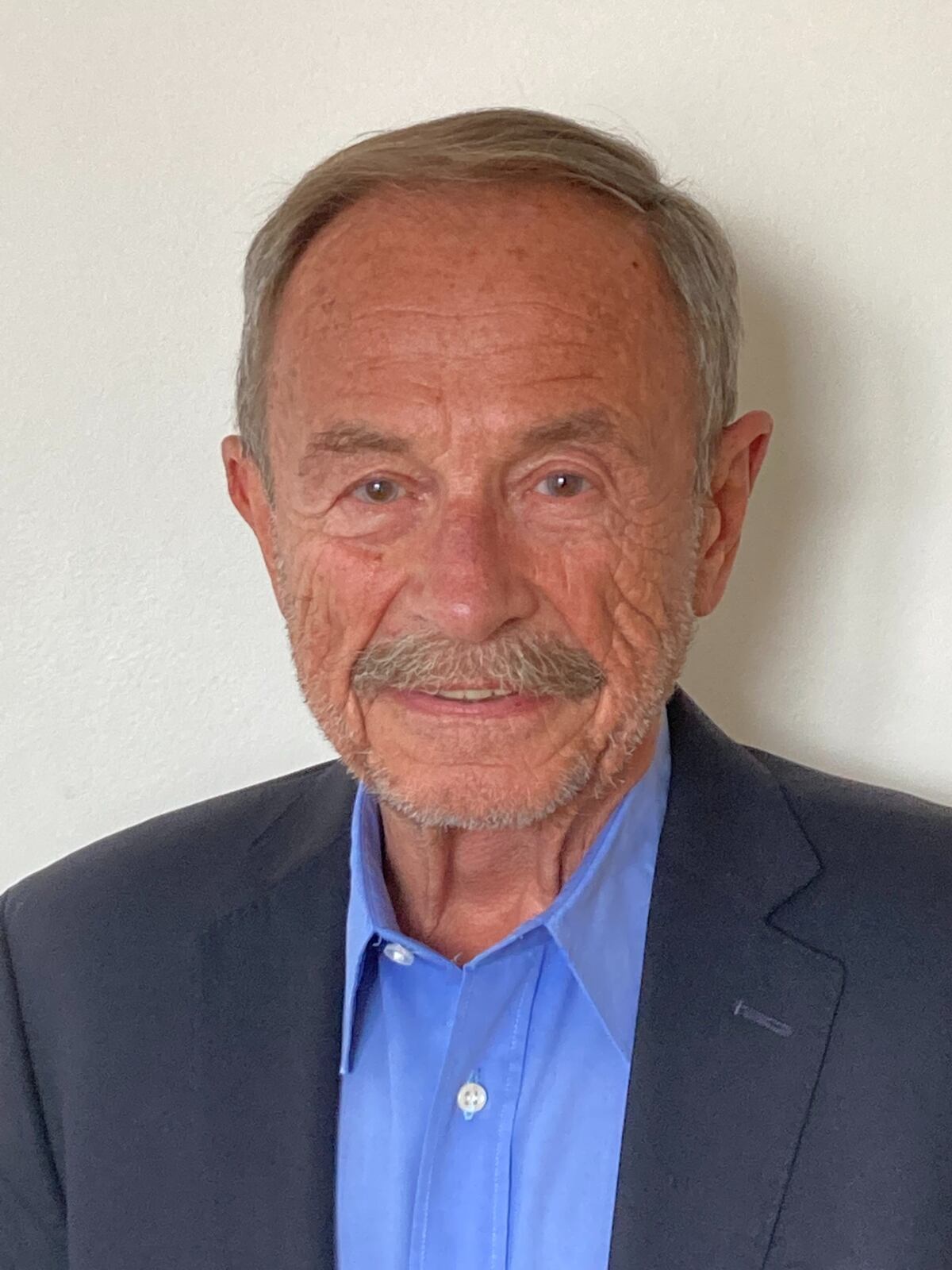
Larry Diamond
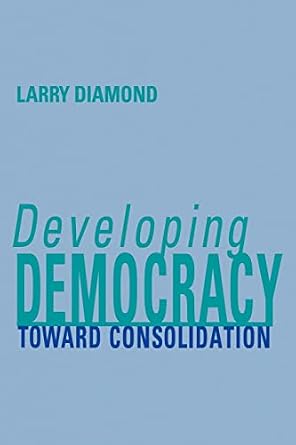
Larry Diamond is a leading scholar of global democratization, uniquely associated with the concept of "democratic consolidation"—the process by which new democracies become resilient enough to withstand authoritarian reversal without collapsing. His framework for analyzing the institutional and cultural factors that make democracies stick, first articulated in his seminal work *Developing Democracy: Toward Consolidation* (1999), became a foundational tool for a generation of political scientists and policymakers. As the founding co-editor of the *Journal of Democracy* for 32 years, he shaped the field's central debates. His subsequent critical analysis of the Iraq War in *Squandered Victory* (2005) and his work on digital threats to democracy highlight his evolution from theorist to a prominent public intellectual engaged in the practical defense of liberal governance [citation:1][citation:3].


✦What is Larry Diamond's specific theory of "democratic consolidation"?
Diamond's theory of democratic consolidation, developed in his foundational work *Developing Democracy* (1999), is a framework for understanding how new democracies become stable and resilient. He posits that consolidation is not merely holding elections but a multi-dimensional process involving the deepening of democratic values and institutions until democracy becomes "the only game in town." This involves the strengthening of civil society, the rule of law, political parties, and a democratic political culture that together make a return to authoritarianism highly unlikely and illegitimate.
✦How does Diamond's work on democracy differ from that of Samuel Huntington?
While Samuel Huntington famously analyzed the "third wave" of democratization as a broad historical process, Diamond's focus has been more on the quality and *consolidation* of these new democracies. Huntington was concerned with the macro-level patterns of regime change, while Diamond has spent his career developing the micro-level and institutional criteria for assessing a democracy's health and sustainability. He has moved beyond just counting the number of democracies to analyze their depth, focusing on how they can be strengthened against authoritarian regression [citation:1].
✦What was Larry Diamond's role in the Iraq War, and what did he conclude?
In 2004, Diamond served as a senior adviser on governance to the Coalition Provisional Authority in Baghdad [citation:1][citation:3]. This firsthand experience directly informed his critical book, *Squandered Victory* (2005). He concluded that the American occupation was fundamentally flawed from the start due to a lack of planning, inadequate resources, and a failure to understand Iraqi society. He argued that the US-led effort to build democracy was "bungled," which resulted in a tragic and avoidable failure that undermined the very democratic goals it sought to achieve.
✦What are the modern challenges to democracy that Diamond focuses on today?
Diamond's recent work highlights how digital technology, social media, and foreign interference are being weaponized to undermine democratic institutions. He analyzes the "sharp power" of authoritarian states like Russia and China, which exploit social media to sow division and disinformation in democracies. His book *Ill Winds* (2019) encapsulates this shift, arguing that a combination of Russian rage, Chinese ambition, and American complacency poses a severe and novel threat to the resilience of liberal democracy globally [citation:1][citation:3].
✦Why is Larry Diamond considered a figure who bridges academia and policy?
Larry Diamond is a rare intellectual who has effectively bridged the worlds of academic scholarship and practical policymaking. He is not only a Stanford professor and the founding editor of the prestigious *Journal of Democracy*, but he has also held advisory roles at USAID, the State Department, the UN, and the World Bank [citation:1][citation:3]. His experience in Iraq and his ongoing work at the Hoover Institution on U.S. foreign policy cement his role as a scholar whose work is directly intended to inform and shape the actual practice of promoting and defending democracy.