


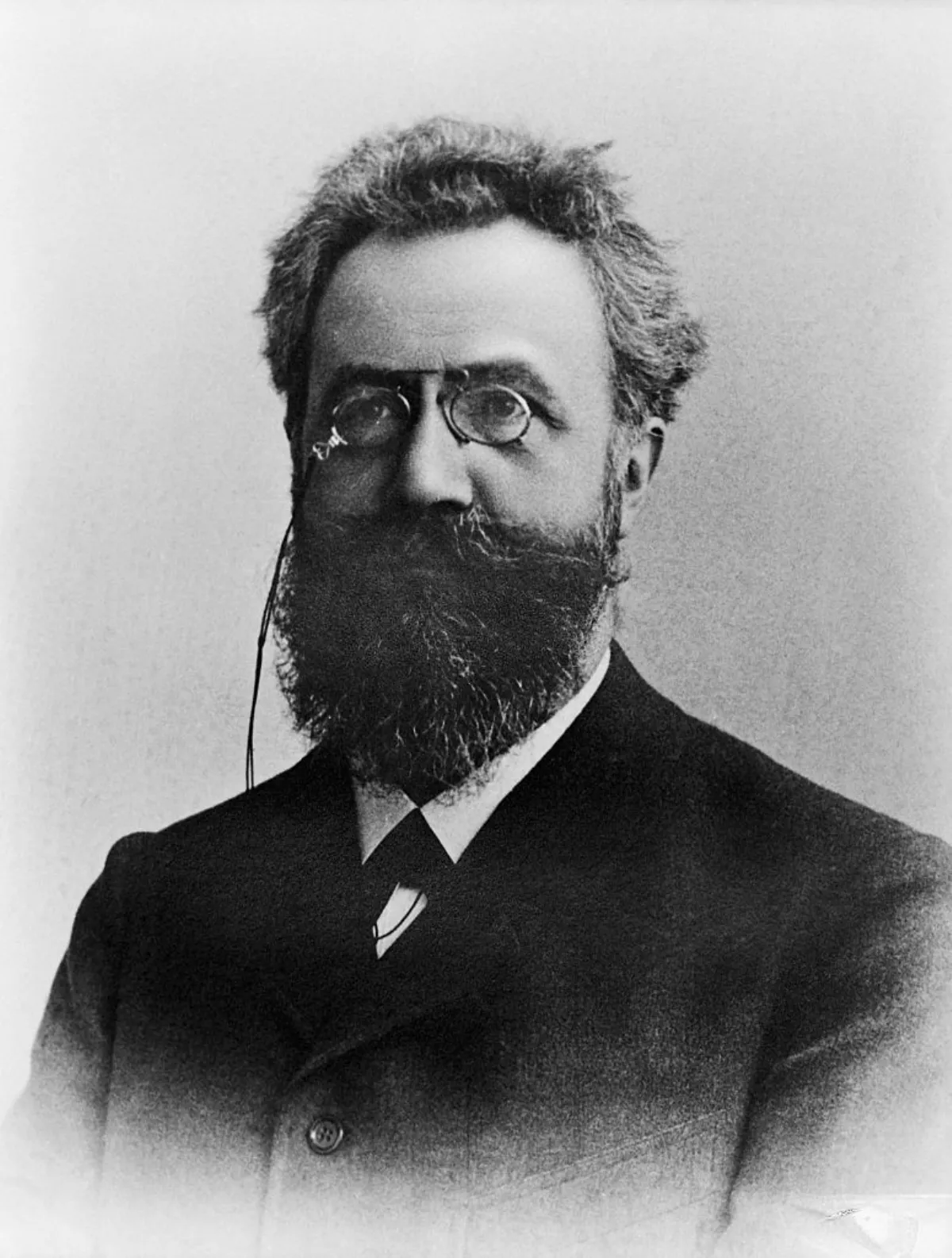
Alfred Binet
0Alfred Binet was a French psychologist and pioneering figure in psychometrics, best known for developing the first practical intelligence test. Collaborating with Théodore Simon, Binet created the Binet-Simon scale in 1905, designed to identify children needing special educational assistance. He introduced the concept of mental age, comparing a child's performance to age-based norms. His work shifted the focus of psychology from measuring sensory and motor skills to assessing higher cognitive functions such as reasoning and judgment. Binet's research also spanned memory, suggestibility, and child development. He served as director of the Laboratory of Experimental Psychology at the Sorbonne. His legacy endures as the foundation of modern intelligence testing and educational psychology.


Key Insights
- ✦
What is Alfred Binet best known for?
Alfred Binet is best known for developing the first practical intelligence test, the Binet-Simon scale, in collaboration with Théodore Simon. This test was designed to identify Parisian schoolchildren who required special educational assistance. Binet introduced the concept of mental age, which compared a child's performance to average levels for their chronological age. His work laid the foundation for modern IQ testing and profoundly influenced educational psychology, developmental psychology, and the measurement of cognitive abilities. Unlike later eugenicists, Binet emphasized that intelligence is malleable and that his test was a practical tool, not a fixed measure of innate capacity.
- ✦
What is the Binet-Simon scale?
The Binet-Simon scale, published in 1905 and revised in 1908 and 1911, was the first standardized intelligence test. It consisted of a series of age-graded tasks, such as repeating digits, defining words, and solving reasoning problems, that were designed to assess judgment, comprehension, and reasoning—higher mental processes rather than simple sensory or motor abilities. The test yielded a mental age score, indicating the intellectual level at which a child performed. It was originally used to identify children with intellectual disabilities who needed specialized education. The scale later became the basis for the Stanford-Binet Intelligence Scales, which introduced the IQ (intelligence quotient) concept.
- ✦
How did Alfred Binet contribute to the concept of mental age?
Alfred Binet introduced the concept of mental age as a way to express a child's intellectual performance relative to same-age peers. In his testing with Simon, he grouped test items by the age at which a typical child could successfully complete them. A child who succeeded on items intended for 8-year-olds but not those for 9-year-olds was said to have a mental age of 8, regardless of their chronological age. This allowed educators to identify children lagging behind or excelling beyond their peers. Mental age later became a core component of the intelligence quotient (IQ) formula, introduced by William Stern, which divided mental age by chronological age and multiplied by 100.
- ✦
What was Binet's view on the nature of intelligence?
Binet believed that intelligence is a multifaceted, dynamic capacity involving judgment, reasoning, and adaptation to novel situations. He rejected the notion that intelligence is a single, fixed, innate entity. He argued that intelligence could be developed through education and practice, and he emphasized the importance of considering a child's background and experiences when interpreting test scores. Binet was cautious about overgeneralizing his test results and warned against using them to label children permanently. He explicitly opposed the eugenic interpretations of intelligence that later became popular, insisting that his scale was a practical diagnostic tool, not a measure of hereditary worth.
- ✦
How did Binet's collaboration with Théodore Simon influence his work?
Théodore Simon was a physician who collaborated with Binet on the development of the intelligence scale. Simon brought medical expertise and practical experience with children with intellectual disabilities, helping Binet select appropriate tasks and standardize the testing process. Together, they conducted extensive field tests with large samples of Parisian schoolchildren to establish age-based norms. The collaboration resulted in the Binet-Simon scale, which became a landmark in psychological measurement. Simon continued to advocate for Binet's work after Binet's death and later adapted the scale for use in other contexts, reinforcing the practical, humanitarian goals of identifying and supporting children with learning needs.
- ✦
What criticisms have been made of Binet's intelligence tests?
Criticisms of Binet's intelligence tests include concerns about cultural bias, as test items often reflect the knowledge and experiences of the dominant culture, disadvantaging minority or lower socioeconomic groups. Additionally, the tests have been misused to support deterministic and eugenic claims about innate intellectual hierarchies, contrary to Binet's own cautionary stance. Some critics argue that intelligence tests measure only a narrow set of abilities, neglecting creativity, emotional intelligence, and practical problem-solving. Furthermore, the use of mental age and IQ has been criticized for stigmatizing children and leading to self-fulfilling prophecies. Binet himself stressed that his test was not a measure of innate worth and opposed its use for labeling or permanently classifying individuals.
- ✦
What other areas did Binet research besides intelligence testing?
Besides intelligence testing, Binet conducted extensive research in experimental psychology, including studies on memory, attention, suggestibility, and the development of higher mental processes in children. He investigated hypnosis and the psychology of testimony, examining how suggestion influences memory and perception. He also studied the intellectual development of his own two daughters, publishing detailed observations that contributed to developmental psychology. Binet was interested in the measurement of personality and emotion, and he explored methods for assessing creativity and aesthetic judgment. His broad research interests reflected his conviction that psychology should be a practical science addressing real-world problems in education, law, and clinical settings.
- ✦
How did Binet's work influence modern educational psychology?
Binet's work profoundly influenced modern educational psychology by introducing systematic assessment as a means to tailor instruction to individual needs. His intelligence tests provided educators with a tool to identify children who required special education, enabling early intervention and support. The concept of mental age and later IQ scores became central to tracking student progress and diagnosing learning disabilities. His emphasis on higher cognitive functions shifted educational assessment away from rote memorization toward reasoning and problem-solving. Additionally, Binet's view that intelligence is educable encouraged the development of enrichment programs and remediation strategies. Today, his legacy persists in standardized testing, gifted education, and individualized education plans.