



Charles Spearman
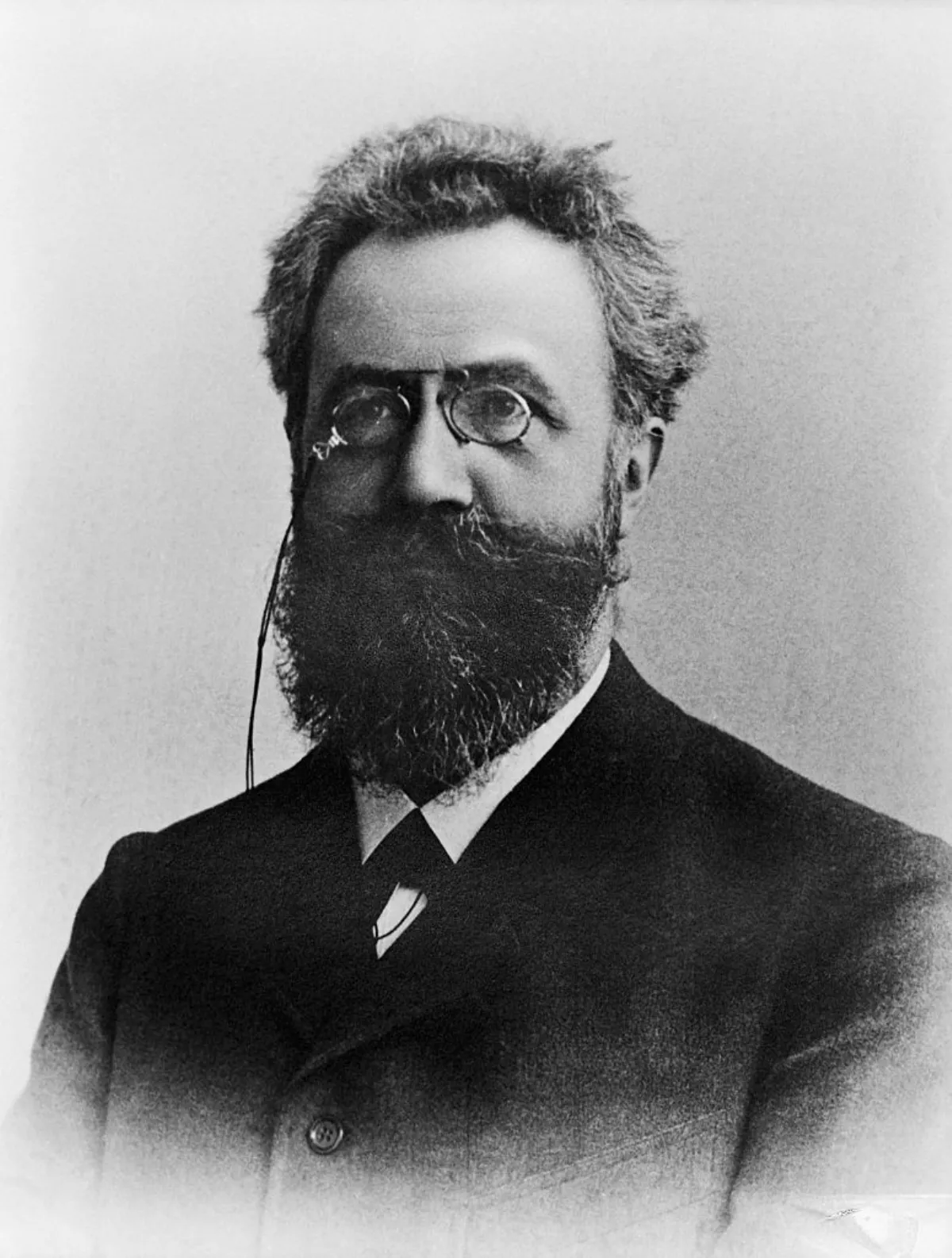
0Charles Spearman was a British psychologist and statistician who revolutionized psychometrics with his pioneering work on factor analysis and the theory of intelligence. He proposed that all cognitive abilities share a common underlying factor, which he termed general intelligence or 'g', alongside specific factors ('s') unique to each task. His two-factor theory of intelligence, articulated in his 1904 seminal paper, laid the groundwork for subsequent models of cognitive abilities. Spearman also developed the rank correlation coefficient (Spearman's rho) and the method of factor analysis, profoundly influencing psychological measurement and statistics. He held a professorship at University College London and his work continues to underpin intelligence research and educational assessment.
Similar Minds
All authors →

Key Insights
- ✦
What is Charles Spearman best known for?
Charles Spearman is best known for his two-factor theory of intelligence, which posits that all intellectual tasks share a common underlying component called general intelligence or 'g', as well as specific factors unique to each task. He developed factor analysis as a statistical method to identify these underlying factors, fundamentally shaping psychometric theory. He also created Spearman's rank correlation coefficient, a non-parametric measure of association. His work transformed the study of intelligence and influenced subsequent researchers, including Raymond Cattell and John Carroll. Spearman's legacy persists in modern intelligence testing and cognitive psychology.
- ✦
What is the g factor in Spearman's theory?
The g factor, or general intelligence, is the core concept in Charles Spearman's two-factor theory, representing a single, general mental capacity that influences performance across a wide range of cognitive tasks. Spearman observed that scores on diverse mental tests were positively correlated, indicating a common thread. He argued that g is responsible for overall intellectual performance, while specific factors (s) are tied to particular abilities. Although later theories, such as Thurstone's multiple intelligences, challenged this unitary view, the g factor remains a robust empirical finding in psychometrics and is used in many modern IQ tests, such as the Wechsler scales, as a composite measure of cognitive ability.
- ✦
How did Spearman develop factor analysis?
Spearman developed factor analysis as a statistical technique to identify underlying dimensions in a set of correlated variables. He observed that correlations among cognitive tests could be explained by a common factor—the g factor—and he devised a mathematical method to extract this common factor from correlation matrices. His early work in 1904 introduced the principles of factor analysis, which were later formalized and extended by other statisticians. Factor analysis became a cornerstone of psychometrics, used not only in intelligence research but also in personality psychology, clinical assessment, and other social sciences to reduce complex data into simpler structures. Spearman's innovative application of mathematics to psychology was a major contribution to quantitative methodology.
- ✦
What is Spearman's rank correlation coefficient?
Spearman's rank correlation coefficient, often denoted as rho (ρ), is a non-parametric measure of statistical dependence between two variables. It assesses how well the relationship between two variables can be described by a monotonic function, without requiring the assumptions of normality or linearity. Spearman introduced this statistic as a more robust alternative to Pearson's correlation for ordinal data or when data violated parametric assumptions. It is widely used in psychology and other disciplines to evaluate the strength and direction of association between rankings, and it is a standard tool in psychometric research for analyzing test-retest reliability and inter-rater agreement.
- ✦
How did Spearman's theory influence modern IQ testing?
Spearman's g factor theory profoundly influenced modern IQ testing by establishing that a single general intelligence measure could summarize overall cognitive ability. Many contemporary intelligence tests, such as the Wechsler Adult Intelligence Scale (WAIS) and the Stanford-Binet, yield a full-scale IQ score that is essentially an estimate of g. Spearman's work also spurred the development of hierarchical models of intelligence, such as Cattell's fluid-crystallized theory and Carroll's three-stratum model, which incorporate g as a top-level factor. Thus, his conceptualization of intelligence as a general capacity continues to shape test design, educational placement, and clinical assessment, though it is also debated by proponents of multiple intelligences.
- ✦
What were the criticisms of Spearman's two-factor theory?
Spearman's two-factor theory faced several criticisms, most notably from L.L. Thurstone, who argued for multiple primary mental abilities rather than a single g factor. Thurstone's factor analysis suggested that intelligence comprises distinct factors such as verbal comprehension, spatial ability, and numerical reasoning. Critics also pointed out that Spearman's method of factor analysis was limited and that the g factor might be an artifact of test construction. Additionally, some researchers questioned the assumption that g is purely innate and stable. Despite these critiques, subsequent research has consistently found a strong g factor in diverse test batteries, and modern approaches often integrate both general and specific factors in hierarchical models, acknowledging the utility of g while also recognizing specific abilities.
- ✦
What were Spearman's major publications?
Charles Spearman's major publications include his 1904 article 'General Intelligence, Objectively Determined and Measured,' which introduced his two-factor theory and the concept of g. He elaborated his ideas in the book 'The Abilities of Man' (1927), where he detailed his factor analytic methods and discussed the nature of intelligence. He also published extensively on statistical methodology, including his work on rank correlation in 'The Proof and Measurement of Association between Two Things' (1904). His writings combined rigorous mathematical reasoning with psychological theory, making them foundational texts for psychometrics. Spearman's influence is evident in the continued citation and use of his concepts in contemporary intelligence research.
- ✦
How did Spearman's background in philosophy and experimental psychology shape his work?
Spearman initially studied philosophy and psychology under Wilhelm Wundt and later turned to experimental psychology. His philosophical training gave him a rigorous approach to conceptual clarity and the nature of mental processes, while his experimental background instilled a commitment to empirical testing and quantification. He was influenced by the work of Francis Galton and sought to apply statistical methods to psychological questions. His unique combination of philosophical reasoning and statistical innovation allowed him to propose a comprehensive theory of intelligence and develop the analytical tools to test it. This interdisciplinary background was crucial to his success in synthesizing theory and measurement in psychometrics.