



Eugene Thacker
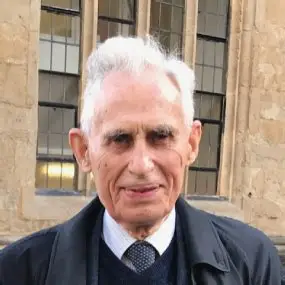
Eugene Thacker is an American philosopher, poet, and author, and a professor of media studies at The New School in New York City. His writing is associated with the philosophies of nihilism and pessimism. He is known for his Horror of Philosophy trilogy—In the Dust of This Planet, Starry Speculative Corpse, and Tentacles Longer Than Night—and for Infinite Resignation, which the New York Times called a 'party for all of these eloquent cranks'. His major philosophical work, After Life, argues that ontologies of life operate via a metaphysical displacement. Thacker's work engages with thinkers like Schopenhauer, Nietzsche, Cioran, and Kierkegaard, and is associated with speculative realism and collapsology.



Who is Eugene Thacker and what is he known for?
Eugene Thacker is an American philosopher, poet, and author, and a professor of media studies at The New School in New York City. He is known for his work on nihilism and pessimism, particularly his Horror of Philosophy trilogy—In the Dust of This Planet, Starry Speculative Corpse, and Tentacles Longer Than Night—and for his books Infinite Resignation and After Life. His writing has been associated with speculative realism and collapsology, and he has been cited as an influence on cultural works like True Detective.
What is the Horror of Philosophy trilogy?
The Horror of Philosophy trilogy is a series of three books by Eugene Thacker: In the Dust of This Planet, Starry Speculative Corpse, and Tentacles Longer Than Night. The series explores the intersection of philosophy and horror, treating philosophical works as horror stories in their own right. At its center is the philosophical drama of human beings confronting their own limits. The trilogy has been described as an essential resource for thinking about the unthinkable and has gained a cult following.
What is cosmic pessimism in Thacker's philosophy?
Cosmic pessimism is a concept developed by Eugene Thacker that goes beyond moral pessimism (the world is made in our own image) and metaphysical pessimism (the world is closed off and opaque). It seeks to locate human beings within a larger non-human world, conjuring a pessimism of the 'world-without-us'. Thacker defines pessimism as 'the night-side of thought, a melodrama of the futility of the brain, a poetry written in the graveyard of philosophy'. Cosmic pessimism is characterized by impersonal affects, scaling-up and scaling-down the human point of view.
What are Eugene Thacker's major works?
Thacker's major works include the Horror of Philosophy trilogy—In the Dust of This Planet (2011), Starry Speculative Corpse (2015), and Tentacles Longer Than Night (2015)—as well as Infinite Resignation (2018), a collection of aphorisms and fragments on pessimism. His major philosophical work is After Life (2010), published by the University of Chicago Press, which argues that ontologies of life operate via a metaphysical displacement. He has also written Biomedia (2004) and The Global Genome (2005), and co-authored Excommunication (2013).
What is Thacker's view on nihilism?
Thacker finds nihilism compelling because it has a dubious status in philosophy—it seems like a viable philosophical position but always falls short of being fully philosophical. His work is often associated with nihilism and pessimism, and he has been described as engaging in a renewal of nihilism rooted in a pessimistic sentiment. In Infinite Resignation, he describes the work as a 'nihilist's devotional', exploring the universe's 'looming abyss of indifference'. His approach to nihilism is characterized by a refusal of easy solutions and an embrace of the futility of thought.
Who are the philosophers that influence Thacker's work?
Thacker's work is deeply influenced by a range of philosophers, including Schopenhauer, Nietzsche, Kierkegaard, and E.M. Cioran. He also engages with Thomas Bernhard, Osamu Dazai, Clarice Lispector, Giacomo Leopardi, and Fernando Pessoa. In his philosophical writing, he traces themes in Aristotle, Pseudo-Dionysius, John Scottus Eriugena, negative theology, Kant, and Bataille. This eclectic range of influences contributes to his distinctive voice, which blends philosophy, poetry, and aphorism.
Where does Eugene Thacker teach and what is his academic background?
Eugene Thacker is a professor of media studies at Parsons School of Design, The New School in New York City. He was born and grew up in the Pacific Northwest. He received a Bachelor of Arts from the University of Washington and a Master of Arts and Doctor of Philosophy in comparative literature from Rutgers University. Prior to teaching at The New School, he was a professor at the Georgia Institute of Technology in the School of Literature, Media, and Communication.