



Geert Hofstede
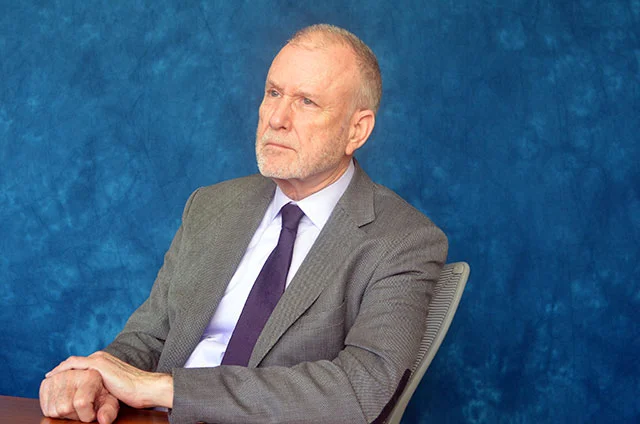
0Geert Hofstede was a Dutch social psychologist and a pioneering figure in cross-cultural psychology and organizational culture. Born in Haarlem, Netherlands, he earned his Ph.D. from the University of Groningen. He is globally renowned for developing one of the most influential frameworks for understanding cultural differences: the cultural dimensions theory. His seminal work, based on a massive IBM employee survey, identified key dimensions like Power Distance, Individualism, Masculinity, and Uncertainty Avoidance. Hofstede's research has profoundly impacted international business, management, and intercultural communication, providing a foundational model for analyzing how cultural values shape behavior in organizations and societies.



Key Insights
- ✦
What is Geert Hofstede best known for?
Geert Hofstede is best known for his groundbreaking cultural dimensions theory, a framework for cross-cultural communication. Developed through a comprehensive analysis of IBM employee surveys in over 70 countries, his model initially identified four key dimensions of national culture: Power Distance, Individualism vs. Collectivism, Masculinity vs. Femininity, and Uncertainty Avoidance. Later, he added a fifth dimension, Long-Term Orientation. This theory remains one of the most cited and widely used models in the world for understanding how cultural values influence behavior in professional and social contexts.
- ✦
What are the five cultural dimensions of Geert Hofstede?
Hofstede's model originally included four dimensions: Power Distance (acceptance of unequal power distribution), Individualism (priority of individual goals over group goals), Masculinity (preference for achievement and competition versus cooperation), and Uncertainty Avoidance (tolerance for ambiguity and uncertainty). Later, in collaboration with Michael Bond, he added a fifth dimension, Long-Term Orientation (focus on future rewards versus preserving traditions). A sixth dimension, Indulgence vs. Restraint, was added later. These dimensions are used to create cultural profiles that help explain and predict differences in social and organizational behavior across nations.
- ✦
Where did Geert Hofstede work and what was his background?
Geert Hofstede was a Dutch social psychologist. He worked at IBM as a personnel researcher, where he conducted the global survey that became the foundation of his life's work. After leaving IBM, he became a professor of organizational anthropology and international management at the University of Limburg in Maastricht, Netherlands. He also held positions at other academic institutions and was a frequent consultant and speaker, advising multinational organizations on navigating cross-cultural challenges.
- ✦
What is Geert Hofstede's most famous book?
Hofstede's most famous book is 'Culture's Consequences: International Differences in Work-Related Values,' first published in 1980. This seminal work detailed his theory and research findings, presenting the evidence for his four original cultural dimensions. A revised and expanded edition, 'Culture's Consequences: Comparing Values, Behaviors, Institutions, and Organizations Across Nations,' was published in 2001. He also co-authored 'Cultures and Organizations: Software of the Mind' with Gert Jan Hofstede, which made his theory more accessible to a broader audience.
- ✦
How has Geert Hofstede's theory impacted the business world?
Hofstede's theory has had a profound and lasting impact on the business world, becoming a foundational tool for international management, global marketing, and cross-cultural team leadership. His model provides a practical framework for managers and organizations to anticipate and understand cultural differences in leadership styles, employee motivation, negotiation practices, and decision-making processes. It helps businesses avoid cultural pitfalls and adapt their strategies to be more effective in diverse global markets, making it a staple in business school curricula worldwide.
- ✦
What is the difference between 'tight' and 'loose' cultures in the context of Hofstede's work?
While 'tightness-looseness' is a distinct cultural concept developed by other researchers, it's often discussed alongside Hofstede's dimensions. It refers to the strength of social norms and the degree of tolerance for deviance. 'Tight' cultures have strong norms and low tolerance for deviation, while 'loose' cultures are more permissive. This concept correlates with Hofstede's dimensions; for example, nations with high Uncertainty Avoidance tend to be 'tighter.' Hofstede's framework provided a basis for these later concepts by establishing that cultures can be systematically categorized based on shared value patterns.
- ✦
Was Geert Hofstede a psychologist?
Yes, Geert Hofstede was a social psychologist. His initial training was in engineering and business, but he earned his Ph.D. in social psychology from the University of Groningen. This interdisciplinary background allowed him to uniquely approach the study of culture. He combined rigorous scientific methodology with a practical understanding of organizations, which made his work both academically rigorous and highly applicable to real-world business and management problems.