


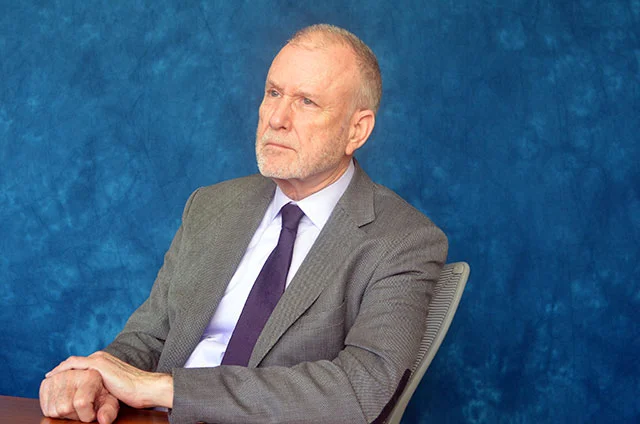
Richard Eugene Nisbett
0Richard E. Nisbett (born 1941) is an American social psychologist and a foundational figure in the field of cultural psychology. As the Theodore M. Newcomb Distinguished University Professor Emeritus of Psychology at the University of Michigan, his pioneering research has demonstrated that human cognition is profoundly shaped by cultural environments. He has shown that Eastern and Western cultures foster fundamentally different systems of thought—Asians tend toward holistic, context-dependent thinking, while Westerners favor analytic, rule-based reasoning. His landmark book, 'The Geography of Thought' (2003), became a seminal work in the field, and his research on intelligence, social class, and reasoning has challenged long-held assumptions about human cognition. A member of the National Academy of Sciences and the American Academy of Arts and Sciences, his influential publications, including 'Human Inference' and 'The Person and the Situation,' have reshaped social psychology[reference:0][reference:1][reference:2].


Key Insights
- ✦
Who is Richard Nisbett and what is he best known for?
Richard E. Nisbett is an American social psychologist and a pioneering founder of the field of cultural psychology. He is best known for his groundbreaking research demonstrating that culture profoundly shapes human cognition and reasoning. His 2003 book 'The Geography of Thought' showed that Eastern and Western cultures have developed distinct systems of thought: Asians tend to think holistically and contextually, while Westerners favor analytic, rule-based logic[reference:3][reference:4]. He has also made significant contributions to understanding intelligence, social class, and the limits of introspection[reference:5][reference:6].
- ✦
What is Richard Nisbett's theory of cultural differences in thinking?
Nisbett's theory, elaborated in 'The Geography of Thought' (2003), posits that human cognition is not universal but is shaped by cultural environments. He argues that East Asian societies, influenced by ancient Chinese philosophy, foster a holistic, context-dependent, and dialectical thinking style that emphasizes relationships and interconnectedness. In contrast, Western societies, rooted in ancient Greek philosophy, promote an analytic, rule-based, and category-focused thinking style that emphasizes logic, control, and the properties of objects[reference:7]. These differences affect perception, reasoning, and problem-solving[reference:8].
- ✦
What is Richard Nisbett's most influential publication?
Perhaps Nisbett's most influential publication is his 1977 paper with Timothy Wilson, 'Telling More Than We Can Know: Verbal Reports on Mental Processes,' published in Psychological Review[reference:9]. With over 13,000 citations, it is one of the most cited articles in psychology[reference:10]. The paper argued that people have limited introspective access to their own higher mental processes and that self-reports often reflect a priori theories rather than actual cognitive processes, profoundly influencing research on consciousness, self-knowledge, and decision-making[reference:11].
- ✦
What books has Richard Nisbett written?
Richard Nisbett has authored and co-authored several influential books. His most famous work is 'The Geography of Thought: How Asians and Westerners Think Differently...and Why' (2003), which explores cultural differences in cognition[reference:12]. He also co-authored 'Human Inference: Strategies and Shortcomings of Social Judgment' (1980) with Lee Ross[reference:13], and 'The Person and the Situation' with Lee Ross[reference:14]. His book 'Intelligence and How to Get It: Why Schools and Cultures Count' (2009) challenges genetic determinism and argues that intelligence can be enhanced through education and culture[reference:15].
- ✦
What awards has Richard Nisbett won?
Richard Nisbett has received numerous prestigious awards for his contributions to psychology. He was elected to the American Academy of Arts and Sciences in 1992 and the National Academy of Sciences in 2002[reference:16]. His honors include the American Psychological Association's Distinguished Scientific Contribution Award (1991)[reference:17], the William James Fellow Award for Distinguished Scientific Achievements (1996)[reference:18], the Donald T. Campbell Award (1982)[reference:19], and the American Psychological Foundation's Gold Medal Award for Life Achievement in the Science of Psychology (2016)[reference:20].
- ✦
What is Richard Nisbett's contribution to the study of intelligence?
In his book 'Intelligence and How to Get It' (2009), Nisbett challenged the prevailing view that intelligence is largely determined by genetics[reference:21]. He argued that culture, education, and social class play a significant role in shaping intelligence, and he presented evidence that targeted interventions—such as early childhood education and improved schooling—can substantially raise IQ[reference:22]. His work has been influential in debates about educational policy, the nature-nurture controversy, and efforts to reduce achievement gaps[reference:23].
- ✦
What did Nisbett and Ross argue in 'The Person and the Situation'?
In their 1991 book 'The Person and the Situation,' Lee Ross and Richard Nisbett argued that human social behavior is best understood through three broad themes: situationism (the power of situational forces), construal (the subjective interpretation of the situation), and the Lewinian idea of tension systems[reference:24]. They challenged the tendency to overemphasize personality traits and underemphasize situational factors in explaining behavior, a phenomenon they termed the 'fundamental attribution error.' The book was a major influence on the development of social psychology and behavioral economics.
- ✦
Where did Richard Nisbett study and work?
Richard Nisbett was born in West Texas and received his A.B. (1962) from Tufts University and his Ph.D. (1966) from Columbia University, where his advisor was Stanley Schachter[reference:25][reference:26]. He taught at Yale University from 1966 to 1971 before joining the University of Michigan in 1971, where he served as the Theodore M. Newcomb Distinguished University Professor and co-director of the Culture and Cognition Program[reference:27][reference:28]. He retired from active faculty status in 2017 and is now Professor Emeritus[reference:29][reference:30].