


Jean Bodin
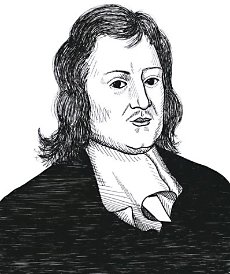
Jean Bodin (1530–1596) forged the modern concept of sovereignty as the defining feature of the republic, articulating it in *Les Six Livres de la République* (1576). Bodin's distinct contribution was defining sovereignty as absolute, perpetual, and inherently indivisible power—legislating without consent but bound by fundamental laws of the realm, divine law, and natural justice. He argued that a commonwealth's stability depends on locating this supreme authority in a single monarch, primarily to prevent the anarchy of religious civil wars. Unlike later absolutists, Bodin insisted on the sanctity of private property and the monarch's duty to govern according to law. His conceptual architecture of state power fundamentally shaped early modern political thought.



✦How does Bodin's concept of sovereignty differ from that of Thomas Hobbes?
Both theorized absolute sovereignty to prevent civil war, but Hobbes derived it from a secular contract of mutual fear, granting the sovereign unlimited power over all matters including religion and property. Bodin derived sovereignty from historical constitutional development and natural law, explicitly limiting the sovereign's power over private property—the sovereign cannot tax without consent—and over fundamental laws of the realm (e.g., Salic law). For Bodin, sovereignty is absolute in scope but limited in object; for Hobbes, it is absolute in both.
✦If sovereignty is absolute, does Bodin believe the monarch is above all law?
No—this is the most common oversimplification. Bodin insisted that the sovereign prince is bound by divine law, natural law, and the fundamental laws of the kingdom. He famously argued that a monarch cannot confiscate a subject's property without consent because the family's right to property is derived from natural law, which even the sovereign must uphold. Bodin's absolute power is legislative supremacy, not arbitrary tyranny; he sought to legalize power, not to unleash unbridled whim.
✦How does Bodin's theory of the republic apply to modern supranational entities like the European Union?
Bodin's framework poses a direct challenge to supranational entities. His theory holds that sovereignty is intrinsically indivisible—it cannot be shared or partially delegated. From a Bodinian perspective, any attempt to pool sovereignty results in a constitutional contradiction, because ultimate supreme authority cannot be split between Brussels and national capitals. This makes Bodin's work unexpectedly relevant for debates on Brexit, federalism, and the constitutional limits of international law, often cited by both euroskeptics and scholars of legal pluralism.
✦Why did Bodin argue that sovereignty is inherently indivisible?
Bodin argued that sovereignty is indivisible because the power to make law and command obedience cannot be shared without creating a hierarchy of authorities that inevitably produces jurisdictional conflict and paralysis. He used the analogy of two captains on one ship. He specifically rejected mixed constitutions—praised by Polybius—as unstable, arguing that in any mixed system, the sovereign element must ultimately reside in one specific part. For Bodin, theoretical purity prevents the jurisdictional disputes that lead to civil war.
✦What role did religious conflict play in shaping Bodin's political theory?
Bodin wrote during the French Wars of Religion (1562–1598), witnessing the St. Bartholomew's Day Massacre (1572). He concluded that competing claims to ultimate authority—whether papal, popular, or aristocratic—led directly to chaos. His theory was a desperate plea for a neutral, unchallenged seat of temporal power to enforce order above sectarian divides. This historical context explains why his theory emphasizes legal supremacy rather than ideological righteousness, and why he is sometimes incorrectly remembered as an absolutist rather than a legal order-builder.
✦What did Bodin get wrong, and what remains valuable in his work today?
Bodin correctly identified that a coherent legal order requires a final, unchallengeable decision-maker to resolve disputes—a principle that underpins modern constitutional courts. However, he failed to foresee that sovereignty could operate through representation and that institutional checks could serve as a legitimate alternative to a unitary monarch. His rejection of mixed government proved overly pessimistic; modern representative democracies have successfully channeled sovereign authority through multiple institutions while retaining ultimate popular supremacy, a model Bodin's theoretical framework struggled to accommodate.