


Marcus Tullius Cicero
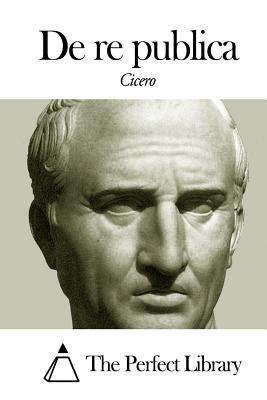
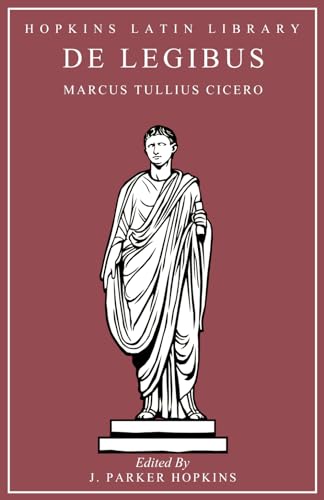
Cicero (106–43 BCE) was a Roman statesman, orator, and political philosopher who forged the Latin republican tradition that would shape Western constitutional thought for two millennia. His distinctive contribution was synthesizing Greek political philosophy—particularly the theory of the mixed constitution—with Roman legal practice into a coherent framework that defined the *res publica* as "the property of the people," bound by law (*iuris consensu*) and common interest. In *De re publica* (54–51 BCE) and *De Legibus*, he articulated natural law as universal reason, accessible to all humans, standing above positive law. This framework—popular sovereignty, mixed government, rule of law—became the conceptual bedrock of American constitutionalism, influencing Adams, Hamilton, and Madison.


.webp?alt=media&token=446479e7-ffcc-4102-b760-4ca7ef90127a)
✦What is Cicero's definition of a republic and why does it matter?
Cicero defined a *res publica* (commonwealth) as "the property of the people" (*res populi*), and a *populus* as "an assemblage associated by agreement on law and community of interest". This definition was revolutionary because it made law—not blood, ethnicity, or conquest—the constitutive bond of political community. It also carried a normative implication: a regime that fails to govern justly is not truly a republic at all. Augustine later weaponized this definition to argue that Rome, lacking justice, had never been a true commonwealth.
✦How does Cicero's mixed constitution differ from Polybius's version?
Both Polybius and Cicero praised the Roman constitution as a mixed system balancing monarchy (consuls), aristocracy (Senate), and democracy (popular assemblies). But Cicero went further: he elevated Rome's mixed constitution as "by far the best" and argued it was uniquely stable because it distributed power while preserving ultimate sovereignty in the people. Where Polybius offered descriptive analysis, Cicero provided a normative defense—the mixed constitution wasn't just effective, it was the most just form of government because it embodied the natural law principle that all legitimate authority derives from the consent of the governed.
✦What did Cicero mean by 'natural law' and how did it influence later thinkers?
For Cicero, natural law was not a human invention but universal reason inherent in the cosmos—"right reason in agreement with nature," applicable to all people at all times. This law stands above human-made statutes; unjust laws are not truly laws. This concept became the foundation of Western natural law theory, transmitted through Roman jurists to medieval theologians (Aquinas) and early modern thinkers (Grotius, Locke). The American Founders' appeal to "the Laws of Nature and of Nature's God" in the Declaration of Independence is directly indebted to Cicero's formulation.
✦How did Cicero influence the American Founding Fathers?
Cicero was perhaps the single most cited classical authority among the Founders. John Adams called him "the greatest statesman and philosopher united". His concepts of mixed government, checks and balances, popular sovereignty, and the rule of law shaped the Constitution's structure. Alexander Hamilton's defense of judicial review in Federalist No. 78 drew on Cicero's interpretive principles about hierarchies of law. Even Hamilton's conception of the unitary executive and his actions during the Whiskey Rebellion were modeled on Cicero's example as consul.
✦Why is Cicero's *De re publica* considered lost, and how do we know its content?
Of *De re publica*'s six books, only the "Dream of Scipio" (Book VI) survived intact through the Middle Ages, preserved by Macrobius. The rest was lost until 1819, when a palimpsest—a manuscript scraped clean and overwritten with a commentary on the Psalms—was discovered in the Vatican Library, revealing substantial portions of Books I-III. The remainder has been reconstructed from quotations and references in later authors like Augustine and Nonius. This fragmentary survival makes *De re publica* one of the great archaeological recoveries of classical philosophy.
✦What did Cicero get wrong, and what remains relevant today?
Cicero's fatal miscalculation was believing that eloquent persuasion and constitutional appeals could restrain armed power. He misjudged the ambitions of Caesar, Pompey, and Antony, and his political realism failed to account for military force as the ultimate arbiter of power—a lesson Machiavelli would later drive home. Yet his framework remains profoundly relevant: the idea that legitimate government requires popular consent, the rule of law, and institutional checks on power is the DNA of modern constitutional democracy. His insistence that law, not force, should govern political life is an enduring counterweight to authoritarianism.
✦Was Cicero primarily a philosopher or a politician—and does the distinction matter?
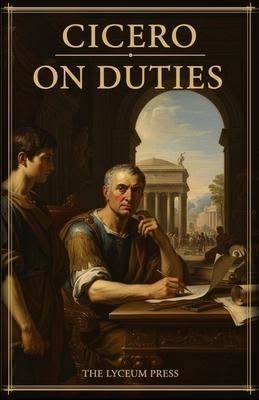
Cicero saw philosophy and politics as inseparable. He wrote philosophy not as abstract speculation but as a practical resource to guide statesmanship and improve Roman society. His philosophical works were composed during periods of political eclipse—*De re publica* during his forced retirement from politics, *De Officiis* in his final year after Caesar's assassination. This fusion of theory and practice is his hallmark: he believed that the best statesman must be a philosopher, and the best philosopher must engage with the political world. To separate his "philosophy" from his "politics" is to misunderstand his entire project.