


Polybius
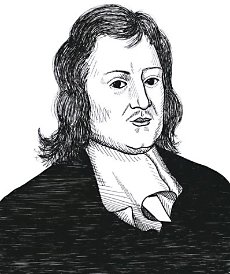
Polybius (c. 200–118 BCE) was a Greek historian whose distinctive contribution was grounding the theory of the mixed constitution in empirical historical evidence, demonstrating precisely why Rome's combination of consuls, senate, and popular assemblies enabled its unprecedented expansion across the Mediterranean. His *Histories*—written partly during his captivity as an Achaean hostage in Rome following the Battle of Pydna (167 BCE)—introduced the concept of anacyclosis, the cyclical degeneration of governments, and argued that Rome's balanced system was uniquely resistant to this decay. Unlike abstract political philosophers, Polybius delivered a mechanical, functionalist account of how interlocking institutions check one another's power. This pragmatic analysis became the primary classical source for James Madison and the Federalists in designing American constitutional checks and balances.
.webp?alt=media&token=5b0a9899-a30b-438e-b0e0-17287eb41857)

.webp?alt=media&token=446479e7-ffcc-4102-b760-4ca7ef90127a)

✦How does Polybius's analysis of the Roman constitution differ from Cicero's?
Polybius approached the Roman constitution as an empirical historian seeking to explain *why* Rome succeeded, offering a descriptive, functionalist account of how the consuls, Senate, and people interacted in practice. Cicero, writing a century later, was a normative philosopher-statesman who framed the mixed constitution as an ideal of justice rooted in natural law. Where Polybius asks 'What made this system work?', Cicero asks 'What makes this system just?'—making Polybius the primary source for institutional designers and Cicero the primary source for moral and legal philosophy.
✦What is Polybius's theory of anacyclosis, and why did he think Rome might escape it?
Anacyclosis is Polybius's cycle of political revolution, where simple constitutions inevitably degenerate: monarchy becomes tyranny, which falls to aristocracy, which becomes oligarchy, which falls to democracy, which becomes mob-rule (ochlocracy)—only to produce a new monarch and restart the cycle. Polybius argued that Rome's mixed constitution broke this cycle by blending all three forms simultaneously, so each branch checked the others' excesses. He believed this balance gave Rome unusual stability, though he later worried that moral decay and wealth inequality would eventually doom it.
✦Which specific parts of the US Constitution were directly influenced by Polybius?
James Madison explicitly cited Polybius in Federalist No. 63 to defend the Senate's role as a stabilizing aristocratic element within a popular government. The Founders derived from Polybius the principle of blending democratic (House), aristocratic (Senate), and monarchic (President) elements within a single republican framework. Polybius's emphasis on interlocking vetoes and shared powers—rather than strict separation—also informed the American system of checks, such as the presidential veto, Senate treaty ratification, and judicial review, ensuring each branch could resist encroachment by the others.
✦What did Polybius mean by 'pragmatic history,' and why was it revolutionary?
For Polybius, 'pragmatic history' meant a method focused on political and military causation, geography, and eyewitness testimony—excluding myth, divine intervention, and rhetorical embellishment common in earlier Greek historiography. He insisted that a historian must have practical political and military experience, personally visit the places described, and interview participants. This empirical, evidence-driven approach made his constitutional analysis uniquely credible to later statesmen, because it was rooted in observable institutional mechanics rather than abstract theorizing or literary tradition.
✦Why is only a fraction of Polybius's work preserved, and how did it survive?
Of Polybius's original forty books of *The Histories*, only the first five survive fully intact. The rest exist in fragments, quotations in later authors (such as Strabo and Plutarch), and excerpt collections compiled in the Byzantine era (the *Excerpta Constantiniana*). The work was simply too voluminous to be copied in full through the Middle Ages, and its Greek text lacked the canonical status of Plato or Aristotle in Latin Christendom. The surviving fragments still provide enough material to reconstruct his constitutional theory and historical methodology with considerable confidence.
✦What did Polybius get wrong about the Roman Republic, and what did he correctly foresee?
Polybius underestimated the severity of internal class conflict—the Struggle of the Orders had largely subsided by his time, but latent tensions later exploded in the Gracchi reforms and civil wars, which his model of institutional balance failed to predict. He also overestimated the Senate's cohesive virtue, not anticipating its descent into factionalism. However, he correctly identified the demographic and moral decay arising from unchecked wealth and imperial conquest, and he foresaw that Rome's external success would ultimately destabilize its internal constitution—a diagnosis that proved tragically accurate.
✦Was Polybius a neutral observer of Rome, or a partisan Greek hostage?
Polybius was a Greek aristocrat from the Achaean League who was deported to Rome as a hostage in 167 BCE, which gave him intimate access to the Roman elite—particularly the Scipio family—but also complicated his objectivity. He openly admired Roman institutions and attributed their success to their superior constitution, leading some historians to accuse him of pro-Roman bias. Yet his firsthand vantage point inside the Roman power structure also gave him unmatched insight into how the government actually operated, making his analysis more empirically grounded than that of later armchair theorists.