



Career Development: Self-Concept Theory
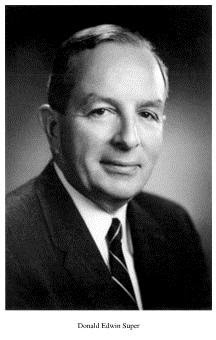 Donald Edwin Super
This 1963 research monograph collects five essays that operationalize Super's self-concept theory of vocational development. Its central claim is that career choice is the implementation of the self-concept in occupational terms: people seek work that allows them to express who they believe they are. The essays move from theoretical foundations to operational definitions, then to Starishevsky and Matlin's model of how self-concept is translated into 'occtalk,' and finally to exploratory behavior and the assessment of vocational maturity. The volume is the technical companion to Super's 1957 Psychology of Careers.
Key Details
Related Books
View AllSimilar books from the same category, ranked by shared topics and reader engagement.



Key Insights — Read in 10 Minutes
What is the central claim of Career Development: Self-Concept Theory, and how does it advance Super's earlier work?
The book's central claim is that vocational development is the process of forming, translating, and implementing a self-concept in occupational settings. The first chapter deals with historical questions, the research literature, and the elements necessary to a self-concept theory of vocational choice; the second presents operational definitions . This operationalization is the volume's distinctive contribution: Super's 1957 Psychology of Careers had introduced the self-concept as the linchpin of vocational development, but left it largely abstract. The 1963 monograph, produced as Research Monograph No. 4 of the College Entrance Examination Board, translates the theory into testable terms and models .
What specific model did Starishevsky and Matlin contribute, and how does it work?
Starishevsky and Matlin devised a model to illustrate how people translate their self-concepts into occupational terms. They distinguish between 'occtalk' and 'psychtalk'—statements a person makes about occupations and about himself, respectively. Within this system, the degree to which the self-concept is incorporated into occtalk can be ascertained . Chapter 3 of the volume views occupational self-concept as the incorporation of a person's self-concept and his 'dictionary' or understanding of various occupations . This translation model supplied the operational bridge between the abstract self-concept and the concrete occupational preferences through which Super theorized that self-concept is implemented.
How does the volume define and measure vocational maturity?
The final essay examines vocational development in adolescence and early adulthood, showing that stages, tasks, and behaviors are identifiable and usable in assessing vocational maturity on three scales: classifying according to life stage, classifying within life stages, and a longitudinal approach that analyzes changes in maturity across two or more adjacent sequential life stages . This three-scale framework represents the volume's most concrete methodological contribution. It operationalizes vocational maturity not as a single score but as a multidimensional assessment that can be applied within stages or tracked across them, providing the foundation for later instruments like the Career Development Inventory.
What is the relationship between this monograph and the Career Pattern Study?
The volume is described as one outgrowth of the longitudinal Career Pattern Study conducted at Teachers College, Columbia University . The Career Pattern Study followed ninth-grade boys from Middletown, New York, through their career development. This 1963 monograph translates the theoretical insights emerging from that study into operational terms. A companion monograph, Tiedeman and O'Hara's Career Development: Choice and Adjustment, was published by the College Board the same year. Together, these two volumes are described as classics in the career-development literature .
What are the bibliographic details and contents of the volume?
The volume was published in 1963 by the College Entrance Examination Board as Research Monograph No. 4, running v + 95 pages with diagrams . It contains five essays: Super's 'Self-Concepts in Vocational Development' (pp. 1–16) and 'Toward Making a Self-Concept Theory Operational' (pp. 17–32); Starishevsky and Matlin's 'A Model for the Translation of Self-Concept into Vocational Terms'; Jordaan's 'Exploratory Behavior: The Formulation of Self and Occupational Concepts'; and a final essay on vocational development in adolescence and early adulthood . The volume includes bibliographies and is held in major research libraries worldwide .
How has the self-concept theory presented here been tested in subsequent research?
Subsequent studies tested the theory with varying results. Putnam and Hansen's 1972 study of 375 female high school students found that self-concept was significantly associated with vocational maturity, supporting Super's theory and indicating its applicability to females . A British study of schoolchildren found that self-concepts and concepts of occupational preferences did have a role in career development, though the theory appeared more applicable to more able youngsters and those high in self-esteem. The study also found that agreement between ideal-self-concepts and occupational preference concepts was significantly greater than between actual-self-concepts and occupational preference concepts, suggesting refinements were needed .
Show 1 more insights
What is the theoretical significance of the distinction between ideal-self and actual-self in this framework?
The distinction matters because the British replication found that ideal-self-concepts aligned more closely with occupational preference concepts than actual-self-concepts did. This finding was interpreted as reflecting youngsters' greater concern for the future and the possible, rather than the present and the given . The implication is that vocational choice may be driven more by aspirational identity than by current self-assessment. This nuance complicates the simple version of self-concept implementation: people may choose occupations not for who they are, but for who they hope to become. The refinement suggests Super's theory requires specification of which self-concept—actual or ideal—drives vocational implementation.
Wealthy Psyche is an intellectual archive. We do not host, distribute, or sell book copies — physical or digital. We provide structured knowledge to help you think better, faster.