



Constitutional Project for Corsica
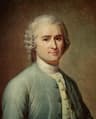
Rousseau's Corsica project is his most concrete attempt to translate the Social Contract into institutional design. Commissioned by Pasquale Paoli, it argues that a small, agrarian, and still-uncorrupted island could realise the general will through decentralised cantons, universal militia service, and sumptuary laws that suppress luxury before it breeds inequality. The central claim is that Corsica's freedom depends on deliberately limiting commerce and cultivating rustic virtue, not on adopting the commercial model of larger European states. The plan was never enacted—France purchased the island from Genoa in 1768—but it remains Rousseau's clearest statement of what his political theory looks like in practice.
Key Insights
✦What specific institutional proposals did Rousseau make for Corsica, and how do they derive from his political theory?
Rousseau proposed a decentralised republic of small cantons, universal militia service for all men, and sumptuary laws designed to hinder luxury . The design follows from his diagnosis that large, commercialised states corrupt virtue and concentrate power. By keeping Corsica agrarian and frugal, Rousseau hoped to prevent the emergence of factions and economic inequality that would undermine the general will. He also envisioned an educational system to instil public morality and attachment to the collective . The plan's logic is defensive: Corsica can remain free only by limiting trade and holding to rustic virtue, rejecting the commercial path that other European states had taken. These are not abstract principles but concrete institutional mechanisms tailored to the island's conditions.
✦Why was Rousseau commissioned to write a constitution for Corsica, and what was the historical context?
Corsican leader Pasquale Paoli invited Rousseau to design a constitution during the island's brief period of independence from Genoa . Corsica had declared independence in 1755 and sought to establish a legitimate republican order. Rousseau's reputation as the author of the Social Contract made him an obvious choice for a philosopher-legislator. He corresponded with Matteo Buttafoco, a Corsican officer, and gathered information about the island's customs and conditions before drafting the plan . The project was overtaken by events: France purchased Corsica from Genoa in 1768 and annexed it, making the constitution moot before it could be implemented. The text was first published in 1768, though it remained a fragment rather than a complete constitution.
✦How does the Corsica project differ from the Social Contract in its treatment of democracy and representation?
The Corsica project reveals a practical concession that the Social Contract's abstract theory leaves unresolved. In the Social Contract, sovereignty is inalienable and the people assemble directly. For Corsica, Rousseau acknowledges that a purely democratic government suits a small city rather than a nation of the island's size. He therefore proposes a mixed government in which the people assemble only in parts, through cantons, and delegate administrative authority to elected magistrates who remain accountable to the sovereign people . This is not a betrayal of his principles but an application of them to circumstances. The legislator must examine whether a people is fit for the laws he intends, and Rousseau adjusts institutional forms to Corsica's scale and character rather than imposing a single model.
✦What is the English translation history of the Corsica project, and which version should readers seek?
The first published English translation appeared in Frederick Watkins's edition of Rousseau's Political Writings, published by Nelson in 1953 . Watkins's edition was long noted for its accuracy and for containing what is widely regarded as the finest English translation of the Social Contract . The 1986 University of Wisconsin Press edition of Watkins's Political Writings includes this translation, which remains the only widely available English version of the Corsica fragment . A more recent translation appeared in a modern critical edition that includes supplementary materials, an afterword on Rousseau's intellectual relationships, and a glossary of Enlightenment terminology . Readers should note that the work is a fragment—Part I only—and that no complete constitution was ever finished.
✦Why does Rousseau reference Switzerland in the Corsica project, and what role does it play in his argument?
Rousseau saw similarities between Corsicans and Swiss mountaineers and used Switzerland as a cautionary example . He presents an antithetical portrait: the virtuous Switzerland of the past, frugal and free, as a model for Corsica, and the corrupted Switzerland of his own day, commercialised and unequal, as a warning. The reference serves two functions. Positively, it demonstrates that a small, mountainous people can sustain republican institutions through simplicity and discipline. Negatively, it shows that even such a people can decline if it embraces luxury and commerce. For Rousseau, the Swiss case proves that virtue is historically fragile—it must be actively preserved through laws and institutions, not assumed as a natural inheritance. Corsica, still uncorrupted, has a brief window to establish the safeguards Switzerland has lost.
✦Is the Corsica project merely a curiosity, or does it have genuine philosophical significance?
Scholars have been divided, but the prevailing view now treats it as significant. Earlier critics, including C. W. Hendel and J. C. Hall, dismissed its relevance altogether . More recent scholarship argues the opposite: the Corsica project provides the clearest demonstration of the practical implications of Rousseau's political thought . By comparing its specific proposals with the Social Contract, readers can see how Rousseau adjusts abstract principles to concrete circumstances—how the legislator's art operates in practice. The project also reveals Rousseau's awareness that institutions alone cannot guarantee virtue; the people's character and judgment must be cultivated alongside legal structures. For anyone who finds the Social Contract abstract or ambiguous, the Corsica fragment is the most direct evidence of what Rousseau actually wanted a just republic to look like.
Wealthy Psyche is an intellectual archive. We do not host, distribute, or sell book copies — physical or digital. We provide structured knowledge to help you think better, faster.