



Opportunities in Psychology
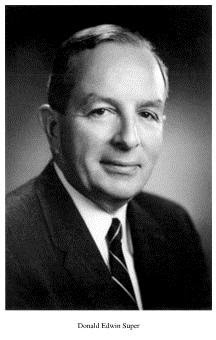 Donald Edwin Super
Super's 1955 vocational guidance manual presents psychology as a rapidly expanding field with excellent prospects, backing the claim with APA membership data showing growth from roughly 400 members in 1920 to some 13,000 by 1955. Its central method is to treat the choice of psychology as a career the same way it treats any vocational decision: by supplying the concrete information a young person needs—subfields, educational hurdles, training requirements, and employment trends—rather than abstract exhortation. The book functions as both career guide and evidence of Super's developmental approach applied to his own profession.
Key Details
Related Books
View AllSimilar books from the same category, ranked by shared topics and reader engagement.



Key Insights — Read in 10 Minutes
What is the central claim of Opportunities in Psychology, and what evidence supports it?
The book argues that psychology's rapid recent growth suggests excellent career prospects, particularly because the surge of the last decade followed a long period of steady growth . Super supports this with APA membership figures: approximately 400 members in 1920, about 2,500 in 1940, roughly 7,500 in 1950, and some 13,000 by 1955 . He uses APA membership as an index because growth of the professional association parallels growth of the field. The argument is characteristic of Super's approach: career prospects are assessed through concrete, verifiable trends rather than vague reassurance, and a growing field means both advancement opportunities for those already in it and openings for increasing numbers of new entrants .
How does the book treat the educational hurdles involved in becoming a psychologist?
The book devotes a chapter to the psychologist's education and training, presenting the path as a series of sequential hurdles: getting into college, graduating, gaining admission to a master's program, obtaining the master's degree, admission to a doctoral program, passing comprehensive examinations, completing a dissertation, and defending it orally . Super notes that each hurdle is more difficult than the one before, with fewer candidates getting over each as they rise, and that four hurdles screen out the largest numbers of candidates . He emphasizes that good writing and speaking skills are vital for any psychologist—teacher, researcher, clinician, or personnel administrator—because organizing and presenting facts to varied audiences is central to the work .
What did a contemporary review say about the book's suitability for its intended audience?
H. Meltzer's 1957 review in the Journal of Educational Psychology stated that Super does an excellent job of presenting in intelligible language the kind of information one would want to know about a field being considered as a possible choice . Meltzer concluded that all in all, it is a very handy volume for the purpose intended . This assessment is notable because it evaluates the book precisely on its own terms—as a vocational guidance manual—rather than faulting it for lacking theoretical ambition. The review's emphasis on intelligibility and handiness reflects the book's design as a practical tool for young people making career decisions.
What is the publication history of this title, and how did it evolve across editions?
The original edition was published in 1955 by Vocational Guidance Manuals in New York as a 96-page volume . The title changed in subsequent editions: the 1968 edition was published as Opportunities in Psychology Careers; the 1976 third edition as Opportunities in Psychology Careers Today ; and the 1982 fourth edition reverted to Opportunities in Psychology, now co-authored with Charles M. Super and published by VGM Career Horizons . A revised edition appeared in 2001 as Opportunities in Psychology Careers, revised by Blythe Camenson . The series of retitlings and co-authorships tracks both changes in the field and the aging of the original author into collaboration with his son.
How does this book relate to Super's theoretical work on vocational development?
Opportunities in Psychology is Super's applied vocational guidance manual, a genre distinct from his theoretical treatises. The Psychology of Careers (1957) presents the developmental framework of life stages and self-concept implementation; Appraising Vocational Fitness (1949) evaluates the tests used to assess vocational potential. This 1955 book supplies the concrete occupational information that a counselor or young person would use within that developmental framework. It is, in effect, Super demonstrating how to analyze a specific profession—his own—using the informational categories his broader work established: growth trends, entry requirements, subfields, and employment prospects.
What specific subfields and employment settings does the book cover?
The book addresses the major employment settings in which psychologists work: teaching, research, clinical practice, and personnel administration. Super's discussion of training notes that a psychologist's education must prepare them for any of these roles, and that the undergraduate program should include experiences developing social skills and familiarity with new fields of knowledge . The 1982 fourth edition, co-authored with Charles Super, includes a bibliography and covers specializations, education and training, employment prospects, and compensation . The 2001 revision by Camenson retained the core structure of overview, specializations, education, employment prospects, and planning .
Wealthy Psyche is an intellectual archive. We do not host, distribute, or sell book copies — physical or digital. We provide structured knowledge to help you think better, faster.