



Quotations from Chairman Mao
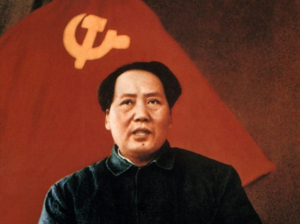 Mao Zedong
Commonly called the Little Red Book, Quotations from Chairman Mao is not a systematic treatise written as a single work, but a politically curated anthology of excerpts from Mao Zedong’s speeches and writings. Organized by themes such as revolutionary war, party discipline, mass participation, criticism, and ideological study, it turned Mao’s ideas into short, memorizable directives for collective recitation and practical political judgment. First issued for the People’s Liberation Army in 1964, it became a central instrument of Mao’s personality cult during the Cultural Revolution, when displaying, studying, and quoting it could function as a public demonstration of political loyalty.
Key Details
Related Books
View AllSimilar books from the same category, ranked by shared topics and reader engagement.



Key Insights — Read in 10 Minutes
What is the central claim of Quotations from Chairman Mao, and what does its format reject?
The book presents Mao Zedong Thought as a guide to action rather than an abstract body of doctrine. Its selections repeatedly insist that revolutionary theory must be tested through practice, investigation, class struggle, and engagement with the masses. The compilation rejects the idea that Marxism is a fixed set of formulas to be applied mechanically from books. Yet its own aphoristic format creates a tension: short quotations make Mao’s arguments portable and memorable, while often detaching them from the historical situations and longer theoretical arguments in which Mao originally developed them.
Why was the Little Red Book more than a collection of Mao quotations?
Its political function mattered as much as its textual content. The pocket-sized anthology made Mao’s words easy to circulate, memorize, quote in meetings, and display in public. During the Cultural Revolution, it became a ritual object through which people could demonstrate alignment with Mao and with officially sanctioned political campaigns. Carrying or reciting it therefore did not simply indicate that someone had read Mao’s work; it could signal loyalty, protect a person from suspicion, or establish authority in a highly volatile political environment.
Did Mao Zedong personally write the Little Red Book as a book?
No. Mao wrote the speeches, essays, directives, and statements from which the selections were drawn, but Quotations from Chairman Mao is an edited compilation rather than a book composed by Mao in a single sustained act. It was initially produced under the auspices of the People’s Liberation Army and developed in the political environment associated with Lin Biao’s promotion of Mao study within the military. That distinction is essential: the arrangement of excerpts, their thematic headings, and their use as a mass political text shaped how readers encountered Mao’s thought.
How does Quotations from Chairman Mao differ from Mao’s Selected Works?
Mao’s Selected Works presents longer essays and speeches, allowing readers to follow arguments about revolution, class analysis, guerrilla warfare, party organization, and philosophy in their historical context. Quotations from Chairman Mao extracts compact passages from such writings and arranges them under thematic headings. The latter is designed for rapid study, recitation, and political deployment, not for reconstructing the development of Mao’s thought. A reader seeking Mao’s reasoning should consult the longer texts; a reader seeking the Cultural Revolution’s most recognizable ideological artifact should begin with the Little Red Book.
What role did Lin Biao play in the book’s history?
Lin Biao was closely associated with the elevation of Mao study in the People’s Liberation Army, the institutional setting in which the quotation collection first appeared. The book’s early military purpose helps explain its concise format: it could be used for disciplined collective study and the transmission of political directives. Lin’s prominence also reveals that the Little Red Book was part of a wider struggle over authority within the Chinese Communist Party, not merely a neutral presentation of Mao’s ideas. Later editions and paratexts changed as Lin’s political standing collapsed.
Is the Little Red Book best understood as a faithful summary of Maoism?
It is faithful in the limited sense that it consists of Mao’s words, but it is not a complete or neutral map of Maoism. Selection and rearrangement elevate themes useful for political mobilization: loyalty, discipline, mass work, revolutionary vigilance, criticism, and struggle. The anthology gives less room for sustained debate, uncertainty, policy trade-offs, or the changing contexts of Mao’s earlier arguments. Treating it as Maoism in full risks mistaking a campaign-oriented reader for a comprehensive political philosophy or a complete record of Mao’s governing practice.
Show 1 more insights
How has the book’s meaning changed since the Cultural Revolution?
Outside its original political setting, the Little Red Book is often treated as a design icon, collectible, historical artifact, or shorthand for revolutionary China. That afterlife can obscure its coercive political context. In the Cultural Revolution, public engagement with Mao quotations could be entangled with institutional pressure, factional conflict, and the danger of being judged ideologically unreliable. For historians, its importance lies not only in the propositions it contains but also in what mass production, ritual reading, and public display reveal about propaganda, authority, and personality cults in communist political life.
Wealthy Psyche is an intellectual archive. We do not host, distribute, or sell book copies — physical or digital. We provide structured knowledge to help you think better, faster.