



Socratic Puzzles
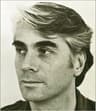
Nozick's collection argues that philosophy at its best is a Socratic activity—an unrelenting search for counterexamples and conceptual clarity—rather than the construction of grand systems. The volume gathers essays from 1969 to 1995 on coercion, Newcomb's Problem, interpersonal utility, moral structure, and the counterintuitive opposition of intellectuals to capitalism. What unifies the disparate pieces is Nozick's method: the counterexample as the substantive core of philosophy, deployed with analytical rigor and intellectual playfulness to expose the limits of received views.
Key Insights
✦What unifies a collection that ranges from coercion to Ayn Rand to philosophical fictions?
The unifying thread is methodological rather than thematic. A Review of Metaphysics essay argues that if the book has a tacit theme, it is that Nozick's philosophy puts the counterexample at its substantive core—he makes from counterexamples 'art, philosophy and entertainment' . The essays do not build toward a single thesis; they demonstrate a way of doing philosophy. Nozick includes a personal introduction discussing the origins and tools of his work, and the volume's title signals his reverence for Socrates as a figure who pursued truth through relentless questioning rather than system-building . The collection is best read as a showcase of a method, not a monograph.
✦What is Nozick's contribution to Newcomb's Problem, and why does it remain influential?
Nozick introduced Newcomb's Problem into the philosophical literature after hearing about it at a party from a physicist, William Newcomb . The problem pits two principles of choice against each other: maximize expected utility, or choose the option that is causally responsible for the best outcome. Nozick's essay, 'Newcomb's Problem and Two Principles of Choice,' laid out the puzzle with unusual clarity and refused to resolve it dogmatically. A reviewer in The Review of Metaphysics singled out this essay, along with 'Moral Complications and Moral Structures,' as 'outstanding' . The problem remains a standard test case for decision theories, and Nozick's framing of it is still the point of departure for most discussions.
✦What does 'Moral Complications and Moral Structures' attempt, and why has it been undervalued?
The essay attempts to uncover the structure underlying ordinary moral judgments by modeling how we weight rightness and wrongness. Nozick proposes a principle for comparing the weights of competing considerations and shows how, given enough such comparisons, one could derive a numerical measure of how right- or wrong-making a person considers various features of actions . The reviewer who praised it noted that 'it has not had as much influence as it should have' and that moral philosophers of all stripes would still benefit from studying it . The neglect may be due to its formal apparatus, which is demanding, or to Nozick's reputation as a political libertarian rather than a moral theorist. The essay repays close reading.
✦How was the book received, and what criticisms were made of its formal style?
Reception was respectful but not uniformly enthusiastic. The Review of Metaphysics noted that 'the occasional page packed with little but probability matrices, set theory and the like makes for slow and somewhat typographically intimidating reading,' though it judged the tools well used and the results clear . The reviewer also observed that the less formal essays, such as the one on Quine's epistemology, presuppose substantial philosophical background, making the book's audience uneven. Mind published a review by Hallvard Lillehammer in 2001 . The consensus is that the collection is valuable for the convenience of having important essays in one place, but it is not an introduction to Nozick's thought.
✦What is the significance of Nozick's claim in the introduction that Anarchy, State, and Utopia was 'an accident'?
Nozick disclaims the title 'political philosopher' and characterizes his most famous book as an accident that came about because he was 'getting nowhere' working on the problem of free will . The remark is characteristic of his intellectual restlessness and his refusal to be confined by disciplinary labels. It also matters for reading Socratic Puzzles: the collection shows that Nozick's interests were far broader than political philosophy, ranging across decision theory, epistemology, methodology, and moral psychology. Readers who know him only as the author of Anarchy, State, and Utopia will find here a philosopher engaged with problems across the whole of the discipline. The introduction is a guide to that wider landscape.
✦What are the 'philosophical fictions' included in the volume, and how do they relate to the essays?
The final section of the book contains short fictions—'Fiction,' 'R.S.V.P. - A Story,' 'Testament,' and 'Teleology' . These are not mere diversions. They extend Nozick's method into narrative form, using imagined scenarios to explore philosophical questions in a register that argument alone cannot reach. The inclusion of fictions alongside formal essays is consistent with the book's Socratic spirit: philosophy is a way of life and a form of play, not merely a technical discipline. A reviewer noted that the volume 'illustrates the originality, force, and scope of his work' and displays his 'trademark blending of extraordinary analytical rigor with intellectual playfulness' . The fictions are part of that blend.
Wealthy Psyche is an intellectual archive. We do not host, distribute, or sell book copies — physical or digital. We provide structured knowledge to help you think better, faster.