



Successful Living: A Practical Guide to Help You Influence People
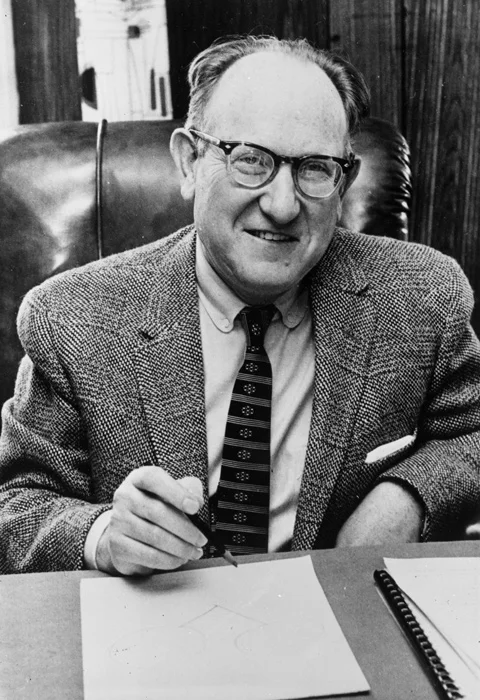 Ernest Dichter
Ernest Dichter's Successful Living translates his motivational research from the corporate boardroom into a personal handbook. Rather than treating influence as a set of tricks, Dichter argues that effective persuasion begins with understanding the unconscious desires and emotional needs that drive ordinary behavior. The book applies psychoanalytic depth psychology to everyday situations—marriage, workplace relations, self-presentation—showing readers how to read beneath surface interactions. It represents the popularization of his core commercial insight: that people act on irrational motivations they often cannot articulate, and that recognizing these hidden drivers is the first step to meaningful influence.
Key Details
Related Books
View AllSimilar books from the same category, ranked by shared topics and reader engagement.


.webp?alt=media&token=48ae434b-2ecf-4690-a2ac-e97370fc544a)
Key Insights — Read in 10 Minutes
What is the central argument of Successful Living, and what does it reject?
Dichter's central claim is that effective influence—whether in personal relationships or professional settings—depends on understanding the unconscious, often irrational motivations that shape behavior. He rejects the notion that people act primarily on rational self-interest or that persuasion can be reduced to logical argument or surface-level techniques. This argument emerges directly from his commercial motivational research: the same depth-psychological approach he used to decode consumer product choices is applied here to everyday social interactions. The book positions itself against both behaviorist models that ignore inner drives and moralistic approaches that assume people simply need better information to act differently.
How does Successful Living relate to Dichter's more famous work, The Strategy of Desire?
Successful Living (1947) predates The Strategy of Desire (1960) by over a decade and represents an earlier, more practical application of the same core framework. While The Strategy of Desire offers a broader theoretical statement about motivation research and its social implications, Successful Living is deliberately populist and instructional—a handbook rather than a treatise. It translates Dichter's consulting insights into accessible advice for individuals seeking to navigate interpersonal dynamics. The later book extends the argument into civic and political domains; Successful Living remains focused on personal and professional influence.
What is the documented critical reception of Dichter's approach in this book and elsewhere?
Dichter's motivational research drew sustained criticism from Vance Packard, whose 1957 book The Hidden Persuaders portrayed the field as a form of psychological manipulation threatening democratic autonomy. This critique became the dominant popular framing of Dichter's work. Within advertising and market research, however, Dichter's methods were influential and widely adopted—the Journal of Advertising Research later commemorated his contributions as foundational. The tension between these two receptions—dangerous manipulator versus pioneering innovator—remains central to how his work is assessed.
How has the book's argument about influence held up given subsequent research in psychology?
Dichter's emphasis on unconscious motivation anticipated later developments in behavioral economics and dual-process theories of cognition, which confirm that much decision-making operates below conscious awareness. However, his specific Freudian framework—relying on concepts like repressed desires and symbolic product meanings—has not been validated as a predictive scientific model. Modern consumer psychology draws on cognitive and social psychology rather than psychoanalytic depth interviewing. Dichter's historical importance lies in establishing that unconscious factors matter, not in the durability of his particular interpretive method.
Was Successful Living a commercial success, and what was its publishing history?
The book was originally published in 1947 under the title The Psychology of Everyday Living, then reissued by Barnes & Noble in 1952 as Successful Living in their Everyday Handbooks series. The reissue with the more instrumental subtitle—'A Practical Guide to Help You Influence People'—reflects its positioning as a self-help volume rather than a theoretical work. It was one of Dichter's earliest books, published before his reputation as the 'father of motivational research' was fully consolidated. The title change suggests a deliberate marketing shift toward the practical influence market.
Is there a common misconception about what this book actually contains?
A frequent misreading treats Successful Living as a straightforward self-help manual offering tips for winning friends or closing deals. In fact, the book is more fundamentally a popularization of Dichter's psychoanalytic approach to understanding human behavior. The 'influence' it teaches is diagnostic rather than tactical: readers are urged to develop sensitivity to hidden motivations, not to memorize persuasion scripts. Dichter's method requires interpretation and empathy, not technique. Reducing it to a set of interpersonal tricks misrepresents its core argument that influence begins with understanding, not with manipulation.
Wealthy Psyche is an intellectual archive. We do not host, distribute, or sell book copies — physical or digital. We provide structured knowledge to help you think better, faster.