


.webp?alt=media&token=0982d289-06f5-4083-8138-63d3d4ed5745)
The Dynamics of Vocational Adjustment
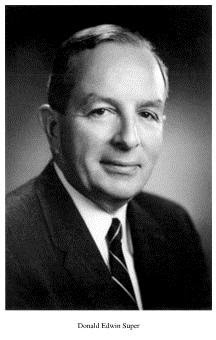 Donald Edwin Super
Super's 1942 book argues that vocational adjustment is a dynamic process shaped by social, psychological, and economic forces, not a static matching of individuals to jobs. Its central claim is that understanding vocational problems requires analyzing the social setting in which adjustment is sought, the psychological factors affecting it, and the economic determinants of labor supply and demand. The book's distinctive contribution is its integration of these three perspectives into a single framework for vocational guidance, replacing the trait-matching approach dominant at the time.
Key Details
Related Books
View AllSimilar books from the same category, ranked by shared topics and reader engagement.



Key Insights — Read in 10 Minutes
What is the central claim of The Dynamics of Vocational Adjustment, and what does it reject?
Super argues that vocational adjustment is a dynamic process requiring analysis of three interlocking dimensions: the social setting in which adjustment is sought, the psychological factors affecting it, and the economic determinants of labor supply and demand . He rejects the static trait-and-factor approach that dominated vocational guidance, in which counselors matched individuals to jobs based on aptitude profiles. Frank Flynn's review identified the book's distinctive approach as concerned first with sociological and historical forces, next with psychological factors, and then with economic realities . Super later recalled that even in 1942 he was interested in 'something more than a static comparison of people and situations' .
How did reviewers assess the book's contribution to vocational guidance literature?
Reviews were strongly positive. Robert Hoppock in Journal of Consulting Psychology called it 'one of the best new books on vocational adjustment to appear in recent years,' noting it was written for beginning courses but 'substantial enough to be read with profit by the professors who teach them' . Frank Flynn in Social Forces judged the book justified by 'an approach to vocational problems not made by other authors,' praising Chapter II 'Occupations and American Traditions' as 'more unique in its contribution to the thinking in the field' than other chapters . Both reviewers noted the book's integration of sociological, psychological, and economic perspectives distinguished it from existing texts.
What was the specific 'dynamic' theory Super was developing in this early work?
Super sought a theory explaining how people choose occupations, enter them, and progress within them—not merely how well they fit at a single point in time. He drew on differential psychology, developmental psychology, personality theories, sociology, and economics to construct this account . The concept of 'adjustment' implied for Super an individual's capacity for change in the jobs obtained and professions pursued. He later identified this book as the origin of his career-long inquiry into vocational development, which culminated in the life-stage model and self-concept theory . The 1942 book thus planted the seed for the developmental framework Super elaborated over the following decades.
What specific chapter did reviewers single out as uniquely valuable?
Chapter II, 'Occupations and American Traditions,' was identified by Frank Flynn as justifying the book's publication, 'more unique in its contribution to the thinking in the field than certain of the topics treated in some other chapters' . Flynn found it unfortunate this material was not placed first, instead of the review of past vocational guidance concepts that occupied that position. The chapter examined how American cultural traditions and historical forces shaped occupational structures and individual adjustment—a sociological dimension absent from conventional guidance texts. The economic analysis in Chapter VI on labor supply and demand was also cited as a 'high spot' .
How does this book relate to Super's later theoretical work?
The Dynamics of Vocational Adjustment is the foundation of Super's entire theoretical program. His 1957 Scientific Careers and Vocational Development Theory presents the self-concept theory of vocational development, which states that vocational development is 'the process of forming and perpetuating a self-concept' . The 1942 book had already rejected static matching in favor of dynamic process, and Super's later work specified the mechanism—self-concept implementation—that the earlier book only gestured toward. The Japanese scholarly review of Super's concepts identifies 'vocational adjustment' and 'vocational development' as the two main supports of his whole idea, with adjustment studied first .
What was the book's publication history and bibliographic format?
The book was published by Harper & Brothers in New York in 1942 as a first edition, running xiii + 286 pages with tables and diagrams . It included references at the end of each chapter . Multiple library catalogs confirm the 1942 imprint and 286-page count . The book was not revised in subsequent editions; Super's later books developed the theoretical framework in new directions rather than updating this volume. It remains available in research libraries and is cited in histories of vocational psychology as the origin point of Super's developmental approach.
Show 2 more insights
What specific criticism did reviewers raise about the book's scope or organization?
Frank Flynn suggested that the chapter on occupations and American traditions should have been placed first rather than the review of past vocational guidance concepts, which he noted was 'so frequently commented upon in other books on the subject' . The implication is that Super's unique contribution was buried behind conventional material. Hoppock's review did not identify structural problems but emphasized the book's freedom from 'the emotional appeal to do something about a problem' and its grounding in what the profession actually knows . The overall assessment was that Super combined familiar material in a new framework rather than presenting wholly novel content.
What intellectual traditions did Super draw on in constructing this framework?
Super drew on differential psychology, developmental psychology, personality theories, sociology, and economics . This interdisciplinary synthesis was unusual for vocational guidance texts of the period, which typically focused on testing and placement techniques. The sociological dimension—analyzing the social setting and historical forces shaping occupational structures—reflected the influence of the Progressive Era's concern with social context. The economic analysis of labor supply and demand addressed a dimension largely ignored in psychological approaches. Super's later work continued this synthesis, with the Career Pattern Study integrating developmental, sociological, and psychological perspectives.
Wealthy Psyche is an intellectual archive. We do not host, distribute, or sell book copies — physical or digital. We provide structured knowledge to help you think better, faster.