



The Power of Ideas
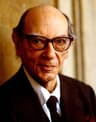
This posthumous collection takes its title from Heine's warning that philosophical concepts nurtured in a professor's study can destroy a civilization. Berlin's unifying claim is that ideas are not epiphenomena of material conditions but autonomous historical forces with consequences their progenitors neither intended nor controlled. The essays range from Enlightenment rationalism and Vico's counter-current to Russian intelligentsia radicalism, Marxism, Zionism, and romanticism. What distinguishes the volume is Berlin's insistence that intellectual history matters because ideas have a life of their own—and that the historian's task is to trace their unpredictable passage into political reality.
Key Insights
✦What does Heine's warning mean in the context of this collection, and why did Berlin adopt it as his title?
The title comes from Heine's admonition to the French not to underestimate the power of ideas: philosophical concepts nurtured in the stillness of a professor's study could destroy a civilization . Berlin adopted it because it names his central methodological conviction. Ideas are not mere reflections of economic or social forces; they have causal efficacy and can migrate from the seminar room to the political arena with devastating effect. The collection exemplifies this thesis across disparate domains: Enlightenment rationalism, Russian radicalism, Marxism, and Zionism all show how abstract propositions become historical forces. For Berlin, this is the answer to why intellectual history matters—not as antiquarianism but as the study of the munitions that shape political life.
✦How does 'My Intellectual Path,' the volume's opening essay, function within the collection?
'My Intellectual Path' is Berlin's last essay, a retrospective autobiographical survey of his main preoccupations . It was written in old age and serves as a guide to the volume's otherwise eclectic contents. Berlin recounts his movement from Oxford analytic philosophy through the history of ideas, explaining why he abandoned technical philosophy for the study of thinkers like Vico, Herder, and the Russian intelligentsia. The essay is not merely personal memoir; it articulates the methodological rationale for the kind of intellectual history practiced throughout the collection. Readers often find it the most accessible statement of why Berlin believed the history of ideas was philosophy pursued by other means, and it provides the thread that connects essays on subjects as disparate as the Enlightenment, Marx, and Chaim Weizmann.
✦What is the significance of the volume's editorial construction by Henry Hardy?
The Power of Ideas is not a book Berlin assembled; it is a posthumous collection edited by Henry Hardy, Berlin's literary trustee, who selected nineteen shorter pieces spanning decades . The first edition appeared from Chatto & Windus in London and Princeton University Press in 2000; Princeton issued a second edition in 2013 adding previously uncollected pieces, including Berlin's earliest statement of value pluralism, and a foreword by Avishai Margalit . Hardy's editorial choices determine the volume's shape, and reviewers noted that the arrangement can feel haphazard—thematically diverse essays follow one another without a sustained argument . Readers should approach it as a curated introduction rather than a systematic treatise, useful precisely because it samples Berlin's range.
✦How does the collection's treatment of Russian thinkers relate to Berlin's better-known Russian Thinkers?
Several essays here—on Russian intellectual history, Belinsky, Herzen, the intelligentsia, and Plekhanov—overlap thematically with Russian Thinkers, Berlin's 1978 collection. The Power of Ideas includes shorter, more introductory pieces rather than the sustained essays of the earlier volume. 'A Revolutionary without Fanaticism,' on Herzen, and 'The Role of the Intelligentsia' distill arguments Berlin developed at greater length elsewhere. The relationship is one of accessibility rather than supersession: these essays provide an entry point for readers not yet ready for the longer studies. Hardy's selection reveals how persistently Berlin returned to the Russian intelligentsia as a case study in the political consequences of ideas, particularly the transformation of humane radicalism into ideological rigidity.
✦Why does Berlin include essays on Zionism and Jewish history in a collection ostensibly about ideas?
The inclusion reflects Berlin's conviction that Zionism is an idea with historical consequences, not merely a political movement. 'Jewish Slavery and Emancipation,' described as the classic statement of his Zionist views, had long been unavailable in print before this collection . Berlin's engagement with Zionism was personal and intellectual: he saw it as a response to the failure of emancipation, an attempt to solve the Jewish question through collective self-determination rather than assimilation. The essays on Weizmann and Israel's origins treat Zionist ideas with the same historical attention Berlin gives to Marxism or romanticism. For readers who know Berlin only as a theorist of liberty, these pieces reveal the biographical and ethical commitments that shaped his political thought.
✦Is the collection genuinely unified, or is it merely a miscellany?
Contemporary reviewers were divided. The Sunday Telegraph called it 'the best short introduction to his thinking,' while Amazon reviewers complained the arrangement was 'haphazard' and covered 'too many themes' without focus . The truth is intermediate. The unifying theme is stated clearly—ideas shape civilizations—but the essays were written for different occasions and do not build on one another. The volume functions best as a sampler of Berlin's range: Enlightenment critique, Russian radicalism, liberty, nationalism, romanticism, Zionism. Its value lies precisely in demonstrating that Berlin applied the same historical sensibility across domains. Readers seeking a single sustained argument should look to The Crooked Timber of Humanity; those seeking an accessible entry to Berlin's mind will find this volume useful.
Wealthy Psyche is an intellectual archive. We do not host, distribute, or sell book copies — physical or digital. We provide structured knowledge to help you think better, faster.