


.webp?alt=media&token=c4a4ddab-8bd4-4bf6-8bb8-00721637b59f)
The Vocational Maturity of Ninth-Grade Boys
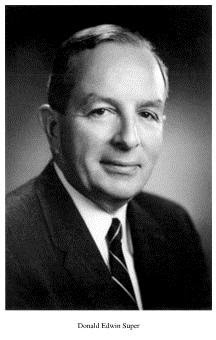 Donald Edwin Super
Super and Overstreet's monograph reports the second phase of the Career Pattern Study, measuring vocational maturity in ninth-grade boys through five dimensions: orientation to choice, information and planning, consistency of preference, crystallization of traits, and wisdom of preferences. The central claim is that vocational maturity is not a single trait but a multidimensional developmental construct, and that ninth-grade boys vary widely in readiness to make career decisions. The study operationalized vocational maturity for empirical measurement, establishing the methodological foundation for the Career Development Inventory.
Key Details
Related Books
View AllSimilar books from the same category, ranked by shared topics and reader engagement.


Key Insights — Read in 10 Minutes
What is the Career Pattern Study, and how does this monograph fit into it?
The Career Pattern Study was Super's longitudinal research project following ninth-grade boys from Middletown, New York, through their career development until age thirty-five . This monograph is the second in the Career Pattern Study series, published as Monograph 2 of the Horace Mann-Lincoln Institute of School Experimentation . It focused on the initial measurement phase, assessing vocational maturity when the subjects were in ninth grade. The study was designed to specify dimensions along which vocational development takes place and to develop practical methods for measuring them .
What are the five dimensions of vocational maturity measured in this study?
The Career Pattern Study investigated five dimensions: (1) orientation to vocational choice, (2) information and planning about preferred occupations, (3) consistency of vocational preference, (4) crystallization of traits, and (5) wisdom of vocational preferences . These dimensions operationalized Super's theoretical construct of vocational maturity—the place reached on the continuum of vocational development from exploration to decline . Each dimension captured a distinct aspect of career readiness, allowing the researchers to assess whether a ninth-grade boy was developmentally on schedule relative to his age peers.
What is the 'vocational maturity quotient,' and how was it calculated?
Super introduced the vocational maturity quotient as the ratio of vocational age to chronological age . This quotient, conceptually analogous to the intelligence quotient, provided a single numerical index of developmental progress. The instrument was constructed to assess the vocational maturity of subjects in the Career Pattern Study and had five scales corresponding to Super's five dimensions . The quotient allowed researchers to compare individuals of the same chronological age and to identify those whose vocational development lagged behind or exceeded expectations for their age.
What was the study's methodological contribution to vocational psychology?
The study's principal methodological contribution was the operationalization of vocational maturity for empirical measurement. Prior to this work, vocational maturity was a theoretical construct without standardized assessment instruments. The Career Pattern Study led to practical methods for measurement, which later developed into the Career Development Inventory . The original indices utilized structured interviews, with five scales corresponding to Super's dimensions . This transformation of a theoretical concept into measurable variables enabled subsequent research on vocational development and provided counselors with tools for assessing client readiness.
How did this study relate to Super's earlier theoretical work in The Psychology of Careers?
This monograph is the empirical application of the theoretical framework Super established in The Psychology of Careers (1957). That book introduced the concept of vocational maturity as the place reached on the developmental continuum . The Career Pattern Study was designed to test and refine this concept through longitudinal research. The five dimensions measured in this monograph correspond to the developmental tasks Super theorized for the exploration stage. The study thus represents the transition from theoretical formulation to empirical operationalization, grounding Super's developmental theory in measurable phenomena.
What does 'vocational maturity' mean according to Super's definition?
Super defined vocational maturity as the place reached by an individual on the continuum of vocational development from exploration to decline . It is not merely a matter of age but of readiness and adaptability . Super also defined it normatively as the congruence between an individual's vocational behavior and the vocational behavior expected at their age . A fifteen-year-old is vocationally mature if engaging with tasks appropriate to that stage—measuring interests and abilities, making educational plans—while a forty-five-year-old's maturity involves maintaining career status . The concept is contextual and developmental, not absolute.
Show 2 more insights
What limitations or criticisms have been identified regarding this study's approach?
Critics have noted that career readiness is not strongly correlated with age, undermining the assumption that vocational maturity can be indexed to chronological age . The instruments developed from this study were criticized as too undifferentiated . Additionally, the sample was limited to ninth-grade boys in a single community, raising questions about generalizability. Later research suggested Super's theoretical model could be generalized to cultures comparable to American society but required careful examination and improved psychometric properties in other contexts .
What were the bibliographic details of the original publication and subsequent reprints?
The monograph was originally published in 1960 by the Bureau of Publications, Teachers College, Columbia University, as 212 pages with illustrations . It was authored by Super and Phoebe L. Overstreet, with collaboration from Charles N. Morris, William Dubin, and Martha B. Heyde . It is Monograph 2 of the Horace Mann-Lincoln Institute of School Experimentation Career Pattern Study series . A reprint was issued in 1968 by Teachers College Press , and UMI produced a reprint in 1998 .
Wealthy Psyche is an intellectual archive. We do not host, distribute, or sell book copies — physical or digital. We provide structured knowledge to help you think better, faster.