


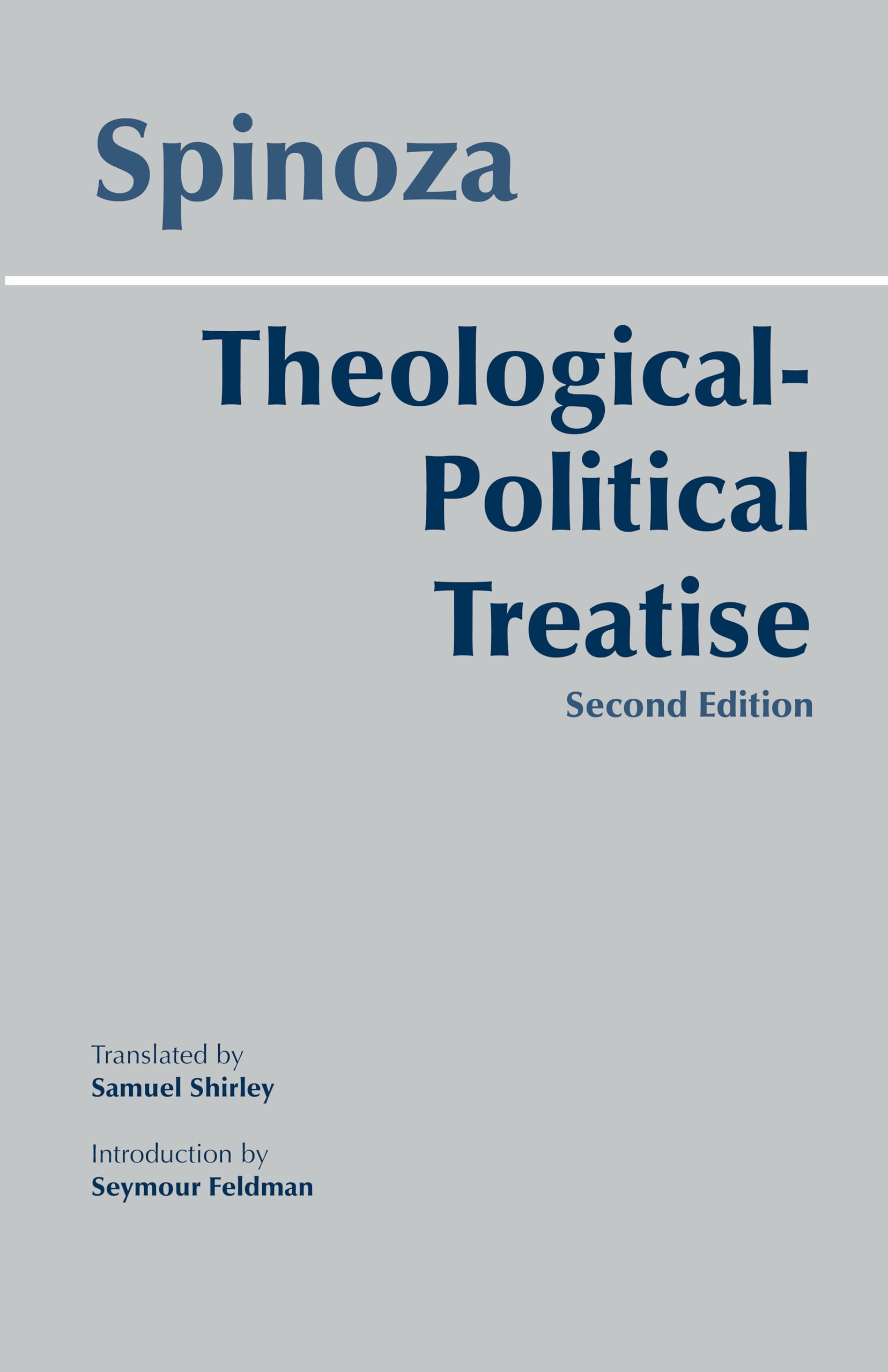
Theological-Political Treatise
 Baruch Spinoza
Spinoza's Theological-Political Treatise argues that the Bible is a human document whose meaning must be established through its own history and language, not through theological dogma, and that philosophy and theology occupy separate domains. The work's central mechanism is the claim that religion consists in obedience and charitable practice—loving one's neighbor—rather than in the truth of speculative beliefs, which frees philosophers to reason without threatening piety. From this separation, Spinoza derives a defense of democracy and the freedom to philosophize as necessary conditions for both peace and genuine piety.
Key Details
Key Insights — Read in 10 Minutes
What is the central claim of the Theological-Political Treatise, and what does it reject?
Spinoza's central claim is that the freedom to philosophize is compatible with piety and the peace of the republic, and indeed that neither can be preserved without it . He rejects the authority of theologians to dictate what Scripture means and the subordination of philosophy to theology. The work argues that Scripture must be interpreted through its own history and language alone—ex sola Scriptura—not through dogmatic presuppositions . Religion, properly understood, consists in obedience and charitable practice, not in the truth of speculative beliefs about God.
What specific concept did the Treatise introduce, and how is it used today?
The Treatise introduced the historical-critical method of biblical interpretation: Scripture should be studied like nature, using only its own language and history, without assuming divine inspiration guarantees the truth of its narratives . This method shifted interpretation from a search for hidden theological meanings to a philological and historical inquiry. It influenced later biblical criticism and remains central to debates about the relationship between reason and revelation, secularism, and the boundaries of religious authority in liberal states.
Why was the Treatise condemned as 'a book forged in hell,' and how was it received?
Published anonymously in 1670 with a false imprint, the Treatise was immediately attacked by religious and secular authorities, banned, and ordered burned . Critics denounced it as 'godless' and 'full of abominations' . The uproar stemmed from Spinoza's arguments that the Bible is human literature, that miracles are impossible, and that religious authorities should have no role in governance. Thomas Hobbes reportedly said he 'durst not write so boldly' . It was the last work Spinoza published in his lifetime.
How does the Treatise relate to Spinoza's Ethics?
Scholars have long debated how the two works fit together. The Ethics presents a geometrical path of reason to rational salvation; the Treatise takes a different route through revelation and Scripture, arguing that obedience and charity, not philosophical truth, constitute piety . Recent scholarship emphasizes that the same philosophical principles—the distinction between intellect and imagination, natural right, and the identity of God and Nature—underlie both works, even though their styles and audiences differ . The Treatise's political philosophy functions as the framework for its biblical exegesis.
Does the Treatise advocate democracy, and on what grounds?
Yes. The Treatise's final chapter argues that in a free state, everyone must be allowed to think what they wish and say what they think . Spinoza grounds this not in abstract rights but in necessity: no one can transfer to another their natural right to think freely, and a government that tries to control minds is oppressive. Democracy is the most natural form of state because it most closely preserves the freedom that individuals cannot surrender. The argument links political stability directly to intellectual liberty, a claim that made the Treatise a foundational text of liberal secular thought.
Wealthy Psyche is an intellectual archive. We do not host, distribute, or sell book copies — physical or digital. We provide structured knowledge to help you think better, faster.