


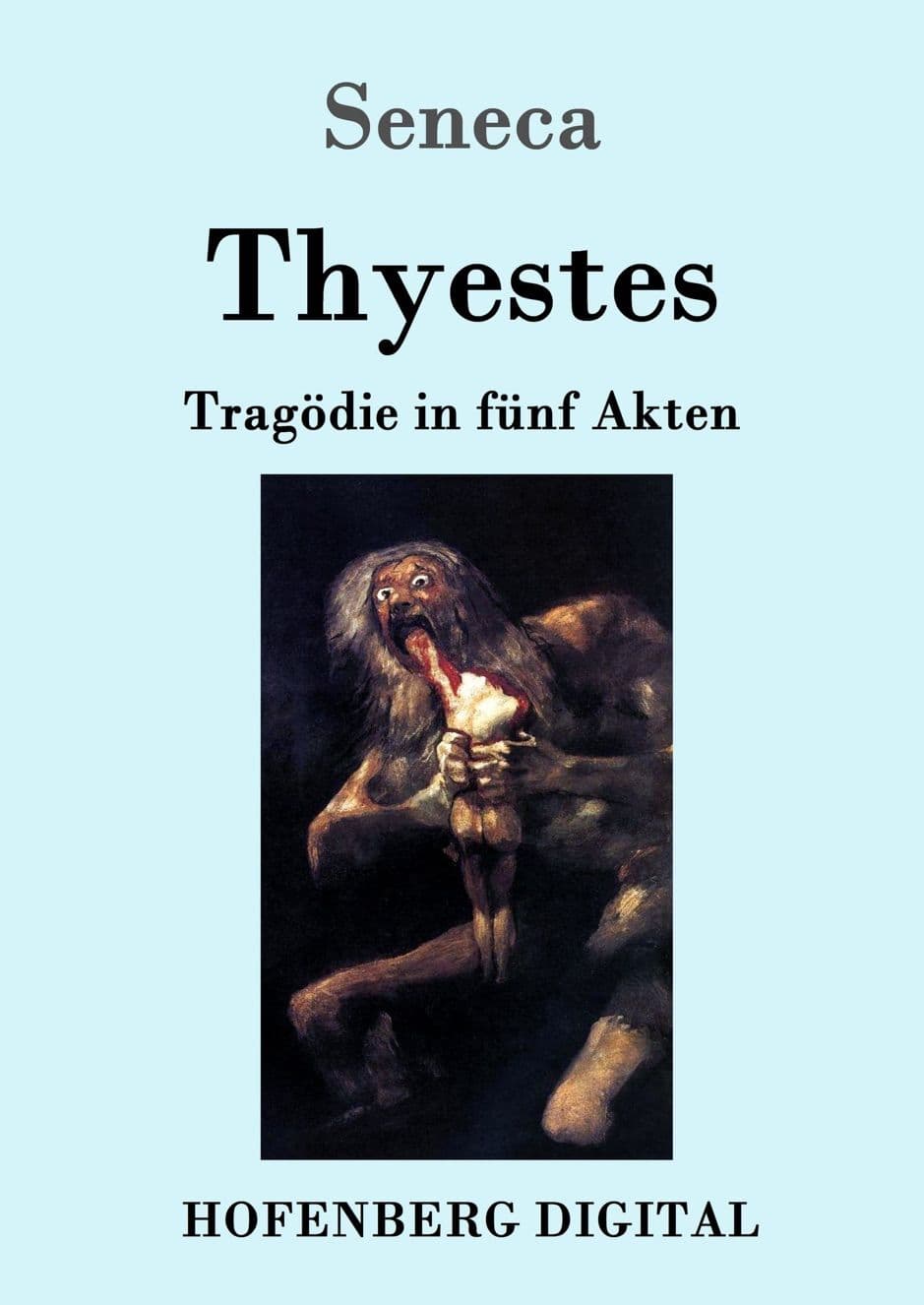
Thyestes

Seneca's Thyestes is a Latin verse tragedy built around the feud of the brothers Atreus and Thyestes, in which Atreus feigns reconciliation and serves Thyestes his own sons at a banquet. Its central mechanism is the staging of passion (furor) as a self-escalating force: Atreus does not merely seek revenge but strives to exceed every previous crime, while the chorus repeatedly sets the ruined house against the Stoic ideal of the self-possessed, kingless mind. The play thus dramatizes what Stoic ethics is meant to prevent, uncontrolled anger and the lust for power, through horror, ghostly prologue, and rhetorical excess.
Key Insights
✦What is the central design of the Thyestes, and what does it set before the reader?
The play presents a crime so extreme that it becomes a study of how passion feeds on itself. Atreus is not content with killing; he wants a punishment that surpasses every precedent, and the tragedy follows his planning with chilling lucidity. The effect is not a moral lesson delivered by a spokesman but a demonstration of what unchecked anger does to a mind and a house. Readers should expect rhetorical intensity, long speeches, and a deliberate pursuit of horror rather than psychological realism.
✦Is the Thyestes a Stoic play, and how is that disputed?
Scholars disagree about how far Seneca's tragedies express his philosophy. The Thyestes contains choral odes praising the quiet, kingless mind and warning against ambition, which echo Stoic themes, and its portrait of furor resembles the analysis of anger in his prose essay On Anger. Yet the plays offer no consoling resolution, and some critics, including those following Anna Lydia Motto and John Clark, have read them as largely Stoic in spirit, while others stress their autonomy as dramatic works. A cautious view treats them as engaging Stoic concerns without simply illustrating doctrine.
✦How does the play relate to Seneca's prose on anger?
The prose treatise On Anger describes anger as a temporary madness and urges early resistance to the first impulses of passion. The Thyestes dramatizes the opposite course, in which passion is welcomed, cultivated, and elevated into policy. Reading them together shows two registers of the same concern, one analytical and one imaginative. The comparison is useful, though it should not be pressed too hard, since the date of the plays relative to the essays is uncertain and the genres follow different conventions.
✦Was the Thyestes performed, and how did it influence later drama?
Whether Seneca's tragedies were staged in antiquity or written for recitation is long debated. Their influence on later drama is better documented. Renaissance writers read Seneca closely, and the revenge tragedies of Elizabethan and Jacobean England, including Kyd's The Spanish Tragedy and Shakespeare's Titus Andronicus, drew on Senecan features such as ghosts, bloodshed, and elaborate declamation. The Thyestes in particular offered a model for the banquet of horror. This reception is a major reason the play is still studied.
✦How has the play been misread?
A common oversimplification treats Senecan tragedy as gratuitous gore written for shock. In fact the violence is shaped by rhetorical and philosophical purposes, including reflection on power under the Roman principate, a context some scholars link to Seneca's own experience at Nero's court. The opposite error treats the plays as straightforward Stoic sermons. The more careful reading holds that they use horror to explore the limits of reason and self-command, leaving questions open rather than closing them.
✦Which editions and translations should readers consult?
The play was written in Latin, and the reliable route is a scholarly edition with commentary. A. J. Boyle's edition of the Thyestes, with introduction, translation, and commentary, is widely cited, and R. J. Tarrant's commentary is a major scholarly resource for the Latin text. English translations of the tragedies include those in the Loeb Classical Library and Penguin and Oxford World's Classics volumes. Because the surviving text has a complicated manuscript tradition, readers should consult notes on textual choices and check which edition a translator follows.
Wealthy Psyche is an intellectual archive. We do not host, distribute, or sell book copies — physical or digital. We provide structured knowledge to help you think better, faster.