


James Garrett Kelly
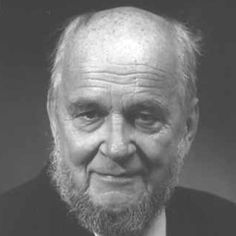
0James Garrett Kelly was a pioneering American community psychologist and Professor Emeritus at the University of Illinois at Urbana-Champaign. Born in Los Angeles, California, he earned his Ph.D. in clinical psychology from the University of Texas. He is widely recognized for his foundational contributions to community psychology, particularly his work on the social ecology of mental health. Kelly developed the concept of 'community competence' and was a leading figure in the study of social networks and their role in psychological well-being. His research on the adaptation of individuals to changing social environments and his advocacy for preventive interventions have been profoundly influential. He mentored generations of community psychologists and his work remains central to the field's understanding of prevention, social support, and ecological analysis.


Key Insights
- ✦
What is James Kelly best known for?
James Kelly is best known for his pioneering contributions to community psychology, particularly his research on the social ecology of mental health. He developed the influential concept of 'community competence,' which describes a community's ability to support the well-being of its members through shared values, effective social networks, and collective problem-solving. He was also a leading figure in the study of how individuals adapt to social change and how social support systems buffer stress, making him a foundational thinker in understanding the relationship between community environments and psychological health.
- ✦
What is the concept of 'community competence'?
James Kelly conceptualized 'community competence' as the capacity of a community to mobilize its resources to address the needs of its members. It is not simply the absence of problems, but a positive set of attributes that enable a community to function effectively. These attributes include a strong sense of collective identity, effective communication networks, diverse leadership, and the ability to learn from experience and adapt to changing circumstances. Kelly argued that building community competence is a primary goal of community psychology, as competent communities are better equipped to prevent mental health problems and promote resilience among their residents.
- ✦
Where did James Kelly work and what was his role?
James Kelly spent the majority of his distinguished academic career at the University of Illinois at Urbana-Champaign. He joined the faculty in 1968 and served as a professor of psychology for many years. He was a key figure in establishing and leading the university's community psychology program, which became one of the most respected in the country. His intellectual leadership and mentorship at Illinois helped shape the field for decades, and he also served as the president of the Society for Community Research and Action (SCRA), the primary professional organization for community psychology.
- ✦
What are James Kelly's key publications?
James Kelly authored and edited numerous influential works. His most significant contribution is arguably his edited volume, 'Toward an Ecological Analysis of Community Mental Health,' published in 1970, which laid out his ecological framework for community psychology. He also published extensively on social networks, prevention, and community adaptation. His 1966 article, 'Ecological Constraints on Mental Health Services,' was a landmark paper that challenged traditional mental health service models and advocated for a more community-based, preventive approach. His writings provided a strong theoretical and empirical foundation for the emerging field.
- ✦
How did James Kelly contribute to understanding social networks?
James Kelly was a forerunner in applying social network analysis to community psychology. He recognized that social networks—the web of relationships connecting individuals to families, friends, neighbors, and organizations—are a critical component of community life and mental health. His research showed how networks provide social support, information, and a sense of belonging. He studied how networks can facilitate adaptation to stressful life events and how their structure and function can either promote or inhibit community competence. This work shifted the focus from individual treatment to the social fabric that sustains well-being.
- ✦
What is the relationship between James Kelly and the Society for Community Research and Action?
James Kelly was a deeply influential figure in the Society for Community Research and Action (SCRA), the major professional organization for community psychologists in North America and increasingly internationally. He served as the president of the SCRA and was actively involved in shaping its mission, values, and activities. His work helped to define the field of community psychology itself. The SCRA's Kelly Award, established in his honor, is given to individuals who have made outstanding contributions to the practice of community psychology, which stands as a testament to his lasting impact on the field.
- ✦
What is James Kelly's legacy in community psychology?
James Kelly's legacy in community psychology is profound and enduring. He is remembered as a visionary thinker who provided the field with a robust ecological framework for understanding and improving mental health. His concepts of community competence and social ecology are fundamental to the field's identity. He was a dedicated mentor who trained a generation of leading community psychologists and, through his work and personal example, embodied the values of collaboration, social justice, and community empowerment that are central to the discipline. His legacy is a field that is more attuned to the social context of human behavior and more committed to systemic change.