


Seymour Bernard Sarason
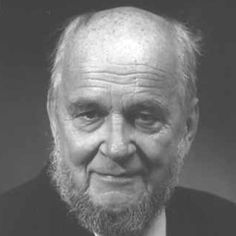
0Seymour Bernard Sarason was a pioneering American psychologist and a foundational figure in the field of community psychology. Born in Brooklyn, New York, he earned his Ph.D. in clinical psychology from Clark University. He spent his entire academic career at Yale University, where he was a professor of psychology and directed the Psycho-Educational Clinic. Sarason is best known for his groundbreaking work on the 'psychological sense of community,' his critiques of traditional clinical psychology and educational practices, and his advocacy for social reform. His seminal books, including 'The Psychological Sense of Community' and 'The Culture of the School and the Problem of Change,' have profoundly influenced community psychology, education, and public health.

Key Insights
- ✦
What is Seymour Sarason best known for?
Seymour Sarason is best known as one of the founders of community psychology and for his influential concept of the 'psychological sense of community.' He defined this as the feeling of belonging, of being part of a larger interdependent structure, and the sense that one matters to the collective. This concept became a central organizing idea in the field, shifting the focus from individual pathology to the health and cohesion of social settings. He is also highly regarded for his critical analyses of the culture of schools and the limitations of traditional clinical psychology.
- ✦
What is the 'psychological sense of community' according to Sarason?
For Seymour Sarason, the 'psychological sense of community' is a fundamental human need and a key variable for understanding social and individual well-being. He described it as a feeling of being connected to and valued by a group or collective, such as a neighborhood, a school, or a religious congregation. He argued that a weak sense of community is a root cause of many social problems, including crime, alienation, and mental health issues. Unlike a simple geographic community, it is a subjective psychological state characterized by mutual trust, shared values, and a sense of interdependence. His work posited that fostering this sense should be a primary goal of social policy and community intervention.
- ✦
What is Seymour Sarason's most famous book?
Seymour Sarason wrote and edited numerous influential books. His most famous is arguably 'The Psychological Sense of Community: Prospects for a Community Psychology' (1974), which was a seminal text that formally introduced and elaborated on the concept that would become a cornerstone of the field. Another highly influential work is 'The Culture of the School and the Problem of Change' (1971), which critically examined the entrenched customs, rituals, and power structures within educational institutions and why reforms often fail. His 1990 book, 'The Predictable Failure of Educational Reform,' also gained significant attention for its trenchant critique of American education policy.
- ✦
Where did Seymour Sarason work and what was his role?
Seymour Sarason spent his entire distinguished academic career at Yale University, joining the faculty in 1945 and remaining for over 40 years. He was a professor of psychology and served as the director of the Psycho-Educational Clinic at Yale, a research and training center. In this role, he was a mentor to countless students who would become influential psychologists themselves. His affiliation with Yale provided a platform for his research on community mental health, education, and social change, and the university was a key base for his advocacy for a more socially engaged and ecologically-minded psychology.
- ✦
What was Sarason's critique of traditional clinical psychology?
Seymour Sarason was a vocal critic of traditional clinical psychology, which he saw as being overly focused on treating individuals in isolation and on diagnosing and remedying internal 'deficits.' He argued that this approach ignored the powerful influence of social context, culture, and systems of power in creating psychological distress. He maintained that a truly effective psychology must extend beyond the clinic to address the problematic environments—such as under-resourced schools, crumbling communities, and dysfunctional institutions—that are often the root causes of individual suffering. This critique was central to his founding of community psychology.
- ✦
What is the connection between Seymour Sarason and community psychology?
Seymour Sarason is widely considered one of the founding fathers of community psychology. His 1974 book, 'The Psychological Sense of Community,' is often cited as a foundational text that helped define the field's core values and focus. His intellectual leadership at Yale and his advocacy for a social reform-oriented psychology provided crucial legitimacy and direction for the emerging discipline. His persistent critique of the medical model and his emphasis on empowerment, prevention, and social change laid the essential groundwork for community psychology as a distinct and vital branch of the discipline.
- ✦
What is Sarason's view on educational reform?
Seymour Sarason was a trenchant and insightful critic of educational reform, arguing that most efforts to change schools fail because they misunderstand the powerful, deep-seated 'culture' of the school itself. In works like 'The Culture of the School and the Problem of Change' and 'The Predictable Failure of Educational Reform,' he argued that reformers often focus on superficial changes, like new curricula, without addressing the underlying structures of power, ingrained rituals, and the lack of a genuine 'psychological sense of community' among teachers and students. He insisted that real change requires a fundamental rethinking of relationships, governance, and the purpose of schooling.
- ✦
How has Seymour Sarason's work influenced modern psychology?
Seymour Sarason's influence on modern psychology is immense and multifaceted. He is a pivotal figure who helped transition psychology from a predominantly individualistic, clinical focus to one that takes ecology and community seriously. His concept of the psychological sense of community remains a central topic of research in social, community, and counseling psychology. His work has also been highly influential in educational psychology, public health, and organizational development. His insistence on seeing problems systemically and his commitment to social justice have become core values in many subfields, ensuring his legacy endures.