



Julian Rappaport
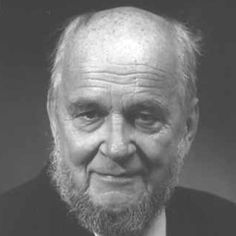
0Julian Rappaport was a distinguished American community psychologist and Professor Emeritus at the University of Illinois at Urbana-Champaign. Born in New York City, he earned his Ph.D. from the University of Rochester. He is widely celebrated for his pioneering work on empowerment theory and for championing the concept of the 'empowering alternative' in community mental health. His seminal book, 'Community Psychology: Values, Research, and Action,' was a foundational text that shaped the field. Rappaport's work challenged traditional deficit-based models of mental health, advocating for a strengths-based, socially just approach that emphasizes the importance of community, participation, and power in promoting psychological well-being.

Key Insights
- ✦
What is Julian Rappaport best known for?
Julian Rappaport is best known for his foundational contributions to community psychology, particularly his development of empowerment theory. He argued that mental health interventions should focus on empowering individuals and communities by redistributing power, enhancing participation, and fostering social justice. His work championed the idea of 'empowering alternatives'—community-based solutions that address systemic inequalities rather than simply treating the symptoms of distress. He fundamentally shifted the field's perspective from a deficit-based, individual pathology model to a strengths-based, ecological approach that values community voice and collective action.
- ✦
What is empowerment theory in community psychology?
Empowerment theory, as articulated by Julian Rappaport, is a framework that focuses on how individuals and communities gain control over their own lives and social contexts. It posits that psychological distress is often rooted in powerlessness, marginalization, and social inequality. The goal of community psychology interventions, therefore, is not simply to 'fix' individuals, but to enable them to gain mastery, access resources, and participate meaningfully in decisions affecting their lives. This involves valuing local knowledge, fostering participatory processes, and challenging oppressive social structures. Empowerment is both a process and an outcome of community action.
- ✦
What are some of Julian Rappaport's key publications?
Julian Rappaport authored and edited several seminal works. His most influential book, 'Community Psychology: Values, Research, and Action,' first published in 1977, was a landmark text that helped define the discipline and its core values. He also co-edited 'Studies in Empowerment: Steps Toward Understanding and Action' with Robert Hess, which provided early, in-depth case studies of empowerment processes. Additionally, his numerous influential journal articles, such as 'In Praise of Paradox: A Social Policy of Empowerment over Prevention,' have been widely cited for their sharp critiques of mainstream psychology and their visionary proposals for social change.
- ✦
Where did Julian Rappaport work and what was his role?
Julian Rappaport spent the vast majority of his distinguished academic career at the University of Illinois at Urbana-Champaign (UIUC). He joined the faculty in 1968 and was a professor of psychology for over four decades. He also held a joint appointment in the Department of Landscape Architecture. At UIUC, he was a key figure in establishing the university as a major center for community psychology research and training. Upon his retirement, he became Professor Emeritus and remained an active thinker and writer in the field, continuing to influence new generations of scholars.
- ✦
What is the 'empowering alternative' concept in Rappaport's work?
The 'empowering alternative' is a central concept in Julian Rappaport's work. It refers to community-based initiatives that offer a meaningful and socially just alternative to traditional, often pathologizing, mental health services. These alternatives are characterized by participant control, a focus on collective strengths, and a challenge to established power structures. Rappaport argued that instead of focusing primarily on prevention, community psychology should focus on creating and supporting these alternatives, which empower individuals by providing them with a genuine role in shaping their own communities and solving their own problems.
- ✦
How has Julian Rappaport influenced the field of community psychology?
Julian Rappaport is considered one of the founding figures of community psychology. His intellectual leadership was instrumental in shaping the field's core values, which include a commitment to social justice, collaboration, and the importance of context. He challenged the field to move beyond simply locating problems within individuals and to instead examine how social systems, policies, and power dynamics create psychological distress. His concept of empowerment has become a central goal and a guiding principle for community psychologists around the world, influencing research, practice, and social policy.
- ✦
What is Rappaport's critique of the traditional medical model in psychology?
Julian Rappaport was a vocal critic of the traditional medical model in psychology, which he saw as reductive and oppressive. He argued that the medical model, with its focus on diagnosing and treating individual 'deficits' or 'pathologies,' obscures the social, political, and economic roots of psychological distress. He contended that this model often disempowers individuals by labeling them as 'patients' or 'clients,' thereby reinforcing a power imbalance between the professional and the person. He advocated instead for a community psychology approach that is more ecological, participatory, and focused on systemic change.
- ✦
What is the relationship between Julian Rappaport and the self-help movement?
Julian Rappaport was a strong advocate for self-help and mutual support groups. He saw them as powerful examples of 'empowering alternatives' to professional mental health services. He argued that self-help groups offer a unique form of support and empowerment because they are organized by and for their members, allowing for shared experience, collective action, and the development of personal agency. His research suggested that participation in these groups could be more effective for certain individuals than traditional therapy, primarily because they foster a sense of community and purpose that counteracts social isolation and powerlessness.