



Roger Wolcott Sperry
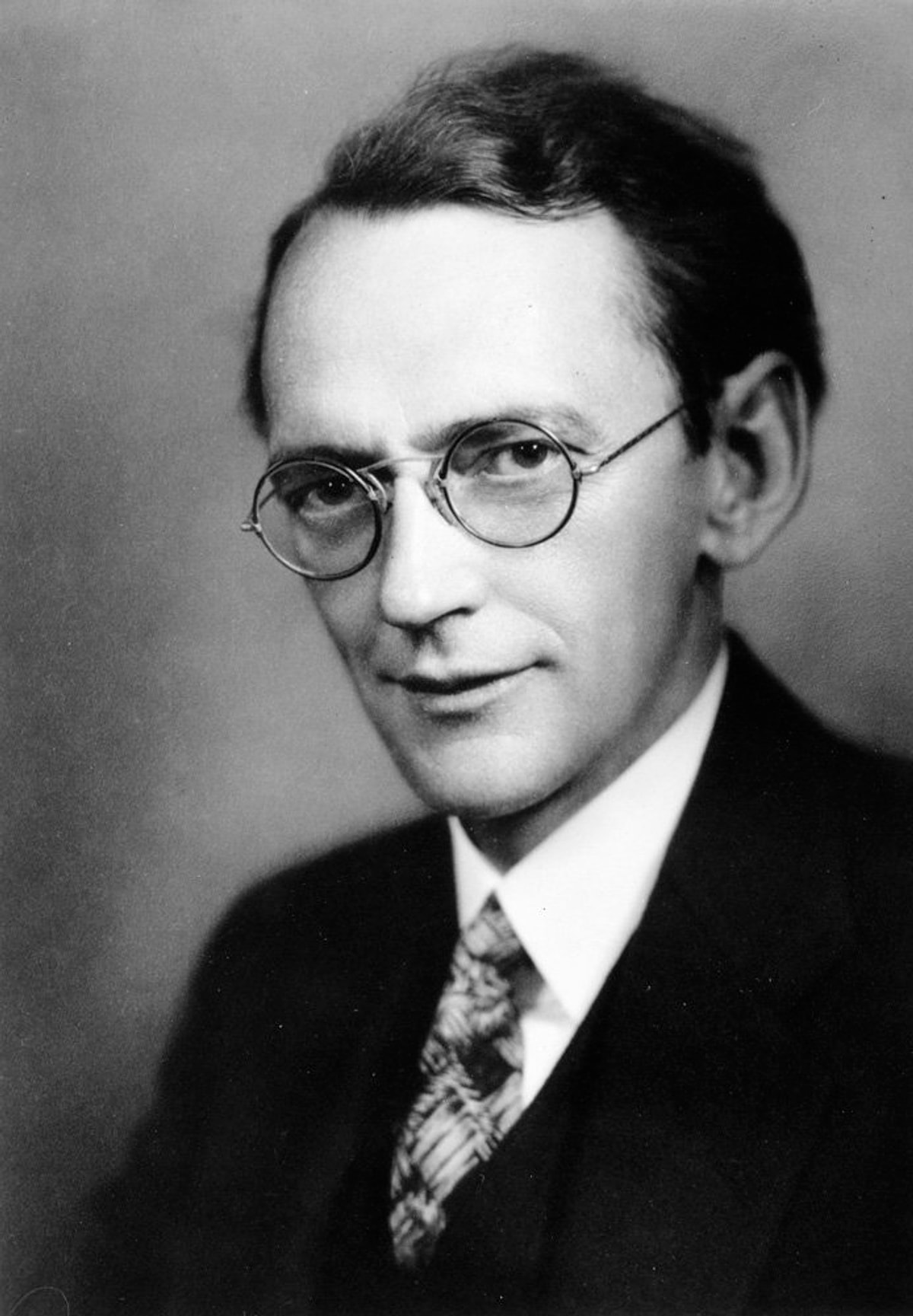
0Roger Wolcott Sperry (1913–1994) was an American neuropsychologist, neurobiologist, and cognitive neuroscientist whose pioneering research on brain function revolutionized the field of neuroscience. He is best known for his groundbreaking split-brain experiments, which demonstrated that the left and right cerebral hemispheres possess specialized, independent functions[reference:0]. His work revealed that the left hemisphere is dominant for language and analytical tasks, while the right hemisphere excels in spatial and musical abilities[reference:1][reference:2]. His research on neural plasticity and the chemoaffinity theory also advanced the understanding of how nerve fibers regenerate and form specific connections[reference:3]. In 1981, he was awarded the Nobel Prize in Physiology or Medicine for his discoveries concerning the functional specialization of the cerebral hemispheres[reference:4]. Sperry's work not only transformed neuroscience but also sparked profound discussions on consciousness and the mind-brain relationship[reference:5].



Key Insights
- ✦
What is Roger Sperry best known for?
Roger Sperry is best known for his pioneering split-brain research, which demonstrated that the left and right cerebral hemispheres have specialized, independent functions[reference:6]. He showed that the left hemisphere is typically dominant for language, analytical thought, and calculation, while the right hemisphere excels in spatial perception, music, and complex pattern recognition[reference:7][reference:8]. For this groundbreaking work, he was awarded the 1981 Nobel Prize in Physiology or Medicine[reference:9].
- ✦
What was the split-brain experiment?
Sperry's split-brain experiments involved studying patients and animals whose corpus callosum—the bundle of nerves connecting the two brain hemispheres—had been severed, often to treat severe epilepsy[reference:10][reference:11]. He presented visual information to only one hemisphere at a time and found that each hemisphere processed information independently. For example, a split-brain patient could name an object presented to the left visual field (right hemisphere) but could not verbally identify it, as language is typically processed in the left hemisphere[reference:12]. This demonstrated that the two hemispheres function as separate, specialized brains[reference:13].
- ✦
What was Sperry's chemoaffinity theory?
The chemoaffinity theory, proposed by Sperry in the 1940s and 1950s, suggests that developing nerve cells are guided to their precise targets by specific chemical markers. Sperry demonstrated this through experiments on amphibians, where he severed the optic nerve, rotated the eye 180 degrees, and observed that the regenerating nerve fibers returned to their original synaptic connections[reference:14]. This discovery revealed that neurons are not simply guided by mechanical pathways but are directed by molecular cues, a principle that has become fundamental to understanding neural development and regeneration.
- ✦
What are Roger Sperry's key publications?
Roger Sperry authored numerous influential papers, including 'Cerebral Organization and Behavior' (1961), 'The Great Cerebral Commissure' (1964), and 'Mind, Brain and Humanist Values' (1965)[reference:15][reference:16]. His later writings explored the philosophical implications of his work, addressing consciousness, free will, and the mind-brain relationship[reference:17]. His extensive bibliography includes over 300 scholarly works, many of which remain foundational in neuropsychology and cognitive neuroscience.
- ✦
What awards did Roger Sperry win?
Roger Sperry received numerous prestigious awards throughout his career. He was elected to the National Academy of Sciences (1960) and the American Academy of Arts and Sciences (1963)[reference:18]. He received the Howard Crosby Warren Medal (1969), the Distinguished Scientific Contribution Award from the APA (1971), the Passano Award (1973), the Karl Lashley Award (1976), the Wolf Prize in Medicine (1979), and the Albert Lasker Medical Research Award (1979)[reference:19]. In 1981, he was awarded the Nobel Prize in Physiology or Medicine for his discoveries on cerebral hemisphere specialization[reference:20].
- ✦
What is the significance of Sperry's work on split-brain patients?
Sperry's work on split-brain patients had profound implications for neuroscience and psychology. It provided the first concrete evidence that the two hemispheres of the brain are not merely symmetrical but are functionally specialized[reference:21]. This challenged the prevailing notion that the brain operates as a single, unified entity and instead revealed a dual-consciousness phenomenon, where each hemisphere could process information independently[reference:22]. His research laid the foundation for modern cognitive neuroscience, influencing studies on language, perception, memory, and even the nature of consciousness itself[reference:23].
- ✦
What was Sperry's educational background?
Sperry was born in Hartford, Connecticut, and attended Hall High School in West Hartford[reference:24]. He earned his Bachelor's degree in English literature from Oberlin College in 1935, followed by a Master's degree in psychology from Oberlin in 1937[reference:25][reference:26]. He then completed his Ph.D. in zoology from the University of Chicago in 1941 under the supervision of Paul A. Weiss[reference:27][reference:28]. He conducted postdoctoral research with Karl Lashley at Harvard University and the Yerkes Primate Research Center[reference:29].
- ✦
Where did Roger Sperry work?
After his postdoctoral research, Sperry worked at the Yerkes Laboratories of Primate Biology (1942-1946), then joined the faculty at the University of Chicago (1946-1954)[reference:30][reference:31]. In 1954, he was appointed Hixon Professor of Psychobiology at the California Institute of Technology (Caltech), where he remained until his retirement in 1984[reference:32][reference:33]. He was later named Board of Trustees Professor Emeritus[reference:34]. His affiliation at the time of his Nobel Prize was Caltech[reference:35].