



Balkan Ghosts: A Journey Through History
 Robert D. Kaplan
Kaplan's travelogue argues that the Balkans are trapped in a cycle of 'ancient hatreds'—centuries-old ethnic and religious rivalries between Orthodox Serbs, Catholic Croats, and Muslim Bosnians that periodically erupt into violence. Drawing on a decade of travel and interviews across Yugoslavia, Romania, Bulgaria, and Greece, he contends that these deeply rooted antagonisms, not contemporary political manipulation, explain the region's tragic history. The book became a Washington sensation when President Clinton reportedly read it during the 1993 Bosnia crisis, drawing the conclusion that intervention was futile until 'those folks got tired of killing each other.'
Key Details
Related Books
View AllSimilar books from the same category, ranked by shared topics and reader engagement.

Key Insights — Read in 10 Minutes
What is the central thesis of Balkan Ghosts, and what does it reject?
Kaplan argues that the Balkans are defined by 'ancient hatreds'—deep, centuries-old ethnic and religious conflicts between Orthodox Serbs, Catholic Croats, and Muslim Bosnians that inevitably erupt into violence. He rejects explanations that locate the cause of Balkan wars in contemporary political manipulation, economic crisis, or elite-driven nationalism. For Kaplan, the violence of the 1990s was the latest chapter in a primordial struggle, not a modern invention. This thesis made the book both influential and controversial, as critics argued it provided a convenient excuse for Western inaction.
How did Balkan Ghosts influence President Clinton's Bosnia policy?
According to multiple accounts, Clinton received Kaplan's book as a Christmas gift in 1993 and read it during the critical period when his administration was debating intervention in Bosnia. The book's portrayal of the region as trapped in unbreakable cycles of ethnic violence reportedly reinforced Clinton's inclination to avoid military involvement, with the conclusion that nothing could be done 'until those folks got tired of killing each other.' Journalist Elizabeth Drew and Bosnian editor Kemal Kurspahic both documented this influence. Kaplan himself later insisted this was a misreading, noting the book was completed before the war and contained little about Bosnia specifically.
What specific evidence do critics cite against Kaplan's 'ancient hatreds' thesis?
Critics point to historical evidence that Serbs, Croats, and Muslims lived in relative peace for long periods, including in cities like Sarajevo, and that the most intense violence occurred only after political entrepreneurs like Slobodan Milosevic deliberately mobilized ethnic grievances. Scholar Noel Malcolm's Bosnia: A Short History was explicitly offered as an antidote to Kaplan's 'bad history.' Timothy Garton Ash argued that Kaplan's language—'the landscape of atrocities,' 'savage hatreds'—lent apparent credibility to the view that ethnic conflict was endemic and intervention futile. The consensus among regional specialists is that ethnicity was mobilized by elites rather than being an autonomous cause of war.
What is the relationship between Balkan Ghosts and Kaplan's later geopolitical works?
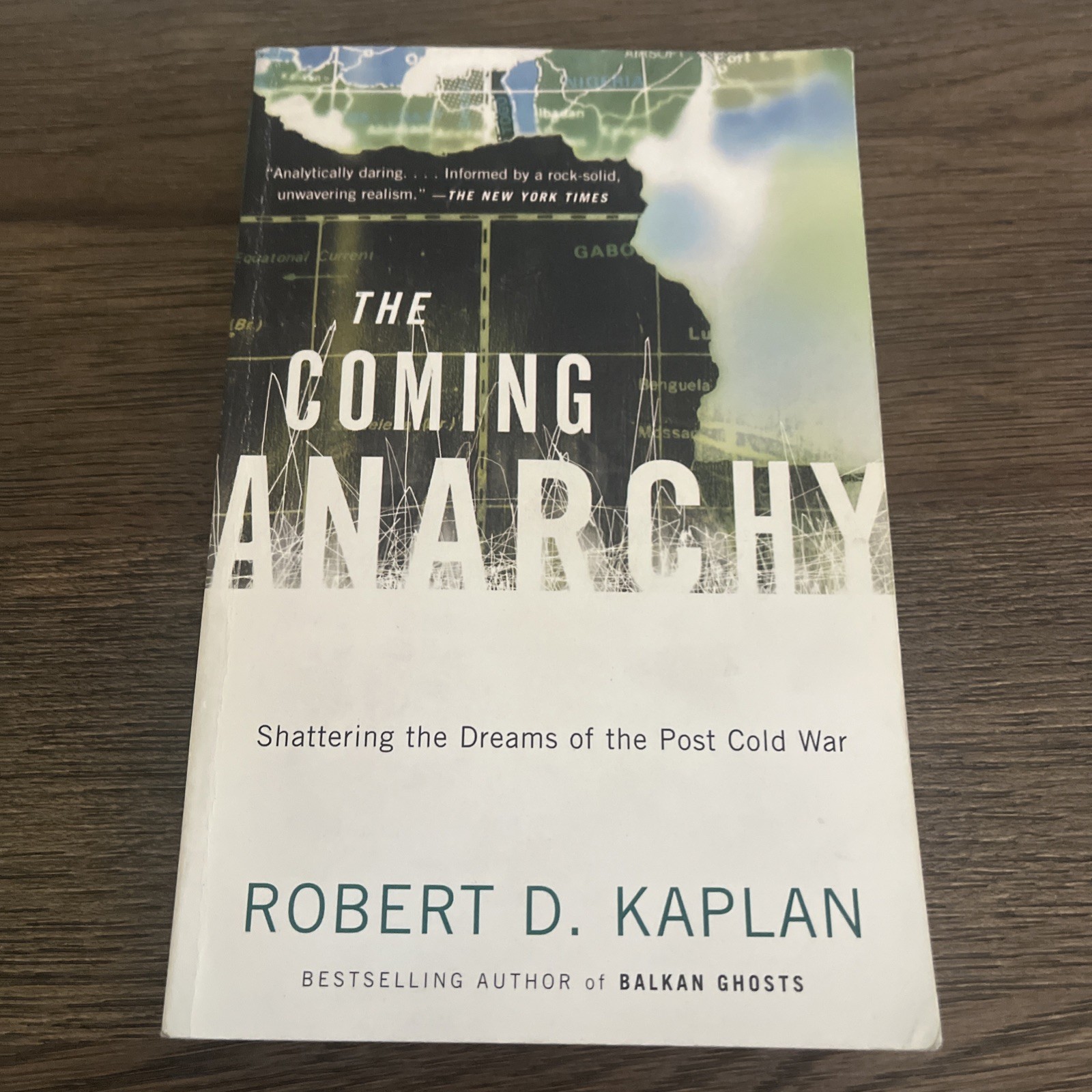
Balkan Ghosts is a travelogue and historical narrative, not a theoretical treatise. Its emphasis on deep cultural and historical patterns as drivers of conflict prefigures Kaplan's later arguments about geography and culture as enduring constraints on political outcomes. In The Coming Anarchy (1994), he extended this lens globally, arguing that environmental and demographic pressures would produce violent disorder. The Revenge of Geography (2012) systematized his conviction that physical and cultural geography shape state behavior. Balkan Ghosts thus represents an early, regionally specific expression of Kaplan's broader worldview.
Why did Kaplan object to how his book was used in policy debates?
Kaplan published a Washington Post essay in 1995 arguing that his book was being misused as an anti-intervention tract. He noted that Balkan Ghosts was written in the late 1980s and completed in January 1991, before the Yugoslav wars began, and that it contained only four chapters on former Yugoslavia—one on Croatia, one on Serbia and Kosovo, one on Macedonia, and one on Milovan Djilas. He personally advocated 'lift-and-strike' intervention against Bosnian Serbs and had briefed the U.S. Army on the case for involvement. His argument was that acknowledging ethnic strife does not logically lead to inaction, since a power vacuum created by Western confusion was the proximate cause of mass violence.
How have scholars assessed the book's accuracy in hindsight?
Contemporary scholarship largely rejects the 'ancient hatreds' framework as an oversimplification. Researchers note that ethnic identity is not an ontological feature of human life and cannot serve as an independent explanatory principle. The Yugoslav wars are now understood as driven by political elites who mobilized ethnicity for power, not by inevitable primordial antagonisms. However, some of Kaplan's specific observations remain valuable: his identification of Kosovo as the region's most dangerous flashpoint proved prescient, and his attention to the plight of ethnic minorities in Bulgaria, Romania, and elsewhere highlighted genuine structural tensions. The book is best read as a vivid travel narrative with a flawed causal thesis.
Show 1 more insights
What happened to Kaplan's reputation as a result of this controversy?
The 'ancient hatreds' controversy became a defining feature of Kaplan's public profile, particularly after journalist Elizabeth Drew reported Clinton's reliance on the book. Kaplan spent years defending his work against charges that it enabled Western passivity. His subsequent books, including The Coming Anarchy and The Revenge of Geography, cemented his reputation as a provocative geopolitical essayist rather than a regional specialist. While Balkan Ghosts was nominated for a Pulitzer Prize and praised for its narrative power, its thesis remains a cautionary example of how compelling prose can shape policy in problematic directions.
Wealthy Psyche is an intellectual archive. We do not host, distribute, or sell book copies — physical or digital. We provide structured knowledge to help you think better, faster.