



The Revenge of Geography: What the Map Tells Us About Coming Conflicts and the Battle Against Fate
 Robert D. Kaplan
Kaplan argues that the post-Cold War assumption of a 'flat,' borderless world—where technology and globalization would erase geography—was an illusion exposed by Iraq. His central claim is that classical geopolitics, the tradition running from Mackinder's Heartland through Spykman's Rimland and Mahan's sea power, retains explanatory force because terrain, climate, and proximity set hard limits on what human agency can achieve. He applies this lens region by region to Europe, Russia, China, India, and Iran, synthesizing older geopolitical thinkers rather than generating new fieldwork. The book's mechanism is straightforward: before analyzing politics, look at the map.
Key Details
Related Books
View AllSimilar books from the same category, ranked by shared topics and reader engagement.
Key Insights — Read in 10 Minutes
What is the central claim of The Revenge of Geography, and what does it reject?
Kaplan argues that geography—terrain, climate, proximity—remains the most enduring constraint on what any state can achieve, and that the post-Cold War belief in a 'flat,' borderless world was an optimism Iraq exposed. He rejects the assumption that globalization, technology, and liberal universalism have rendered physical geography irrelevant. Drawing on Thucydides and Hans Morgenthau, he contends that while human agency matters, it operates within limits dictated by the map. The book positions itself as a corrective to 'end of history' thinking and the 'geo-economics' school .
What specific intellectual tradition does Kaplan revive, and who are its key figures?
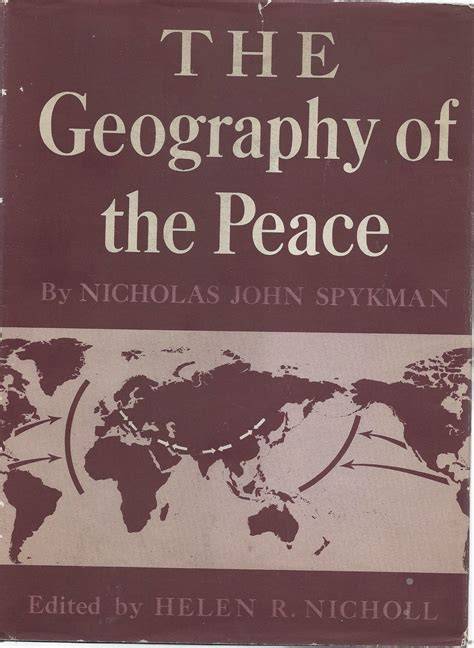
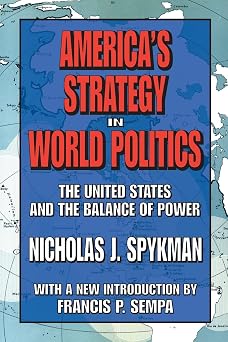
Kaplan resurrects classical geopolitics, a body of thought Western academia set aside after 1945 due to its association with Nazi Lebensraum theory. The key figures are Halford Mackinder, whose Heartland thesis identified the Eurasian interior as the pivot of world power; Nicholas Spykman, who countered that the Rimland—the coastal crescent—held the key; and Alfred Thayer Mahan, who argued maritime power determined global dominance . Kaplan's contribution is synthesis and application, not new theory. He explicitly distinguishes classical geopolitics from its Nazi distortion .
How does Kaplan's argument relate to Jared Diamond's Guns, Germs, and Steel?
Both books treat geographic and environmental factors as fundamental shapers of human history, but they operate at different scales and with different purposes. Diamond's work is macro-historical and explanatory, asking why some societies developed differently over millennia. Kaplan's is contemporary and prescriptive, asking how geography constrains great-power competition in the twenty-first century. Reviewers have noted the affinity: Anne-Marie Slaughter described Kaplan's approach as telling the same kind of story Diamond tells, with geography and climate shaping the more variable element of human choice . The comparison is useful but imperfect; Diamond is a scientist, Kaplan a journalist-strategist.
What is the most common criticism of Kaplan's argument, and how does he respond?
The dominant criticism is that Kaplan is a geographic determinist—that he overstates the role of terrain and understates contingency, institutions, and human agency. Critics including geographer Harm de Blij argued that Kaplan's book misrepresents geography as a discipline . Kaplan anticipates this charge and retreats to what he calls 'partial determinism': geography is an indispensable 'backdrop' to the drama of ideas and will, not a script that dictates outcomes . His formulation—'the map, though not determinative, is the beginning of discerning a historical logic'—is an attempt to occupy the middle ground between determinism and pure contingency .
How has the book's regional analysis held up since its 2012 publication?
Kaplan's diagnosis of geography's enduring relevance has aged better than some specific predictions. His forecast that the Mediterranean would 'become a connector' rather than a divide, powered by offshore energy, has seen partial validation . His reading of Russia as lacking an uplifting ideology beyond geography, and therefore structurally tense with China, remains analytically useful. His prediction that China would shift from land-border resolution to maritime assertiveness—'project hard power primarily through its navy'—has proven prescient . Where the book has aged less well is in its relative neglect of domestic political factors and technological change in shaping state behavior.
What is a common misconception about what The Revenge of Geography actually argues?
Many readers assume the title signals full geographic determinism—that Kaplan believes the map dictates everything. In fact, Kaplan explicitly rejects that reading. He calls for 'the partial determinism we all need,' positioning geography as a necessary but insufficient condition for understanding outcomes . The confusion is understandable: the book's structure, which begins each chapter with a reading of territorial lineaments, creates a determinist impression. But Kaplan's analytical practice is more nuanced. He treats geography as the baseline from which other factors—culture, demography, leadership—operate, not as a substitute for them .
Show 2 more insights
Why does the book give so much attention to Mackinder and Spykman rather than contemporary geopolitical scholarship?
Kaplan's stated purpose is rehabilitation, not innovation. Classical geopolitics fell into disrepute after World War II because of its association with Nazi Geopolitik, and Western academia largely abandoned it. Kaplan argues that this was an overcorrection—that Mackinder, Spykman, and Mahan offer useful tools for understanding contemporary great-power competition even if their Victorian and imperial assumptions are unacceptable . By reviving these thinkers in an accessible narrative, he aims to make their insights available to policymakers and general readers who may never encounter them in academic form. The book is a work of synthesis and advocacy, not original scholarship.
What role does the United States play in Kaplan's geopolitical vision?
Kaplan argues that the United States is destined to remain the great balancing power in Eurasia, short of a dramatic lurch toward isolationism . Geography has given America strategic options unavailable to any other power: oceanic buffers, a resource-rich continental interior, and the ability to project power across both the Atlantic and Pacific. But Kaplan also suggests Washington might regret far-flung interventions in Iraq and Afghanistan rather than tending to its direct neighbor Mexico, which he sees as potentially a 'semifailed state' . His vision is of an offshore balancer, not a global hegemon or a retreating power.
Wealthy Psyche is an intellectual archive. We do not host, distribute, or sell book copies — physical or digital. We provide structured knowledge to help you think better, faster.