


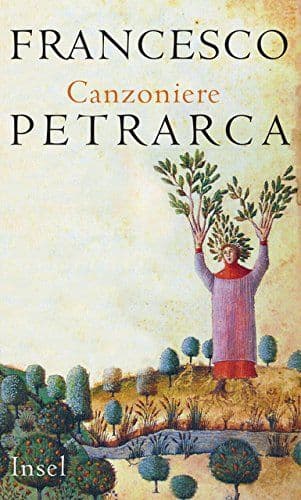
Canzoniere (Rerum vulgarium fragmenta)

Petrarch's Canzoniere is a curated sequence of 366 Italian poems, mostly sonnets, organized by the poet himself around his love for Laura and the moral and spiritual conflict that love produces. Its defining mechanism is the book as a self-edited whole: poems of longing, absence, and mourning are arranged as a retrospective narrative of a divided self, moving from erotic attachment toward penitence and a turn to the Virgin Mary. The title Rerum vulgarium fragmenta, 'fragments of vernacular things', signals both modesty and design. The collection fixed the sonnet as the dominant lyric form of European love poetry and made introspective ambivalence its central subject.
Key Insights
✦What is distinctive about the Canzoniere as a book rather than a pile of poems?
Petrarch revised and rearranged the collection over much of his later life, so its order is an authorial artifact and not an accident of transmission. The poems are framed by an opening sonnet that addresses readers who have known love's sorrows and a closing canzone to the Virgin, which gives the whole a penitential arc. Scholars including Ugo Foscolo's successors and, more recently, Marco Santagata have studied the layers of composition and the logic of sequence. The central point is that meaning arises from arrangement: the individual lyric is read as a moment within a self-curated, retrospective story of desire and its renunciation.
✦How did the Canzoniere establish the Petrarchan sonnet and Petrarchism?
Petrarch did not invent the sonnet, which predates him, but he made it the principal vehicle of lyric introspection and gave it a recognizable repertoire: the idealized and unattainable beloved, antitheses of fire and ice, hope and fear, and an anguished self observing its own contradictions. The octave-and-sestet structure became the model of the form. Writers across Europe, including Pietro Bembo in Italy, Wyatt and Sidney in England, and Ronsard in France, adapted this vocabulary, producing a widespread movement known as Petrarchism. Bembo's advocacy of Petrarch as the model of Italian poetic style was especially influential in codifying his authority.
✦Was Laura a real person, and does it matter?
Petrarch presents Laura as a living woman he first saw in Avignon in 1327 and mourned after her death in 1348, and later tradition has tried to identify her with a historical figure, with proposals that remain unproven. Many scholars treat the question as unresolvable and secondary. The poems themselves cultivate a play on her name and on the laurel, linking love to poetic glory, which suggests that Laura functions as a literary construction as well as a possible biographical figure. Readers are better served by attending to how the sequence builds her image than by seeking a decisive identification.
✦How does the Canzoniere relate to Petrarch's Latin works and humanist identity?
Petrarch regarded his Latin writing, such as the Africa and his letters, as his serious claim to fame and described his Italian poems with some self-deprecation. The Canzoniere nonetheless reflects his humanist formation, drawing on classical and Provençal models and transforming them into a new introspective lyric. Its themes of conflicting desire, fame, time, and moral conversion parallel those in the Secretum, where Augustine challenges him about his attachment to Laura and to glory. Reading the Canzoniere alongside the Latin works shows that his vernacular poetry was not separate from humanism but a vehicle for its concerns with selfhood and ethics.
✦Is the Canzoniere simply a collection of love poems to an idealized woman?
That is a common simplification. Although love for Laura supplies the main thread, the collection also contains political canzoni, poems of friendship, meditations on aging and time, and religious poems, and its dominant emotional register is self-division rather than celebration. The speaker repeatedly regrets and critiques his own passion. Later interpreters, particularly in feminist criticism, have also pointed out that Laura remains largely silent and objectified, which shaped the conventions that Petrarchan poets inherited. A careful reading therefore treats the book as an exploration of the poet's inner conflict at least as much as a portrait of the beloved.
✦Which English translations of the Canzoniere exist, and how do they differ?
The poems were written in Italian, and translators face the challenge of rendering intricate rhyme schemes and wordplay. Notable English versions include Robert M. Durling's bilingual edition with extensive commentary, which uses prose-like fidelity to the meaning, and later verse translations that attempt to preserve rhyme and form, such as those by Mark Musa and A. S. Kline's freely available rendering. Readers should decide whether they prioritize literal accuracy, which Durling's edition offers, or poetic form, and should consult notes that explain the sequence's structure and its allusions to classical and medieval sources.
Wealthy Psyche is an intellectual archive. We do not host, distribute, or sell book copies — physical or digital. We provide structured knowledge to help you think better, faster.