


Travel Journal (Journal de voyage en Italie)
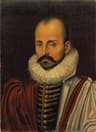
Montaigne's Travel Journal is the record of a long journey through Switzerland, Germany, and Italy in 1580 and 1581, and it is best understood as a working diary of observation rather than a polished literary work. Its distinctive mechanism is dual authorship and dual language: the early portions were dictated to a secretary who narrates Montaigne in the third person, while Montaigne himself later takes up the pen and writes in Italian for part of the trip. The journal records baths and mineral springs, religious practice, local customs, and his own bodily condition with attentive curiosity, and it supplies a documentary counterpart to the self-study of the Essays.
Key Insights
✦What kind of text is the Travel Journal, and what does it set aside?
It is a private working diary, not a literary composition prepared for publication. Montaigne did not shape it into the reflective prose of the Essays, and it records dates, distances, lodging, food, and encounters in a direct, practical manner. This sets aside the polished self-portrait of his major work in favor of a daily log. The result is valuable precisely because it is unguarded: it shows what he noticed when he was not composing for readers, including curiosity about technology, local manners, and the condition of his health during treatment at various baths.
✦How was the manuscript discovered, and how was it first published?
The manuscript was not known for centuries and was found in a chest at the château of Montaigne in the eighteenth century. It was first published in 1774 in an edition prepared by Meunier de Querlon, and the discovery attracted wide interest because it revealed a less familiar Montaigne. The original manuscript has since been the basis of later scholarly editions. Because the early publication involved editorial decisions, readers interested in textual details should consult modern critical editions rather than relying only on the first printed version.
✦Why does the journal switch between a secretary's voice and Montaigne's own?
For the first part of the journey the text is written by a secretary who refers to Montaigne in the third person, which gives the narrative a slightly detached, reportorial quality. At a later point Montaigne takes over the writing himself and shifts to the first person, and for a stretch he writes in Italian rather than French. This change affects how readers interpret tone and reliability, since the secretary's account is filtered while Montaigne's own entries are more directly personal. The shift is one of the journal's most discussed features and is often connected with Montaigne's wish to practice the language.
✦How does the journal relate to the Essays?
The journal and the Essays share a deep interest in custom, bodily experience, and the variety of human practice. The journey itself coincided with the first publication of the Essays and with Montaigne's search for relief from kidney stones through mineral waters, which the diary records in detail. Reading the two together shows how the same curiosity about difference operates in a private log and in a literary work. The journal also lets readers test the essayist's claims about his habits and temperament against his everyday notes, though scholars caution against treating it as a simple key to the Essays.
✦Is the Travel Journal a conventional humanist travelogue of antiquities?
A tempting assumption is that a humanist's Italian journey would center on classical ruins and learned commentary. Montaigne does visit Rome and engages with its antiquities, but the journal gives equal weight to inns, baths, religious services, and the daily practices of the people he meets. His interest in Protestant and Catholic ritual, in how foreigners are treated, and in unfamiliar manners reflects the curiosity about custom that marks his thought generally. The journal is therefore better read as an anthropological and personal record than as an antiquarian guide.
✦Which editions and translations of the Travel Journal should readers consult?
The journal was written in French, with a substantial portion in Italian, so English readers rely on translations that must handle the shift of language and the change from secretary to author. Modern English translations, including one by Donald Frame in his edition of Montaigne's works, are the usual starting point, and French critical editions give fuller apparatus. Readers should check whether a translation preserves the third-person secretarial sections and indicates the Italian passages, since these features are central to understanding how the text was produced.
Wealthy Psyche is an intellectual archive. We do not host, distribute, or sell book copies — physical or digital. We provide structured knowledge to help you think better, faster.