


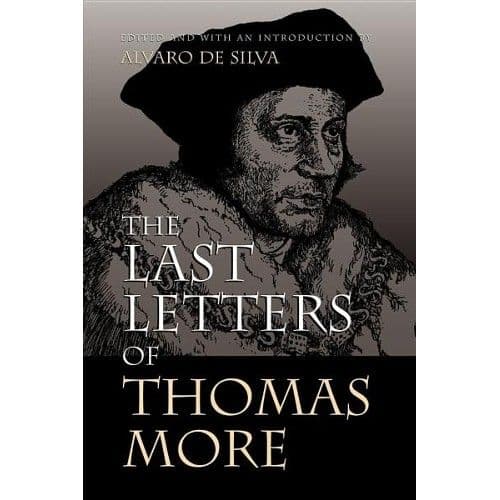
The Last Letters of Thomas More

The Last Letters of Thomas More is a modern editorial grouping of the correspondence More wrote from the Tower of London in 1534 and 1535, chiefly to his daughter Margaret Roper and to friends. Its distinctive feature is the interplay of private tenderness and public conscience: letters to Margaret combine family affection and wit with a steady refusal to swear the oath tied to the Act of Succession, and they rehearse his reasoning about conscience, obedience, and fear. The collection has no single author-designed shape. Its power lies in how a humanist stylist uses the familiar letter to record imprisonment and a principled stand without self-dramatizing.
Key Insights
✦What do the Last Letters contain, and why is the grouping editorial?
The letters were written in different circumstances and survive through different routes, so the title names a modern assembly rather than a book More designed. The core is his exchange with his daughter Margaret Roper during his imprisonment, along with notes to friends and family and a few shorter writings from the same period. Because the grouping is a editors' choice, collections differ in which items they include and in how they order them. Readers should check what a given edition contains and how it dates each piece.
✦How do the letters to Margaret Roper combine affection with argument?
The letters move between warm, sometimes humorous domestic feeling and a careful account of why More will not take the oath. He explains that his conscience forbids him to swear to the preamble of the Act of Succession as framed, while taking care not to condemn others who swore. The tone is calm and often gentle, and they show him preparing his family for a likely death. The pairing of intimacy with principle is what makes them distinctive among prison writings.
✦How do the letters relate to the Dialogue of Comfort?
They were composed in the same imprisonment and share concerns about fear, suffering, and trust in God. The Dialogue of Comfort treats these themes in an extended fictional dialogue set in Hungary, while the letters address them directly and personally. Reading both clarifies how More used different forms for related purposes: the dialogue for sustained pastoral argument, the letters for immediate, relational communication. Scholars often use the letters to gauge how closely the Dialogue's consolation reflects his own state of mind, though the correspondence between life and literary text should not be assumed to be exact.
✦How were the letters preserved, and what are the textual problems?
Some letters were written with coal or whatever was available and passed out of the Tower with the help of those who visited or served him. Their survival is partly due to copies and to Margaret Roper's role in preserving her father's papers. Some texts are known through early printed editions of More's English works, notably that of 1557 edited by William Rastell, rather than through autograph originals. This means editors must weigh printed versions against surviving manuscripts, and questions of dating and authenticity affect certain items.
✦Are the Last Letters a straightforward account of martyrdom?
A common oversimplification treats them as a martyr's testament written with the end already in view. In fact the letters show More hoping to avoid execution, trying legal and practical arguments, and expressing fear as well as resolve. Later traditions of sainthood and dramatic retellings, including the play and film A Man for All Seasons, have shaped popular images of him that the letters complicate. A careful reading recognizes both his steadfastness and the uncertainty and human feeling the letters preserve.
✦Which editions of the Last Letters should readers consult?
The standard scholarly source for More's correspondence is Elizabeth Frances Rogers's edition, The Correspondence of Sir Thomas More (1947), which gathers the letters with notes. Selected editions of the Tower writings are also available for general readers, and the Yale Complete Works includes related Tower material. Because spellings and selections vary, readers should check whether an edition modernizes the English and which letters it includes.
Wealthy Psyche is an intellectual archive. We do not host, distribute, or sell book copies — physical or digital. We provide structured knowledge to help you think better, faster.