



Catuhśatakaṭīkā
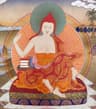
The Catuhśatakaṭīkā is Chandrakīrti's commentary on Āryadeva's Four Hundred Stanzas, and its central framework is a thoroughgoing Madhyamaka rejection of all intrinsic natures (svabhāva). Where the Yogācāra commentator Dharmapāla read Āryadeva as refuting only imagined natures while leaving real natures intact, Chandrakīrti argues that the text dismantles every ascription of inherent existence whatsoever[citation:2]. The commentary is also a rich source for the bodhisattva path, interweaving philosophical refutation with narratives and practical advice, and it became influential in Tibetan scholasticism as a companion to Chandrakīrti's better-known works.
Key Insights
✦What is the central argument of the Catuhśatakaṭīkā, and how does it differ from Dharmapāla's commentary?
The central argument is that Āryadeva's Four Hundred Stanzas must be read as a thoroughgoing rejection of all intrinsic natures (svabhāva) whatsoever. This distinguishes Chandrakīrti's commentary sharply from that of Dharmapāla, a Yogācāra thinker who interpreted the same text as refuting only imagined natures (parikalpitasvabhāva) while leaving real natures untouched[citation:2]. For Chandrakīrti, there is no level of reality at which things possess inherent existence; dependent arising itself is the proof of emptiness. The commentary thus positions Āryadeva firmly within the Madhyamaka tradition and against any attempt to harmonize his arguments with Yogācāra commitments. This polemical dimension is central to the text's philosophical significance.
✦How was the Sanskrit text of the Catuhśatakaṭīkā recovered, and what is the state of the critical edition?
In 1911, Haraprasad Shastri discovered a batch of palm-leaf manuscripts containing fragments of the commentary, written in eleventh-century Newari script[citation:9][citation:13]. He published these fragments in the Memoirs of the Royal Asiatic Society of Bengal three years later. The standard edition of the Sanskrit fragments together with the Tibetan translation was prepared by Kōshin Suzuki and published by the Sankibo Press in Tokyo in 1994[citation:1][citation:15]. Suzuki's edition remains the basis for scholarly work on the text, though the Sanskrit is fragmentary and the Tibetan translation is essential for reconstructing the full commentary. The Tibetan version is preserved in the Derge and Peking editions of the Tripitaka[citation:1].
✦What is available in English translation, and what are the limitations?
The only substantial English translation is Karen C. Lang's Four Illusions: Candrakīrti's Advice for Travelers on the Bodhisattva Path, published by Oxford University Press in 2003[citation:8]. This volume translates the first four chapters of the commentary, which address the body, sensation, and the illusions of permanence, pleasure, purity, and self. It does not cover the philosophical chapters (chapters eight through sixteen) where Chandrakīrti's critique of intrinsic nature is most fully developed. Earlier partial translations exist in French and Italian, but no complete English translation of the Catuhśatakaṭīkā has been published. Readers who need the full text must work with Suzuki's Sanskrit-Tibetan edition or consult the Tibetan translation.
✦What role does the Catuhśatakaṭīkā play in the Tibetan tradition, and how does it relate to Chandrakīrti's other works?
The commentary was influential in Tibet, where it was studied alongside Chandrakīrti's Madhyamakāvatāra and Prasannapadā as part of the Madhyamaka curriculum. Tibetan historians such as Bu ston and Tāranātha drew on Chandrakīrti's biographical account of Āryadeva, which is preserved in the commentary's opening chapter[citation:13]. The Catuhśatakaṭīkā is often read as a companion to the Madhyamakāvatāra: both are commentaries on root texts (Āryadeva's verses and Nāgārjuna's verses, respectively), and both develop Chandrakīrti's Prāsaṅgika position. The commentary is also notable for its citation of the Lotus Sūtra alongside the Samādhirājasūtra, suggesting Chandrakīrti's familiarity with Mahāsāṃghika scriptural traditions[citation:12].
✦What is the most common misunderstanding of this commentary's purpose?
The most common misunderstanding is that the Catuhśatakaṭīkā is merely a technical gloss on Āryadeva's verses, of interest only to specialists in Buddhist philology. In fact, it is a polemical and philosophically original work that intervenes in a live debate between Madhyamaka and Yogācāra interpreters of Āryadeva. Chandrakīrti's reading of the Four Hundred Stanzas as a rejection of all intrinsic natures is not a neutral exposition but a partisan interpretation that excludes Dharmapāla's Yogācāra reading[citation:2]. The commentary also contains narrative material and practical advice on the bodhisattva path, making it more than a purely technical treatise. Readers who approach it as a simple commentary miss its philosophical stakes and its historical significance in the Madhyamaka–Yogācāra controversy.
Wealthy Psyche is an intellectual archive. We do not host, distribute, or sell book copies — physical or digital. We provide structured knowledge to help you think better, faster.