



Yuktiṣaṣṭikāvṛtti (commentary)
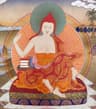
Chandrakīrti's Yuktiṣaṣṭikāvṛtti is a commentary on Nāgārjuna's Sixty Stanzas of Reasoning, and its central framework is the analysis of dependent arising (pratītyasamutpāda) as the path to liberation. Chandrakīrti argues that thorough knowledge (parijñā) means fully realizing the non-arising of dependently arisen phenomena, a realization that cuts off the root of all views and defilements. The commentary applies this analysis to the Four Noble Truths and the two truths, treating even the Buddha's teachings as conventional expressions. It is a key Madhyamaka text for understanding how reasoning (yukti) functions as a soteriological practice, not merely a logical exercise.
Key Insights
✦What is the central argument of the Yuktiṣaṣṭikāvṛtti, and what does it aim to establish?
The central argument is that thorough knowledge (parijñā) of dependent arising is the necessary condition for liberation. Chandrakīrti interprets this thorough knowledge as realizing the non-arising of dependently arisen phenomena: things that arise dependently do not arise with any inherent nature [citation:1]. This realization cuts off the root cause of all views and defilements, because it undermines the conceptualizing that superimposes inherent existence on things. The commentary applies this analysis to the Four Noble Truths, arguing that suffering, its cause, and the path are all non-arising by nature, while cessation is the unconditioned reality that becomes evident when this is realized [citation:1]. The text is thus a soteriological treatise, not merely a logical exercise.
✦How does Chandrakīrti treat the Four Noble Truths and the two truths in this commentary?
Chandrakīrti treats the Four Noble Truths as conventional truths, not ultimate truths. He argues that the Four Noble Truths are 'truths preached by the saints' or 'truths for worldly people becoming saints,' but not 'truths for the saints' themselves [citation:3]. The standard for distinguishing the two truths is the different appearance of the Truth of Cessation and the other three truths to worldly people: cessation appears as unconditioned and non-arising, while the other three appear as conditioned and deceptive. This means that even the Buddha's teaching of the Four Noble Truths is a linguistic expression accommodated to worldly minds, not a description of ultimate reality. The commentary thus applies the two-truths framework to the most fundamental Buddhist teaching, showing that the path itself is conventional.
✦What role does Abhidharma teaching play in the Yuktiṣaṣṭikāvṛtti, and why does Chandrakīrti include it?
Chandrakīrti assigns Abhidharma teaching a specific, provisional role in the path. Abhidharma teachings—such as the analysis of dependent arising across the three times and the classification of skandhas, āyatanas, and dhātus—are essential for those who have not yet freed themselves from the extreme views of existence and non-existence [citation:11]. For those inclined toward nihilism (the view of non-existence), Abhidharma establishes the relation between action and result, preventing them from accumulating unwholesome dharmas. For those inclined toward eternalism (the view of existence), Abhidharma's analysis of the aggregates helps them avoid the fault of misunderstanding emptiness as nothingness. Abhidharma is thus a therapeutic tool for specific mistaken views, not the final truth. The commentary uses it to lead practitioners beyond both extremes.
✦How does the text relate to Nāgārjuna's Yuktiṣaṣṭikākārikā, and what does Chandrakīrti add?
The Yuktiṣaṣṭikāvṛtti is a commentary on Nāgārjuna's Sixty Stanzas of Reasoning, and Chandrakīrti's task is to unfold the meaning of the root verses. The commentary is not a mere paraphrase but an independent philosophical work: Chandrakīrti clarifies the soteriological stakes of Nāgārjuna's arguments, applies the analysis of dependent arising to the Four Noble Truths, and introduces distinctions (such as the three types of compassion and the role of Abhidharma) that are not explicit in the root text [citation:1][citation:11]. The commentary also engages with the Lotus Sutra, citing it to support the claim that all beings will eventually attain Buddhahood, a theme not developed in Nāgārjuna's verses [citation:9]. The relationship is thus one of extension and application: Chandrakīrti takes Nāgārjuna's compressed reasoning and shows how it functions as a guide to liberation.
✦What is the textual history of the Yuktiṣaṣṭikāvṛtti, and what sources are available for its study?
The Sanskrit original of Nāgārjuna's root text is lost, and only fragments of the Yuktiṣaṣṭikākārikā survive through citations; the commentary's Sanskrit original is also not extant as a complete manuscript [citation:4][citation:8]. The text survives primarily in Tibetan translation, with two major versions: an early translation from the Dunhuang manuscripts (circa early 9th century) and the canonical translation by Pa tshab Nyi ma grags (1055–) and Muditāśrī, which was revised during the Later Dissemination [citation:2][citation:8]. Recent scholarship has identified six manuscripts related to the text in the 'Bras spungs monastery catalogue, one of which is a Tibetan translation different from the canonical versions and important for a critical edition [citation:2]. The standard scholarly edition is Cristina Scherrer-Schaub's 1991 French translation with edited Tibetan text, published by the Institut belge des hautes études chinoises [citation:10]. A 2024 English translation by Joseph Loizzo and the AIBS Translation Team, based on the Tibetan, has made the text accessible to English readers [citation:13].
✦What is the most common misunderstanding of this commentary's purpose?
The most common misunderstanding is that the Yuktiṣaṣṭikāvṛtti is a work of abstract logic or epistemology, a treatise on reasoning for its own sake. In fact, the text is fundamentally soteriological: its analysis of dependent arising and non-arising is intended to produce thorough knowledge, which is the necessary condition for liberation [citation:1]. The term yukti (reasoning) in the title does not refer to formal logic but to 'reasoning ordered to a goal,' a critical analysis that functions as a practice leading to awakening [citation:5]. A related misunderstanding is that Chandrakīrti's commentary is a neutral exposition of Nāgārjuna's verses. The commentary is an original work that develops its own arguments, applies the root text to new contexts, and cites scriptures (such as the Lotus Sutra) that Nāgārjuna does not invoke. Readers who treat it as a mere gloss miss its philosophical independence.
Wealthy Psyche is an intellectual archive. We do not host, distribute, or sell book copies — physical or digital. We provide structured knowledge to help you think better, faster.