



Prasannapadā (Clear Words, commentary on Nagarjuna)
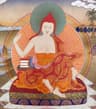
The Prasannapadā is Chandrakīrti's monumental commentary on Nāgārjuna's Mūlamadhyamakakārikā, and its central framework is the defence of the Prāsaṅgika method: refuting opponents by drawing out the absurd consequences of their own positions rather than constructing independent syllogisms. The text's most influential section is the first chapter, where Chandrakīrti defends Buddhapālita against Bhāviveka's critique, a defence that Tibetan exegetes later identified as the origin of the Prāsaṅgika–Svātantrika distinction. Throughout, Chandrakīrti argues that dependent arising proves the lack of inherent existence while preserving the validity of conventional truth as mere conceptual labelling.
Key Insights
✦What is the central argument of the Prasannapadā, and what does it defend?
The central argument is that dependent arising (pratītyasamutpāda) proves the lack of inherent existence (niḥsvabhāvatā) in all phenomena, while conventional truth remains valid as mere conceptual labelling. Chandrakīrti defends the Prāsaṅgika method: refuting opponents by drawing out the absurd consequences (prasaṅga) of their own positions, rather than constructing independent syllogisms (svatantra-anumāna) as Bhāviveka advocated . The commentary's first chapter, the longest and most influential, defends Buddhapālita against Bhāviveka's critique and establishes Chandrakīrti's own positions on ontology and epistemology against both Buddhist and non-Buddhist opponents, including Dignāga and the Naiyāyikas . The text is thus both an exposition of Nāgārjuna's verses and an original philosophical intervention.
✦Why is the first chapter considered the most important, and what debate does it record?
The first chapter is the longest and most wide-ranging, and it became the focal point for the later split of the Madhyamaka school into Prāsaṅgika and Svātantrika streams . Its importance lies in Chandrakīrti's defence of Buddhapālita, an earlier commentator on the Mūlamadhyamakakārikā, against Bhāviveka's criticism that Buddhapālita's consequentialist refutations were incomplete because they did not state an independent syllogism . Chandrakīrti argues that Buddhapālita's method is correct and that Bhāviveka's insistence on autonomous syllogisms misunderstands Nāgārjuna's intent. Tibetan exegetes later identified this defence as the source of the Prāsaṅgika–Svātantrika distinction, making the Prasannapadā a foundational text for understanding the divisions within Madhyamaka.
✦What does Chandrakīrti mean by 'mere convention' (lokasaṃvṛti), and how does it function in his two-truths framework?
Chandrakīrti distinguishes between the conventional truth of ordinary beings (lokasaṃvṛti) and the 'mere convention' recognized by noble beings. For ordinary beings, things appear as conventionally real because they are grasped as intrinsically existent; for noble beings, things are seen as merely conventional, like a reflected image, because they are no longer reified . The key distinction is between correct and fallacious cognitive processes: a correct process, associated with unimpaired sense faculties, is epistemically reliable by the mundane standard, while a fallacious process, associated with defective faculties, is deceptive even by that standard . This allows Chandrakīrti to affirm the validity of conventional truth for practical purposes while denying any inherent existence to conventionally real entities.
✦How does the Prasannapadā relate to Chandrakīrti's Madhyamakāvatāra?
Both works are by Chandrakīrti and belong to the Madhyamaka tradition, but they differ in purpose and audience. The Madhyamakāvatāra is an independent treatise introducing the Madhyamaka path, while the Prasannapadā is a commentary on Nāgārjuna's root verses . A comparative study of the final five verses of the Madhyamakāvatāra and the opening homage of the Prasannapadā shows that both are acts of praise to Nāgārjuna and share common vocabulary, indicating a close relationship between the two texts . However, the term prakriyā (doctrine/method) used in the Madhyamakāvatāra does not appear in the Prasannapadā, suggesting that the two works address different readerships . The Prasannapadā is the more technical and polemical work, while the Madhyamakāvatāra is more pedagogical.
✦What is the textual history of the Prasannapadā, and what are the standard editions?
The Sanskrit text of the Prasannapadā was edited by Louis de La Vallée Poussin in the early twentieth century, and this edition remained standard for nearly a century . In the intervening years, numerous old Sanskrit manuscripts of the work were discovered, and Anne MacDonald evaluated them for a new edition published by the Austrian Academy of Sciences Press . MacDonald's edition, In Clear Words: The Prasannapadā, Chapter One, appeared in two volumes, with the first containing the introduction, manuscript description, and Sanskrit text, and the second containing the Prasannapadā and Tibetan text . The translation is extensively annotated and makes Chandrakīrti's arguments accessible in English . A complete critical edition of all twenty-seven chapters remains a desideratum, and MacDonald's work covers only the first chapter.
✦What is the most common misunderstanding of the Prasannapadā's method?
The most common misunderstanding is that the Prāsaṅgika method is merely destructive or nihilistic, a form of argument that refutes everything without establishing anything. In fact, Chandrakīrti's consequentialist refutations are soteriological: they aim to free the mind from all views of inherent existence, including the view that emptiness itself is a thing . The method is therapeutic, not sceptical. A related misunderstanding is that the Prasannapadā is a neutral commentary that simply explains Nāgārjuna's verses. It is a highly polemical work that intervenes in contemporary debates, defends Buddhapālita against Bhāviveka, and criticizes Dignāga's epistemological project . Readers who treat it as a mere gloss miss its philosophical originality and its historical significance for the development of Madhyamaka.
Wealthy Psyche is an intellectual archive. We do not host, distribute, or sell book copies — physical or digital. We provide structured knowledge to help you think better, faster.