



Fragments and Testimonia (Zeno of Citium)
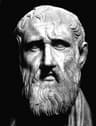
Zeno of Citium's Fragments and Testimonia is a modern scholarly reconstruction, not a book Zeno wrote in this form. None of his works survives intact; what remains are quotations and reports preserved by later authors such as Diogenes Laertius, Cicero, Plutarch, and Sextus Empiricus. Its central significance is evidential: the collections allow scholars to reconstruct the founding doctrines of early Stoicism, including the claim that the goal of life is to live in agreement with nature, that virtue is the sole good, and that the cosmos is a rationally ordered, providentially governed whole. Because the sources are often hostile or later, the doctrines are assembled by inference.
Key Insights
✦What exactly is this book, and why is it not a single work by Zeno?
No complete work by Zeno of Citium survives. Titles attributed to him in ancient lists, such as a Republic and works on nature, human nature, and impulse, are known only through quotation and report. The title Fragments and Testimonia therefore names a scholarly category: fragments are purported direct quotations, and testimonia are reports about his life and views. Editions differ in what they include, so no single standard text exists in the manner of a surviving treatise. Readers should check the editor's principles before relying on any given collection.
✦What are the main sources, and how reliable are they?
The principal source for his life and doctrine is Diogenes Laertius, writing centuries after Zeno, whose reliability varies. Cicero, Plutarch, Seneca, and Sextus Empiricus preserve further material, often to criticize or to place Zeno within later debates. Because later Stoics such as Chrysippus systematized and revised the school, it is often hard to tell what originates with Zeno. Scholars therefore treat attributions cautiously and distinguish firmly documented claims from reconstructions.
✦What doctrines are most securely associated with Zeno?
Reports consistently link him to the ethical goal of living in agreement with nature, the view that virtue is sufficient for happiness, and a division of philosophy into logic, physics, and ethics. He is also associated with the theory of cognitive impression as a criterion of truth and with a materialist, providential view of the cosmos. The details of how he formulated each are less certain, since later Stoics refined them, and scholars debate how much of the mature system he held.
✦How does his lost Republic relate to Plato and to Cynicism?
Zeno's Republic is reported to have presented an ideal community of the wise, with unconventional proposals that scandalized later critics. It is often read as a response to Plato's Republic and as reflecting his early study with the Cynic Crates. Ancient reports of its content are partial and sometimes hostile, and later Stoics were embarrassed by parts of it, so scholars debate how seriously its proposals should be taken. Readers should treat reconstructions as tentative.
✦How is the evidence for Zeno misread?
A common error attributes the whole later Stoic system, including Roman Stoic ethics, directly to Zeno. In fact Chrysippus, Panaetius, Posidonius, and others developed and altered the school, and the best-known Stoic texts, by Seneca, Epictetus, and Marcus Aurelius, come from centuries later. Another error treats the surviving reports as neutral, although many come from critics or doxographers with their own aims. Careful readers distinguish early, middle, and late Stoicism.
✦Which collections and translations should readers consult?
The standard scholarly resource is Hans von Arnim's Stoicorum Veterum Fragmenta, which collects early Stoic fragments in Greek and Latin. For English readers, The Hellenistic Philosophers by A. A. Long and D. N. Sedley provides translated texts with commentary, and Brad Inwood and Lloyd Gerson's Hellenistic Philosophy offers selections. Because collections arrange material differently, readers should check which fragments are attributed to Zeno and how the editors justify their attributions.
Wealthy Psyche is an intellectual archive. We do not host, distribute, or sell book copies — physical or digital. We provide structured knowledge to help you think better, faster.